



Summary
A New York-based business owner, Elnar Zarbailov, has been sentenced to prison for helping a global criminal network move illegal money. The case is part of one of the largest health care fraud investigations ever handled by U.S. authorities.
Key Details at a Glance:
- Crime: Money laundering linked to health care fraud
- Individual: Elnar Zarbailov
- Amount involved: Nearly $1.5 million
- Sentence: 37 months in prison
- Arrest location: International airport in New York
- Fraud source: Medicare and private insurers
- Network: Transnational criminal organization
- Method: Shell companies and fake ownership documents
What the Case Is About
A business owner from New York, Elnar Zarbailov, has been sentenced to over three years in prison for playing a key role in a large international money laundering scheme. The case involves illegal money generated through health care fraud and moved through banks to hide its origin.
The fraud targeted major health insurance systems. These included government programs and private insurance companies. The illegal money looked real at first because it came from trusted payment systems. This made it easier to move the funds without raising suspicion.
Authorities say Zarbailov helped transfer nearly $1.5 million through several bank accounts. These transactions were part of a wider criminal operation that stretched across countries.
How the Fraud Scheme Worked
The operation was run by a foreign-based criminal group. This group created fake medical businesses to submit false claims for payment.
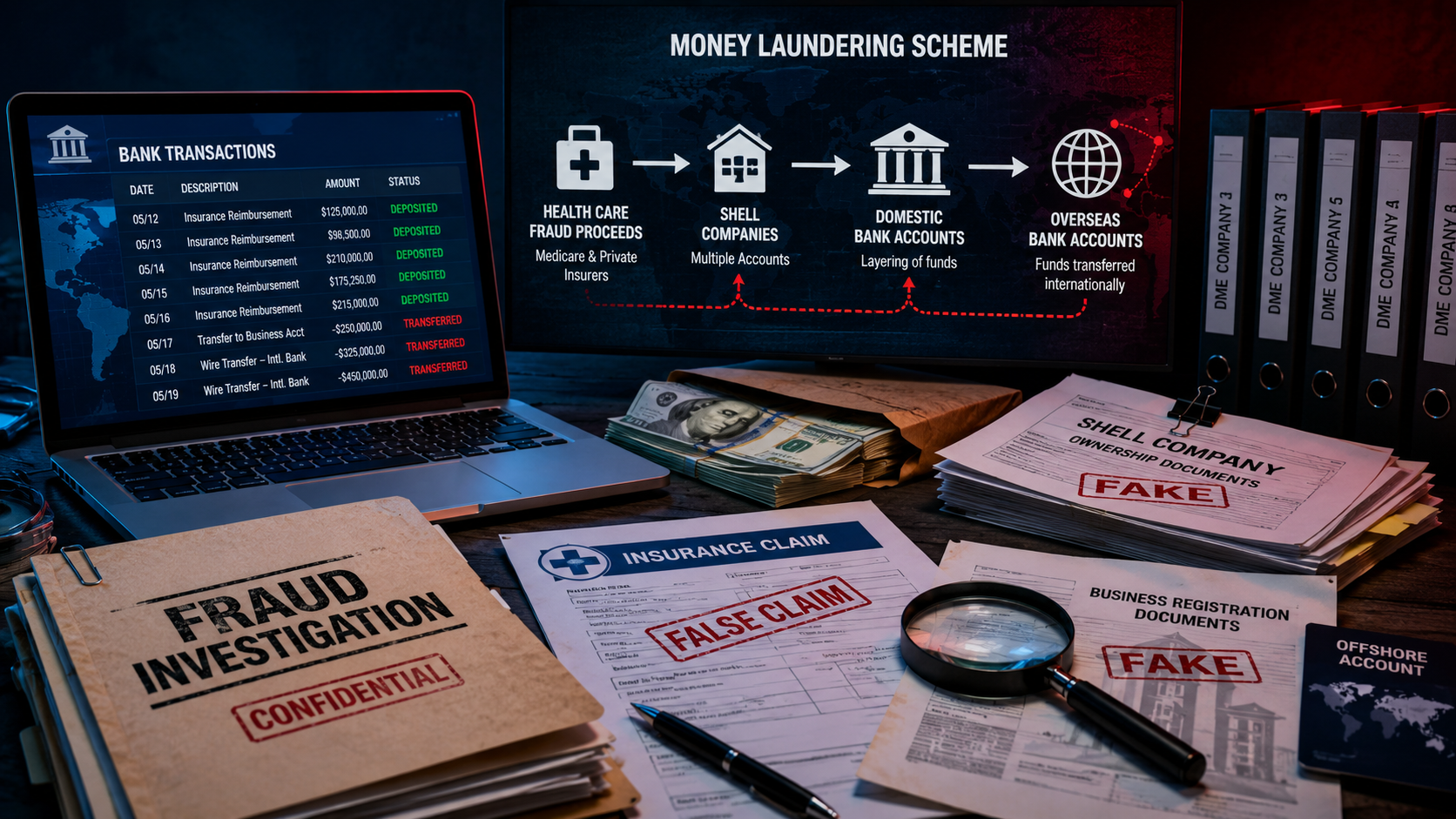
Here is how the system worked step by step:
- Fake companies were set up to appear like real medical equipment suppliers
- Insurance companies were billed for services or equipment that were not needed or never provided
- Payments were made by insurers, making the funds appear legitimate
- The money was then moved through multiple accounts to hide its source
- Finally, the funds were transferred to shell companies and overseas banks
The use of shell companies played a key role. These companies had no real business operations. They existed only on paper to move money and hide ownership, which helped individuals like Zarbailov carry out such activities.
Use of False Documents and Bank Access
To open bank accounts, the network used fake documents. These included false business records and ownership papers. The documents made it look like the accounts belonged to real business owners.
In many cases, these listed owners were not even legally present in the country. This helped hide the true people behind the accounts.
The group also worked around bank security systems. In some cases, they even coordinated with insiders to avoid detection. This allowed them to continue moving large amounts of money without interruption.
Owe Martin Andresen charged in Dream Market money laundering case
Role in the Money Movement
Zarbailov played an important role in handling the money flow. He deposited funds from several fake medical companies into bank accounts.
These funds were then transferred to other accounts, including those outside the country. This process helped Zarbailov and others clean the money and make it harder to trace.
The activity connected multiple companies involved in the scheme. Each transaction added another layer to hide the true origin of the funds handled by Zarbailov.
Arrest and Legal Proceedings
Zarbailov was arrested in September 2024 at a major international airport in New York while attempting to leave the country. He later pleaded guilty to conspiracy to commit money laundering in October 2025.
The court sentenced him to 37 months in prison. In addition to the prison term, the court ordered the forfeiture of approximately $1.46 million. This amount represents the illegal funds linked to the case.
Investigation and Enforcement Action
The case was investigated by federal agencies responsible for tackling fraud and financial crimes. Officials including Colin M. McDonald, Scott J. Lampert, and Tony Costanza announced the outcome.
The prosecution team included Shankar Ramamurthy, Kevin Lowell, Leonid Sandlar, and Sara E. Porter.
The arrest was supported by multiple law enforcement teams. Their coordinated efforts helped stop the suspect before leaving the country.
The case is linked to a larger enforcement operation that uncovered widespread health care fraud. This operation exposed a network responsible for billions of dollars in illegal activity.
Scale of Health Care Fraud Cases
Health care fraud remains a major issue. Authorities report that thousands of individuals have been charged in similar cases over the years.
Some important figures from enforcement data include:
- More than 6,200 defendants charged since 2007
- Over $45 billion in fraudulent billing identified
- Multiple strike forces operating across different regions
These numbers show how large and organized such schemes can be. Criminal groups often work across borders and use complex systems similar to those used in the Zarbailov case.
Jordan Khammar pleads guilty to $7.9 million fraud and money laundering scheme
Government Efforts to Combat Fraud
To fight such crimes, authorities have created special divisions focused on fraud enforcement. These teams aim to identify, investigate, and prosecute those involved in financial crimes.
Health care systems are a major target because they handle large amounts of money. Criminals take advantage of this by using complex methods to disguise illegal funds.
Efforts are also being made to improve monitoring systems. Agencies are working closely with insurers and financial institutions to detect suspicious activity faster.
Why This Case Matters
This case highlights how organized crime groups use financial systems to move illegal money. It also shows how health care fraud can be linked to global criminal networks.
The use of shell companies, fake documents, and multiple bank accounts makes these crimes difficult to detect. However, coordinated investigations continue to uncover such schemes.
Authorities continue to focus on protecting financial systems and ensuring that fraudulent activities are identified and stopped.
To read the original order please visit Department of Justice (DOJ) website