


Summary
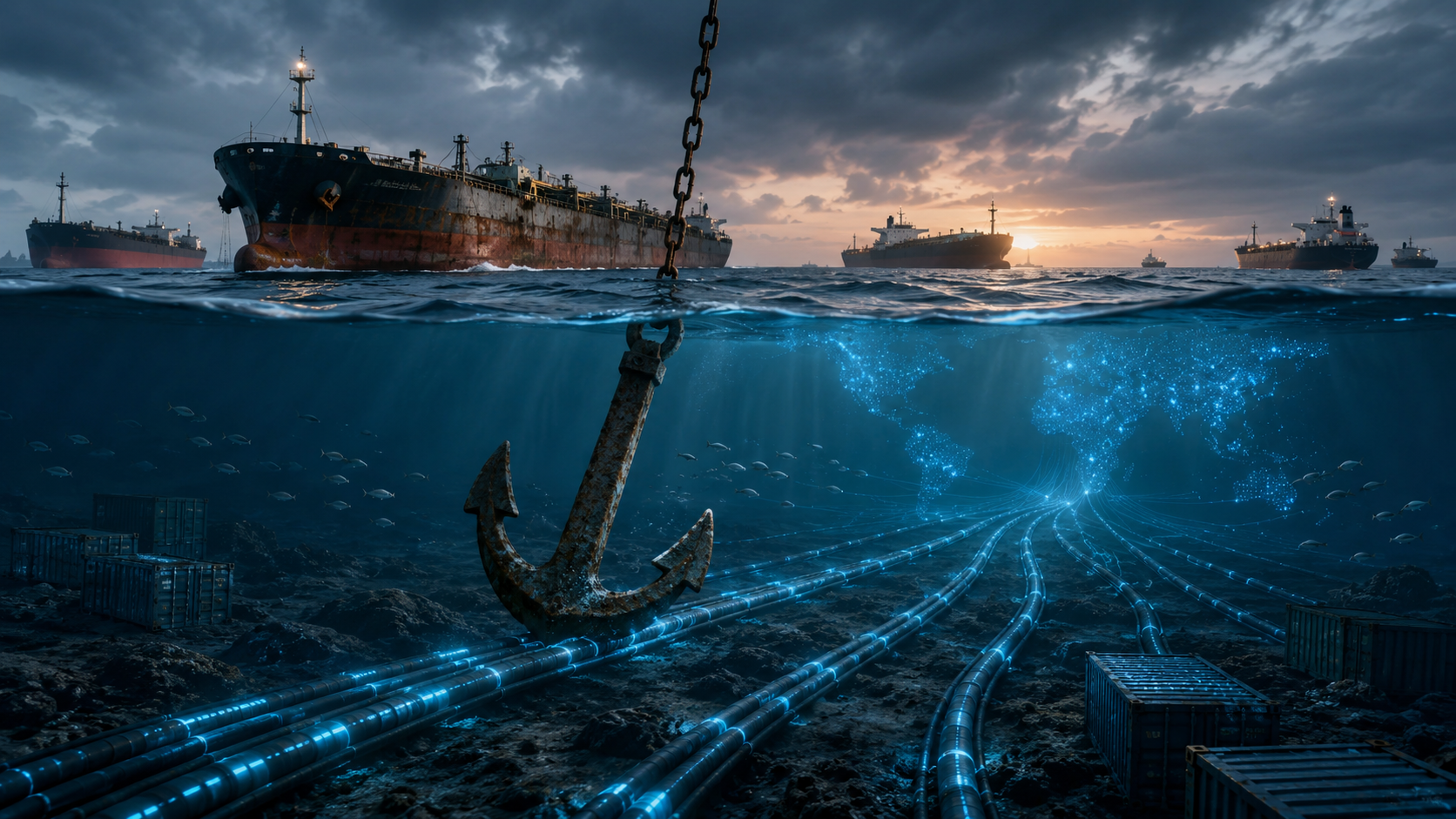
While global attention often focuses on the Strait of Hormuz during maritime tensions, another challenge is growing across international waters. The shadow fleet, a network of aging tankers and cargo ships linked to sanctions evasion, has also been connected to suspected damage to critical undersea cables. These vessels reportedly exploit gaps in international law by changing flags, hiding ownership, and switching off tracking systems. Recent incidents involving Newnew Polar Bear, Yi Peng 3, Vasili Shukshin, Shunxin-39, and Eagle S have increased concerns about the security of subsea infrastructure that carries nearly all international data traffic.
| Key Point | Details |
|---|---|
| Main concern | Shadow fleet vessels linked to sanctions evasion and suspected subsea cable sabotage |
| Common tactics | AIS blackouts, false flags, ship-to-ship transfers, frequent renaming and reflagging |
| Major incidents | Balticconnector pipeline damage, Baltic Sea cable incidents, Taiwan cable cases |
| Legal challenge | Existing international laws limit investigations and enforcement |
| Measures discussed | Shared legal frameworks, cable safety laws, intelligence sharing and insurance restrictions |
Shadow Fleet Raises New Maritime Security Concerns
The Strait of Hormuz has long been viewed as one of the world’s most important maritime routes. However, growing attention is now being directed toward the shadow fleet, which is increasingly being linked to sanctions evasion and suspected attacks on critical undersea infrastructure. According to the original report, these vessels are taking advantage of legal loopholes while creating risks for global trade and communications.
Belgium seizes Russian ‘shadow fleet’ tanker Ethera in North Sea, sets €10M bail
What Is the Shadow Fleet?
The shadow fleet consists mainly of aging oil tankers and cargo ships operating through complex ownership structures that make their real owners difficult to identify. These vessels often switch off their Automatic Identification System (AIS), broadcast false locations, conduct ship-to-ship cargo transfers, frequently change names and flags, and operate under flags of convenience to avoid scrutiny.
The report also notes that similar maritime tactics have reportedly been used by certain Chinese state-owned fishing fleets.
Incidents That Have Raised Concerns
Several recent incidents are highlighted in the report. In October 2023, the Hong Kong-registered and Chinese-owned Newnew Polar Bear reportedly dragged its anchor for nearly 100 nautical miles, damaging the Balticconnector pipeline and nearby communication cables before entering a Russian port. Chinese authorities described the incident as being caused by a storm.
In November 2024, the China-flagged bulk carrier Yi Peng 3 allegedly damaged two communication cables in the Baltic Sea after dragging its anchor. During early 2025, the Belize-flagged Vasili Shukshin reportedly remained near Taiwan for several weeks, while the Cameroon-flagged Shunxin-39, operated by a Chinese crew, allegedly severed a cable near Taiwan after using multiple AIS identities and vessel names.
Legal Gaps Complicate Enforcement
The report states that existing international laws have made enforcement difficult. A key example is the Eagle S case on Christmas Day 2024, when the Cook Islands-flagged vessel, reportedly linked to Russia’s shadow fleet, allegedly damaged an electricity cable connecting Finland and Estonia along with four communication cables in Finland’s Exclusive Economic Zone.
The article explains that the United Nations Convention on the Law of the Sea (UNCLOS) generally allows countries to enforce submarine cable protections only within their territorial waters. Outside those areas, responsibility usually rests with the country whose flag the vessel flies. Many shadow fleet vessels reportedly operate under flags issued by countries that have limited ability or willingness to investigate such incidents.
Rich Starry tanker draws attention with Hormuz transit during US naval blockade
The report also notes that international rules protecting submarine cables date back to 1884, long before modern internet infrastructure existed.
Measures Discussed to Counter the Shadow Fleet
The article says countries following international law could develop shared legal frameworks to improve responses to shadow fleet activities. It refers to Article 110 of UNCLOS, which allows warships to board vessels reasonably suspected of being stateless to verify their documentation.
The report also highlights cable safety legislation adopted by Denmark, Australia, and New Zealand, allowing authorities to better protect underwater infrastructure within their Exclusive Economic Zones while remaining consistent with international law.
Another recommendation involves improving cooperation between governments by sharing satellite imagery, maritime intelligence and vessel tracking information. The report also refers to the Guiding Principles for Underwater Infrastructure Defence Exchanges, announced alongside the Shangri-La Dialogue, as a framework for international cooperation.
US expands sanctions on Iran oil industry as Strait of Hormuz remains closed
Private Sector and Insurance Measures
The report notes that governments are not the only organisations involved in protecting subsea infrastructure. Major technology companies including Google and Meta own around 60 of the world’s major subsea cables and already monitor unusual activity affecting their networks.
It also highlights NATO’s Baltic Sentry and Nordic Warden operations as platforms that could receive real-time intelligence from cable operators and governments.
According to the article, one of the strongest measures against the shadow fleet could involve restricting insurance. Most Russian shadow fleet insurance reportedly passes through European markets, while much of the world’s reinsurance business is connected to either the United States or Europe. The report suggests that the International Group of P&I Clubs could maintain a real-time blacklist of vessels with histories of AIS manipulation or other legal violations, making it much harder for such vessels to access international shipping markets.
The article notes that subsea cables carry approximately 99% of international data, including internet traffic, financial transactions, cloud services and military communications. It states that repeated incidents involving shadow fleet vessels have increased concerns over the protection of this critical global infrastructure.