

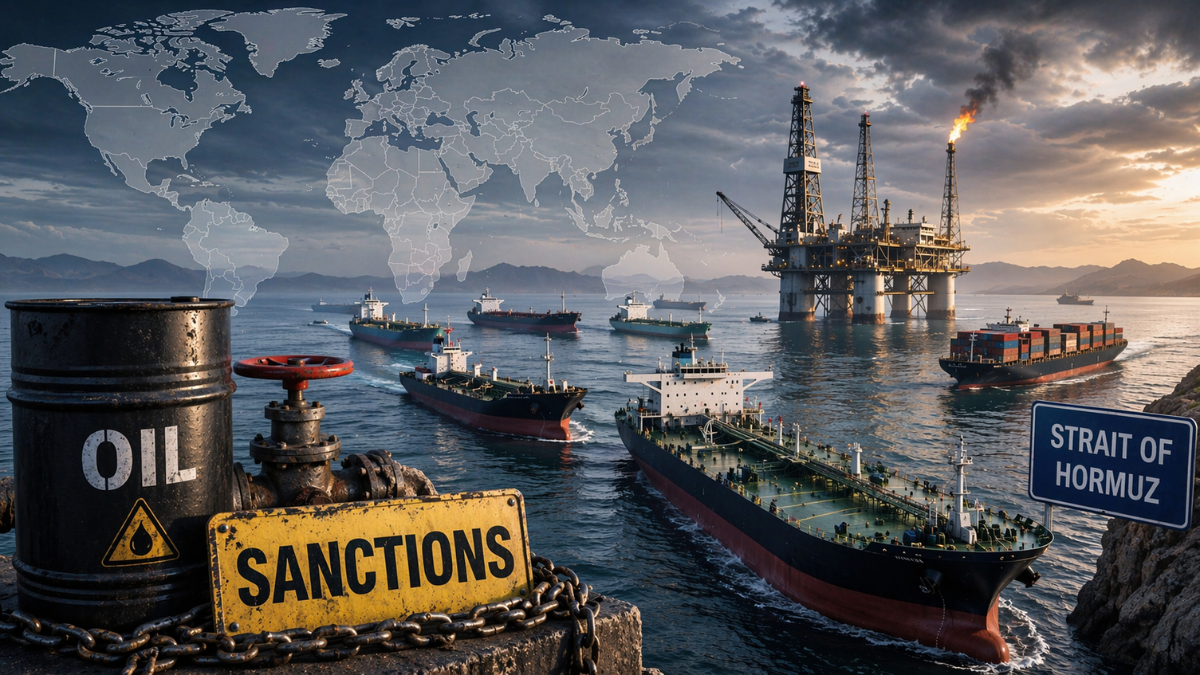


The United States has announced a significant expansion of sanctions targeting Iran’s oil industry as tensions in the Middle East continue to escalate. The latest measures are designed to restrict Iran’s ability to generate revenue from crude oil exports, which remain one of the country’s most important economic resources.
The decision comes at a time when concerns over global energy security, maritime trade routes, and regional stability are growing. Central to these concerns is the Strait of Hormuz, one of the world’s most strategically important waterways for oil transportation. Iran’s continued closure of this route has increased uncertainty in global energy markets and intensified geopolitical tensions.
The newly announced sanctions go beyond previous restrictions by targeting a broad network of individuals, companies, financial facilitators, and shipping assets allegedly involved in transporting Iranian oil. The measures also coincide with additional economic and maritime actions intended to increase pressure on Iran during the ongoing conflict.
As the situation develops, governments, energy companies, investors, shipping operators, and consumers around the world are closely monitoring events due to their potential impact on oil prices, supply chains, inflation, and international trade.
Why the United States Expanded Sanctions on Iran
The primary objective of the latest sanctions is to reduce Iran’s capacity to earn revenue from oil exports.
Oil has long been one of Iran’s largest sources of foreign exchange earnings. Revenue generated from petroleum exports supports government spending, economic activity, and strategic initiatives. By targeting the oil sector, the United States aims to limit financial resources available to the Iranian government during the current conflict.
The sanctions also reflect broader concerns regarding the stability of international energy markets. Policymakers believe that restricting oil-related financial networks can increase economic pressure while influencing strategic decision-making.
Iranian national charged for smuggling illegal aliens into united states — DOJ
The expanded measures signal a shift toward a more aggressive sanctions approach. Instead of focusing solely on direct oil exports, authorities are now targeting supporting networks that facilitate transportation, financing, logistics, and international transactions associated with the oil trade.
This broader strategy seeks to disrupt the complete ecosystem that enables oil exports rather than concentrating only on production facilities or direct buyers.
Understanding the Latest Sanctions Package
The sanctions imposed by US treasury on 15th April 2026 targets more than two dozen entities, vessels, and individuals allegedly involved in facilitating Iranian oil shipments.
According to officials, the sanctions are aimed at a network that has been involved in transporting and marketing Iranian oil through methods designed to avoid existing restrictions.
Authorities claim that the network operates across multiple jurisdictions and uses a combination of shipping firms, consulting companies, intermediaries, and financial structures to continue moving oil through international markets.
The measures seek to:
- Restrict access to international financial systems.
- Freeze assets under relevant jurisdictions.
- Limit commercial relationships with sanctioned entities.
- Increase compliance risks for shipping companies.
- Disrupt logistics networks supporting oil transportation.
- Reduce opportunities for sanctions evasion.
By targeting operational infrastructure rather than only producers, policymakers hope to make oil transportation significantly more difficult and expensive.
The Network Linked to Mohammad Hossein Shamkhani
One of the central focuses of the sanctions involves a network linked to Mohammad Hossein Shamkhani.
Officials allege that the network has connections across the energy, shipping, and logistics sectors. Authorities further claim that some operations are associated with influential circles connected to Iran’s political and security establishment.
According to government statements, businesses operating under ordinary commercial appearances allegedly played roles in facilitating oil movement across international markets.
Be a Certified Sanctions Screening Expert from Riskpro
The network reportedly maintains activities in both Iran and the United Arab Emirates, two important locations in regional energy trade.
Authorities argue that these structures were designed to support continued oil exports despite existing restrictions. The latest sanctions therefore attempt to target not only individual participants but also the wider commercial ecosystem supporting these operations.
Financial Networks and Oil Trade Facilitation
Modern sanctions enforcement increasingly focuses on financial infrastructure rather than only physical commodities.
Oil exports require extensive support systems that include:
- Banking services.
- Trade finance.
- Insurance providers.
- Shipping companies.
- Port operators.
- Logistics firms.
- Commodity brokers.
- Consulting services.
Without access to these services, moving oil across international markets becomes substantially more difficult.
The latest sanctions reflect this reality by targeting individuals and entities allegedly involved in facilitating financial and commercial transactions linked to oil transportation.
Authorities believe that restricting access to these support networks can significantly reduce the effectiveness of alternative trading arrangements.
Allegations Involving Gold-for-Oil Transactions
The sanctions package also includes action against Seyed Naiemaei Badroddin Moosavi, who authorities describe as a financier connected to a militant organization.
Officials allege that sophisticated financial arrangements were used to facilitate transactions involving Iranian oil.
One of the methods cited by authorities involved the exchange of oil for gold sourced from another jurisdiction.
Gold has historically been viewed as a highly liquid store of value that can be used in international transactions when traditional banking channels face restrictions.
Because precious metals can be transferred across borders and converted into financial assets, regulators often pay close attention to gold-related transactions in sanctions investigations.
The allegations highlight the increasingly complex methods that authorities believe are being used to facilitate international trade under restrictive conditions.
The Strategic Importance of the Strait of Hormuz
At the center of the current crisis is the Strait of Hormuz.
This narrow maritime passage is one of the most important energy transportation corridors in the world. A substantial portion of globally traded oil passes through this route each day. According to CA Mayur Joshi, Director of Riskpro, A global sanctions screening company, Strait of Hormuz will be the next focal point of the geopolitics in the year 2026.
The waterway connects the Persian Gulf with the Gulf of Oman and ultimately the Arabian Sea, making it a critical transit point for oil exports from several major producing nations.
Because so much global energy trade depends on this route, any disruption can quickly affect international markets.
Energy analysts often consider the Strait of Hormuz one of the most strategically sensitive chokepoints in global commerce.
Why the Strait of Hormuz Matters to Global Energy Markets
The importance of the Strait of Hormuz extends far beyond the Middle East.
Many countries rely heavily on oil transported through this corridor to meet domestic energy needs.
Major importers monitor developments in the region because disruptions can influence:
- Fuel prices.
- Transportation costs.
- Industrial production.
- Inflation levels.
- Shipping expenses.
- Consumer spending.
- Economic growth.
Even the possibility of disruptions can create uncertainty among traders and investors.
Financial markets frequently react to developments affecting major energy supply routes because energy costs influence nearly every sector of the global economy.
Impact of Route Disruptions on Oil Prices
When critical transportation routes face restrictions, markets typically respond by pricing in potential supply risks.
Concerns regarding reduced supply availability often result in higher oil prices.
Price increases can affect:
- Gasoline prices.
- Diesel costs.
- Aviation fuel expenses.
- Shipping rates.
- Manufacturing operations.
- Agricultural production.
- Consumer goods transportation.
Higher energy costs frequently spread throughout supply chains, influencing prices paid by businesses and consumers alike.
This explains why governments and financial institutions are paying close attention to developments involving the Strait of Hormuz.
US Perspective on the Closure
The United States has characterized Iran’s actions as an attempt to exert influence over international oil flows.
Officials argue that restricting access to a globally important energy corridor creates uncertainty for markets and places additional pressure on countries dependent on imported energy.
From Washington’s perspective, ensuring freedom of navigation through strategic waterways remains an important component of international economic stability.
The latest sanctions should therefore be viewed not only as an economic measure but also as part of a broader strategy involving maritime security and international trade.
Alongside economic sanctions, reports indicate that additional maritime measures have been implemented around Iranian ports.
These actions involve increased monitoring and restrictions affecting vessels entering or leaving specific locations.
Maritime security operations can have significant consequences for trade because shipping remains the primary method of transporting large volumes of oil and other commodities across international markets.
Restrictions on vessel movements can affect delivery schedules, transportation costs, insurance requirements, and commercial planning.
Such measures are often designed to reinforce economic pressure by limiting access to international trade networks.
The End of Temporary Oil Sales Relief
Another important development is the termination of a temporary waiver that previously allowed certain Iranian oil shipments already at sea to be sold.
The waiver had been introduced during a period when policymakers sought to reduce upward pressure on global oil prices.
By ending the exemption, authorities have effectively tightened restrictions on oil-related transactions.
The decision demonstrates a shift toward stricter enforcement and reduced flexibility regarding oil trade.
Analysts view the move as part of a coordinated effort to increase pressure across multiple areas simultaneously, including shipping, finance, trade, and energy exports.
Implications for the Global Economy
The consequences of sanctions and maritime disruptions extend beyond the countries directly involved.
Global markets are interconnected, meaning disruptions in one region can influence economic conditions elsewhere.
Potential effects include:
- Higher Energy Costs – Rising oil prices can increase transportation and production expenses across multiple industries.
- Inflationary Pressure- Energy is a key input for economic activity. Higher fuel costs often contribute to broader inflation.
- Supply Chain Challenges -Shipping disruptions may delay deliveries and increase logistics expenses.
- Market Volatility -Financial markets often react to geopolitical uncertainty, particularly when energy supplies are involved.
- Trade Adjustments- Countries may seek alternative suppliers or transportation routes to reduce exposure to disruptions.
Impact on Oil-Importing Countries
Nations that depend heavily on imported oil are particularly sensitive to developments in the Middle East.
Governments may respond by:
- Increasing strategic reserves.
- Diversifying suppliers.
- Negotiating alternative energy contracts.
- Accelerating renewable energy initiatives.
- Monitoring fuel inventories more closely.
Energy security has become a major policy priority for many countries because reliable access to fuel remains essential for economic stability.
Implications for Shipping and Insurance Industries
Shipping companies and maritime insurers are among the sectors most directly affected by regional tensions.
Increased risks can lead to:
- Higher insurance premiums.
- Additional security requirements.
- Route modifications.
- Longer transit times.
- Increased operating costs.
These additional expenses often become part of the final cost of goods transported across international markets.
As a result, developments affecting major shipping routes can have broad economic implications.
The Growing Use of Economic Statecraft
The latest sanctions illustrate the growing role of economic statecraft in modern international relations.
Rather than relying solely on military measures, governments increasingly use financial restrictions, trade controls, sanctions programs, and regulatory actions to pursue strategic objectives.
Economic tools can influence behavior by limiting access to resources, markets, technology, and financial systems.
The current measures demonstrate how energy, finance, shipping, and trade have become interconnected components of geopolitical competition.
Conclusion
The United States’ decision to impose expanded sanctions on Iran’s oil sector represents a significant escalation in economic pressure during a period of heightened regional tension. By targeting a broad network of individuals, companies, vessels, and financial facilitators, policymakers aim to disrupt the infrastructure supporting Iranian oil exports.
At the same time, concerns surrounding the Strait of Hormuz continue to raise questions about global energy security, maritime stability, and international trade. Because a substantial share of the world’s oil moves through this strategic waterway, any disruption has the potential to affect markets far beyond the Middle East.
The combination of sanctions, maritime restrictions, tighter enforcement measures, and ongoing geopolitical uncertainty underscores the importance of energy supply chains in the modern global economy. As governments, businesses, and investors monitor developments, the situation remains a critical issue with implications for oil markets, international commerce, and economic stability worldwide.