

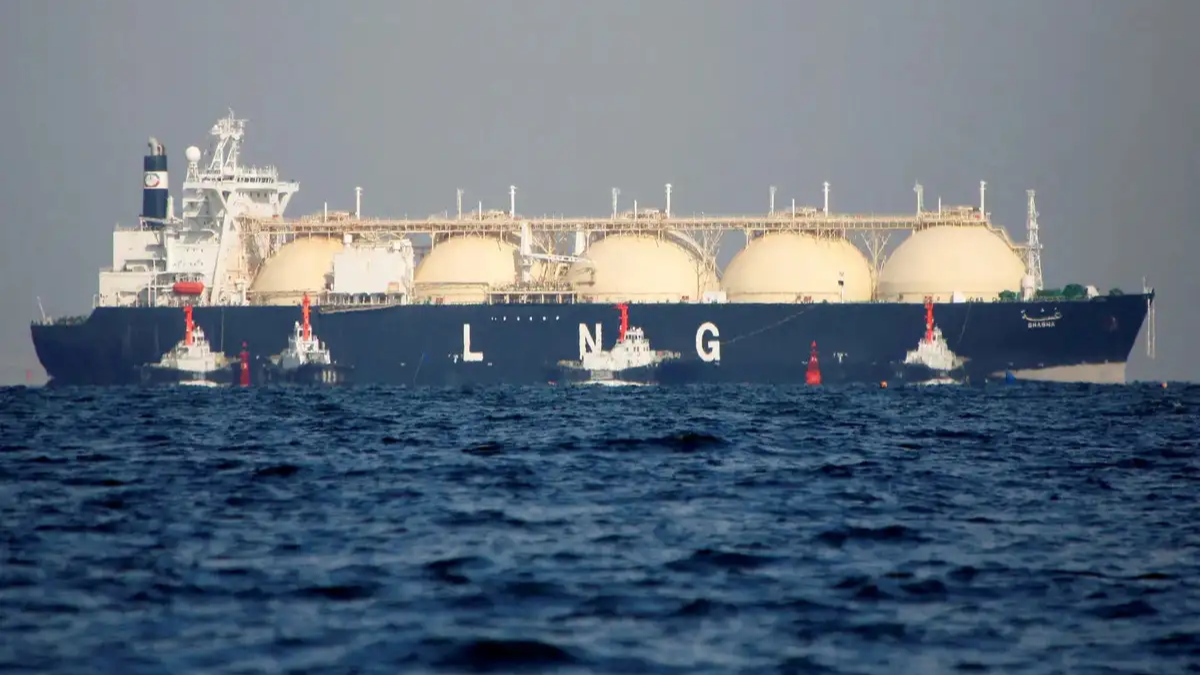


Russia has delivered a second liquefied natural gas (LNG) cargo to China after facing strict international sanctions. The shipment was carried out by Gazprom and came from the Portovaya LNG plant, a small facility located on the Baltic Sea. This plant has a production capacity of about 1.5 million tons of LNG each year and began operations in September 2022.
The latest shipment was transported by a gas tanker named Valera, which was previously known as Velikiy Novgorod. According to ship-tracking data, the vessel loaded the LNG cargo on January 25 and successfully delivered it to the Beihai LNG terminal on Wednesday.
This marks the second delivery made after a break caused by sanctions. The first shipment after the pause was sent in December. These deliveries show that Russia has restarted exports from this plant, even though restrictions remain in place.
The plant had faced interruptions due to sanctions imposed in January 2025. These sanctions were introduced by the United States to reduce Russia’s ability to produce and export LNG. The goal was also to limit Russia’s earnings from energy exports during the ongoing Russia-Ukraine war.
Uncertainty grows over US waiver on Russian oil sanctions ahead of April 11 expiry
Impact of Sanctions on LNG Exports
The sanctions have clearly affected how much LNG the Portovaya plant can export. Before these restrictions, the plant used to ship about two cargoes every month during the winter season. These shipments were regular and supported Russia’s energy trade with several countries.
After the sanctions came into effect, export activity slowed down. Since March 2025, the plant has only managed a few shipments. Apart from the two cargoes sent to China, it has been sending about one cargo per month to Kaliningrad. Kaliningrad is a Russian region located separately from the mainland, and it depends on such shipments for energy supply.
The reduced number of exports shows that sanctions have made operations more difficult. However, the recent deliveries also show that exports have not completely stopped. Instead, they have become less frequent and more targeted.
Another Russian LNG project, known as Arctic LNG-2, has also been supplying LNG to the same Beihai terminal in China. This indicates that China continues to receive LNG from multiple Russian sources, even after sanctions were introduced.
Changing LNG Trade Routes and Markets
In the early days of its operations, the Portovaya plant mainly supplied LNG to countries like Turkey and Greece. Over time, its market expanded. It started sending cargoes to countries such as China, Spain, and Italy.
Hong Kong emerges as a key link in China’s quantum technology plans despite US restrictions
The latest shipments to China show a clear shift in trade patterns. While earlier exports were spread across different regions, current deliveries appear more focused. China has become one of the key destinations for LNG from this plant.
The delivery of the second cargo highlights how trade routes have adjusted under pressure. Even though sanctions have limited access to some markets, shipments are still reaching certain destinations. The Beihai LNG terminal has received both recent cargoes, making it an important receiving point.
The use of the tanker Valera also shows how logistics continue to operate despite restrictions. Ships are still being used to transport LNG across long distances from the Baltic Sea to Asia.
Overall, the Portovaya plant continues to function, though at a lower level compared to before sanctions. It is still producing LNG and sending it to selected locations. The shipments to China, along with deliveries to Kaliningrad, show how exports are being managed under current conditions.
These developments reflect ongoing changes in LNG trade patterns. While restrictions have slowed down exports, they have not completely halted them. The movement of LNG cargoes continues, with fewer shipments and a narrower set of destinations.