

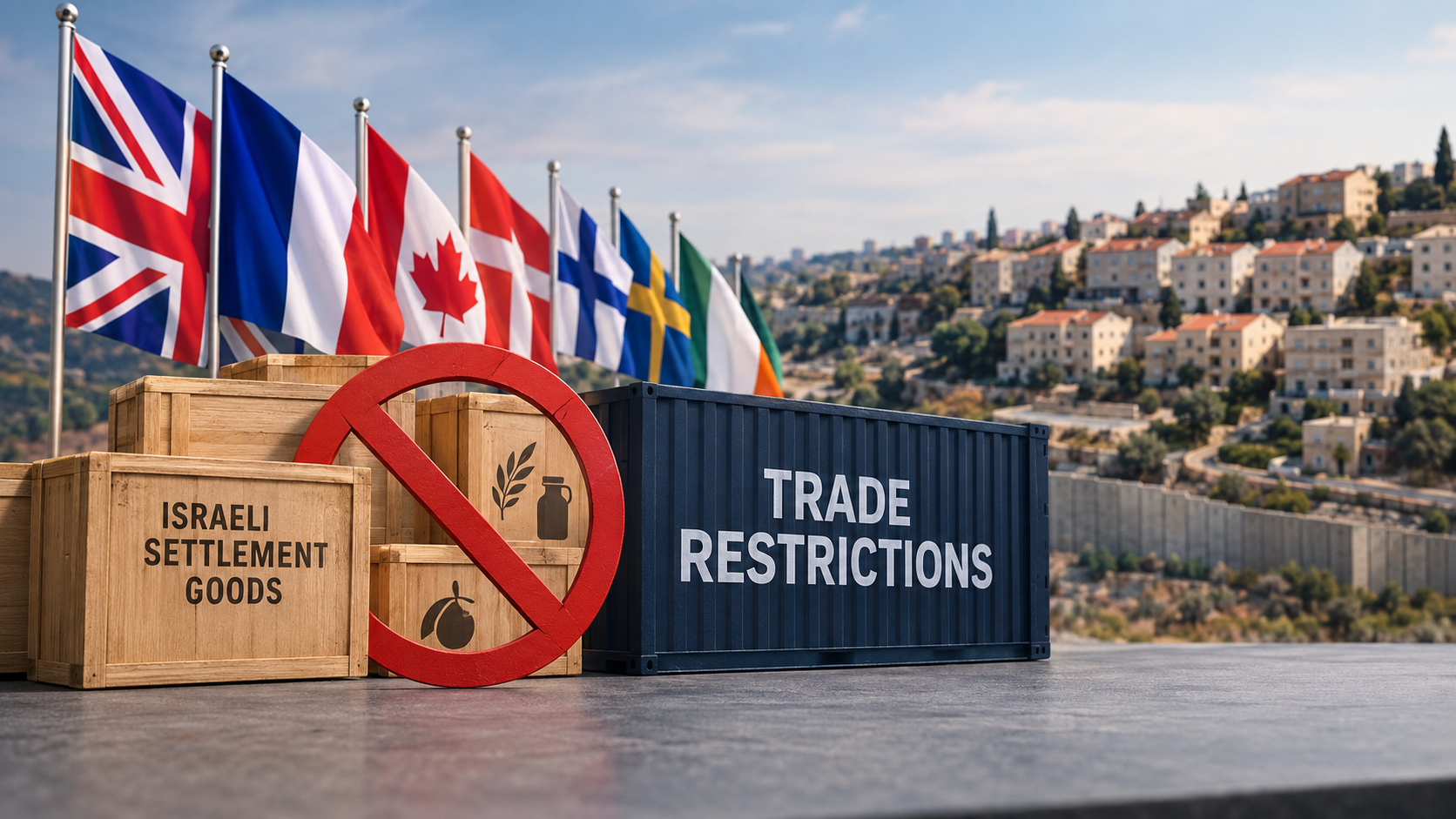


Twelve countries moved from talk to action this week, confirming new trade restrictions on goods from Israeli settlements, with the UK going further and banning settlement imports outright. Israel responded within hours by shutting Britain’s consulate in East Jerusalem.
Key Takeaways
-
Twelve countries, namely the UK, France, Canada, Denmark, Finland, Iceland, Ireland, Norway, Poland, Portugal, Spain, and Sweden, confirmed new trade restrictions on Israeli settlement goods on 8 September 2026.
-
British Foreign Secretary Ed Miliband announced an immediate import ban on goods from illegal settlements, accusing “settler terrorists” of “ethnic cleansing” in parts of the West Bank.
-
Israel responded by ordering the closure of the British consulate in East Jerusalem.
-
The trigger: Israel opened tenders last month for roughly 1,200 housing units in the E1 settlement area, a project that would isolate East Jerusalem from the rest of the West Bank.
-
As of October 2024, there were an estimated 737,000 Israeli settlers living in the West Bank, including East Jerusalem settlements that are illegal under international law.
EU countries remain split over trade measures targeting Israeli settlements
What the 12 Countries Announced
The foreign ministers of the UK, France, Canada, Denmark, Finland, Iceland, Ireland, Norway, Poland, Portugal, Spain, and Sweden issued a joint statement on 8 September confirming plans to restrict trade with Israeli settlements. The statement said Israeli government actions in the West Bank “are undermining the possibility of a two-State solution,” pointing to what it called unprecedented settler violence and settlement expansion.
“We will take action in pursuit of a just and lasting peace,” the statement said, describing the response as resolute and collective.
Leaders Behind the Push
British Prime Minister Andy Burnham, French President Emmanuel Macron, and Canadian Prime Minister Mark Carney were named as having personally agreed on the need to act, according to the joint statement.
What Triggered This
Last month, the Israeli government opened tenders for around 1,200 housing units in the E1 settlement area, a project that would further separate East Jerusalem from the rest of the West Bank. The 12 foreign ministers called the decision to publish those tenders “unacceptable” in their joint statement.
The UK’s Response Goes Further
Speaking to Parliament on 8 September, Foreign Secretary Ed Miliband accused “settler terrorists” of carrying out “ethnic cleansing” in parts of the West Bank and said the Israeli government had “turned a blind eye” to it. He confirmed the UK would immediately bring in an import ban on goods from illegal settlements in the occupied territories.
“I do not believe the British people want us supporting the occupation by accepting products from settlements in our shops and supermarkets,” Miliband told MPs.
Dublin Dares While Brussels Waits: Ireland Acts on Israeli Settlements, Alone
France’s Position
French Foreign Minister Jean-Noël Barrot said in a post on social media that Paris acted because the West Bank was “on the brink of explosion,” citing unchecked settlement expansion, a surge in settler violence against Palestinians, and acts of terror that Israeli authorities themselves have condemned.
Israel’s Response
Israeli Foreign Minister Gideon Sa’ar ordered the closure of the British consulate in East Jerusalem the same day, calling Miliband’s statement to Parliament “outrageous lies.”
Background on the West Bank
The West Bank has been under Israeli occupation since 1967 and has seen a sharp rise in violence since the war in Gaza began following the 7 October 2023 attacks. Israeli settlements in the territory are considered illegal under international law. Estimates place the settler population at roughly 737,000 as of October 2024, including those in East Jerusalem.