

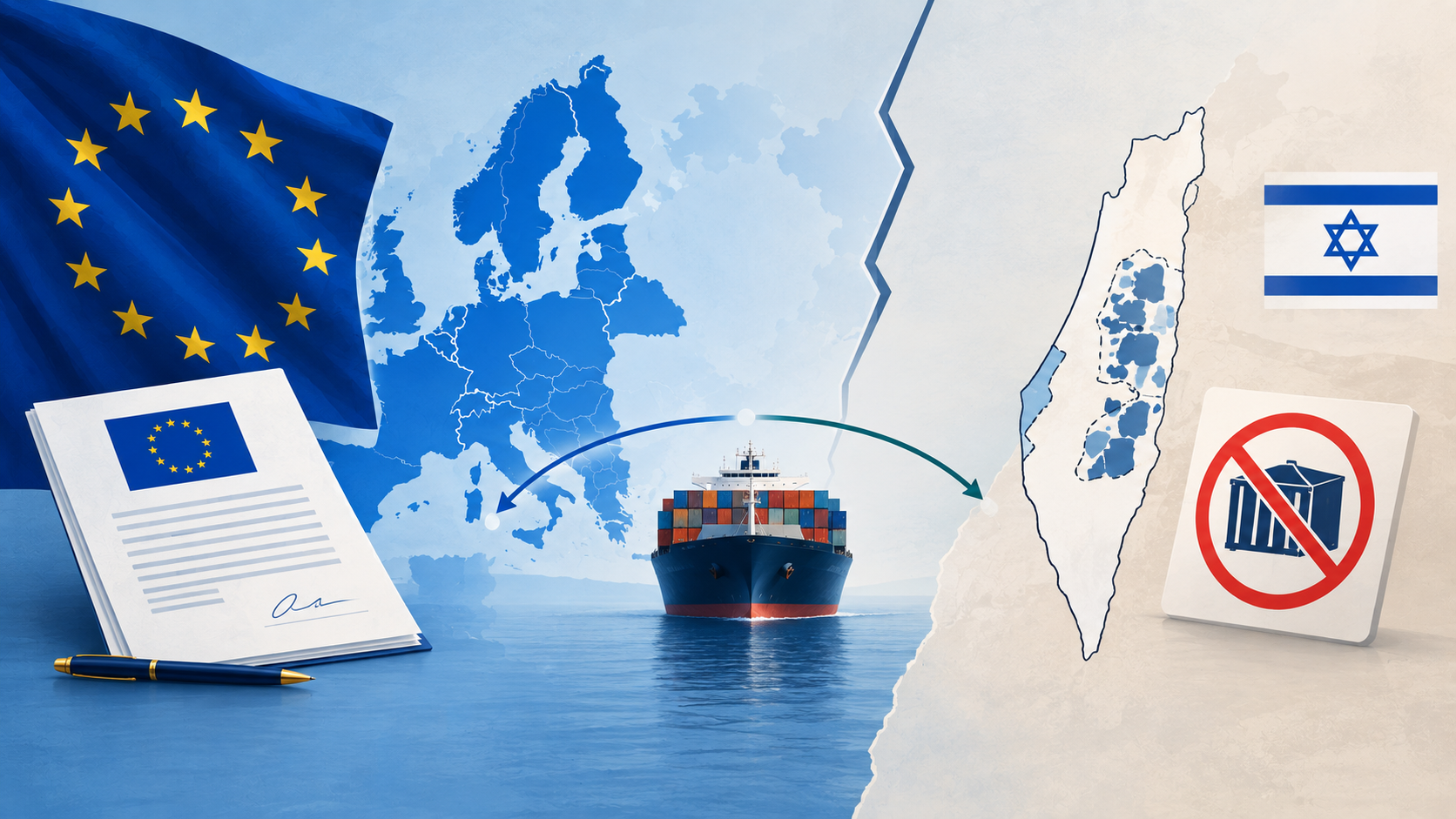


Ireland and Spain pushed EU foreign ministers to back trade restrictions on goods from illegal Israeli settlements at a Wicklow meeting this week, but Germany, Austria, Czechia, and Hungary made clear they’d block it, leaving the bloc’s largest trading partnership with Israel untouched for now.
Key Takeaways
- EU foreign ministers remain divided after an informal meeting hosted by Ireland in Wicklow on 2–3 September 2026, with no agreement reached on trade sanctions against Israel.
- Ireland and Spain, backed by Belgium and the Netherlands, led calls for EU-wide restrictions on goods from illegal Israeli settlements.
- Germany, Austria, Czechia, and Hungary made clear they would oppose any settlement sanctions, citing concerns about diplomatic relations with Israel.
- The EU is Israel’s largest trading partner, with bilateral goods trade reaching nearly $50 billion last year; EU exports to Israel rose from about $30 billion to $32 billion in 2025.
- A binding trade restriction likely needs only a simple majority vote, but major political decisions require unanimity, and it’s still unsettled which threshold applies here.
EU pursuing more Russia sanctions after failed airport drone attack: Kallas
What Happened in Wicklow
Ireland, which currently holds the EU Council presidency, hosted an informal meeting of EU foreign ministers in Wicklow across two days this week. According to wire reporting from the meeting, Ireland and Spain, with support from Belgium and the Netherlands, led the push for EU-wide restrictions on goods imported from illegal Israeli settlements in the occupied West Bank.
The Opposition
On the other side, Germany, Austria, Czechia, and Hungary were reportedly clear that they would oppose any attempt to sanction settlement goods, arguing the move would strain diplomatic channels with Israel. That split has effectively stalled the issue at this meeting, mirroring a similar deadlock at the EU’s earlier Gymnich meeting in July.
Ireland’s Position
Ireland was the first EU country to ban imported Israeli settlement goods outright and recognized a Palestinian state in 2024. Dublin has also pushed for a formal review of the EU-Israel Association Agreement, a cooperation deal signed in 2000 that underpins the EU’s current trade relationship with Israel.
Russia Under the European Union’s Sanctions Regime Since 2014
What the Foreign Minister Said
Irish Foreign Minister Helen McEntee told reporters after the meeting that the bloc “should be moving collectively,” adding that it isn’t credible for the EU “to say we should uphold international law in one form and not do it in the other.”
Irish MEP Lynn Boylan said reporting from the ministers’ meetings in Wicklow this week indicated Ireland was the only country to formally raise the settlements issue on the floor.
What Kallas Has Said
EU foreign policy chief Kaja Kallas did not address the prospect of trade sanctions directly in her news conference following the Wicklow meeting. She had previously discussed the issue at the July Gymnich meeting in Brussels, where ministers debated three separate options:
- An import licensing system
- Prohibitive tariffs
- An outright ban
Kallas said at the time that the outright ban option received the strongest backing among ministers present, but that no single option secured a clear majority.
Russia strengthens shadow LNG fleet as Europe tightens sanctions
The Unresolved Procedural Question
There’s an added complication sitting underneath the political disagreement: it isn’t fully settled whether imposing trade restrictions on settlement goods would require unanimous approval or could pass by simple majority. EU trade decisions generally can pass with a simple majority vote, but major political or policy decisions require unanimity, and where a settlement-goods restriction falls on that spectrum, it remains disputed among member states.
The Trade Numbers at Stake
| Metric | Figure |
|---|---|
| Total EU-Israel bilateral goods trade (last year) | ~$50 billion |
| EU exports to Israel (2023) | ~$30 billion |
| EU exports to Israel (2025) | ~$32 billion |
| EU’s rank as Israel’s trading partner | Largest |
Context on the Ground
The talks took place against a backdrop of intensifying settler violence in the occupied West Bank, including incidents reported this week in which Palestinians were killed during raids by settlers and Israeli forces on a West Bank village. Protesters demonstrated near the meeting venue, holding signs calling for a boycott and sanctions on Israel.