

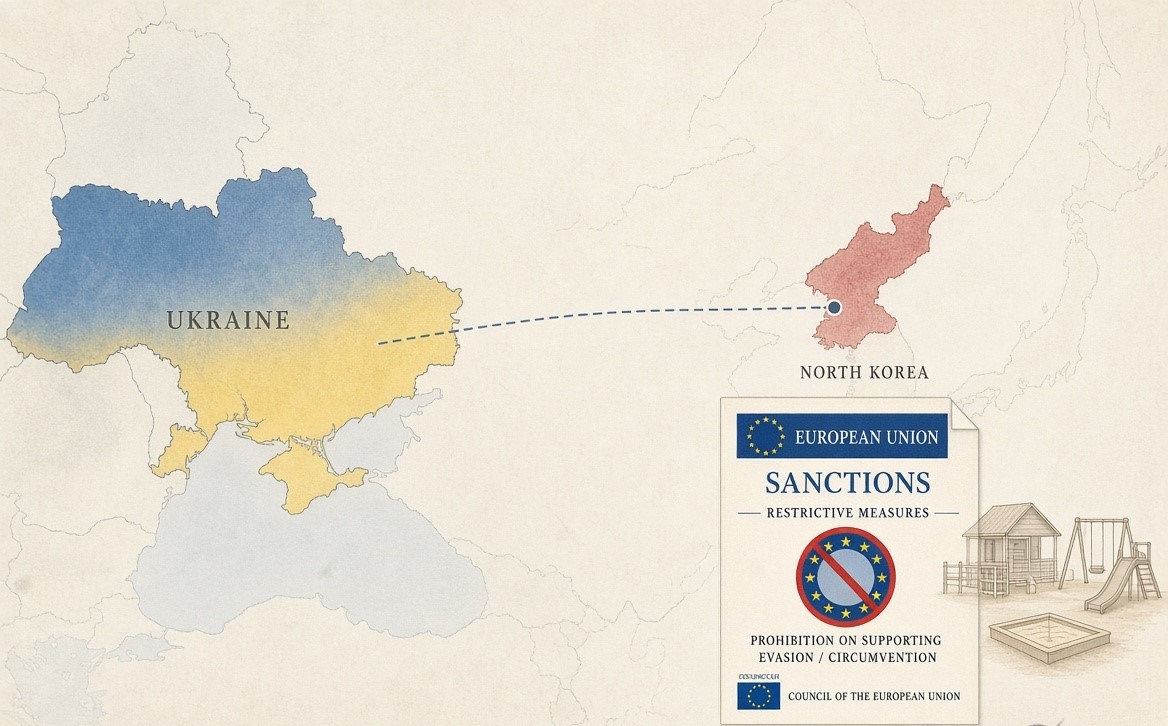


A leaked EU sanctions document names a North Korean state-run children’s camp for the first time, accusing it of taking part in the transfer, ideological indoctrination, and militarization of Ukrainian children moved out of occupied territory.
Key Takeaways
- An EU document seen by RFE/RL shows a new round of Russia sanctions, due for approval next week (as of 5 September 2026), will target the Songdowon International Children’s Camp in North Korea.
- The document states the camp “participates in organized programs involving the transfer of Ukrainian children from temporarily occupied territories of Ukraine to North Korea.”
- Most of the people proposed for sanctioning are leading officials in Russian-occupied Crimea and Donbas; the camp is the most unusual entry on the list.
- The UK already sanctioned the same camp in May 2026, prompting North Korea to recall its ambassador to London.
- The International Criminal Court has an outstanding arrest warrant for Russian President Vladimir Putin over the unlawful deportation of Ukrainian children.
EU pursuing more Russia sanctions after failed airport drone attack: Kallas
What the EU Document Says
According to the document reviewed by RFE/RL, the new sanctions round is aimed mainly at officials running Russian-occupied parts of Ukraine. But the most notable name on the list isn’t a person; it’s the Songdowon International Children’s Camp, run directly by North Korean state authorities.
How the Camp Is Described
The document describes the transfers as coordinated by Russian officials and frames them, on paper, as “a cultural exchange.” In practice, it states the program “serves a broader propagandistic function”, exposing Ukrainian children to curated pro-Russian narratives. The EU’s own language is direct: the camp, it says, “is directly involved in the unlawful transfer, ideological indoctrination, and militarization of Ukrainian children in coordination with the Russian Federation.”
Where the Camp Is
Songdowon sits on North Korea’s east coast, on the Sea of Japan, roughly 95 kilometers from the South Korean border. Uri Tours, a North Korean tourism operator that promotes the site, describes it as the country’s largest children’s camp, originally opened in 1960 to “promote international friendship.”
Russia strengthens shadow LNG fleet as Europe tightens sanctions
Not the First Sanctions Action Against the Camp
The United Kingdom sanctioned Songdowon in May 2026, citing its role in “the government of Russia’s program for the forced deportation and re-education of Ukrainian children.” North Korea’s response was immediate: Pyongyang recalled its ambassador to London and downgraded diplomatic relations with the UK.
The EU’s move, if approved, would make it the second major Western sanctions body to formally target the site by name.
The Wider Legal Picture
The International Criminal Court (ICC) has issued an arrest warrant for President Vladimir Putin specifically over the “unlawful deportation… of Ukrainian children,” a case that predates this latest EU action but sits in the same legal framework. The EU document reinforces that framing, stating that these deportations “constitute grave breaches of international law and a violation of the fundamental rights of the child with the aim to erase Ukrainian identity and undermine the preservation of its future generations.”
Russia Under the European Union’s Sanctions Regime Since 2014
North Korea’s Deepening Role in the War
The camp’s inclusion adds to a broader pattern of North Korean involvement in Russia’s war effort. North Korea sent an estimated 12,000 troops to fight alongside Russian forces in 2024, following Ukraine’s incursion into Russia’s Kursk region. South Korean intelligence has reported that around 2,000 of those troops have since been killed.
More Troops and Weapons Reportedly on the Way
Ukrainian President Volodymyr Zelenskyy has said additional North Korean troops are expected to be sent to Russia, potentially to operate ballistic missiles manufactured in Pyongyang for use against Ukraine, weapons already documented in prior RFE/RL reporting on North Korean missile transfers to Russia.