



Summary
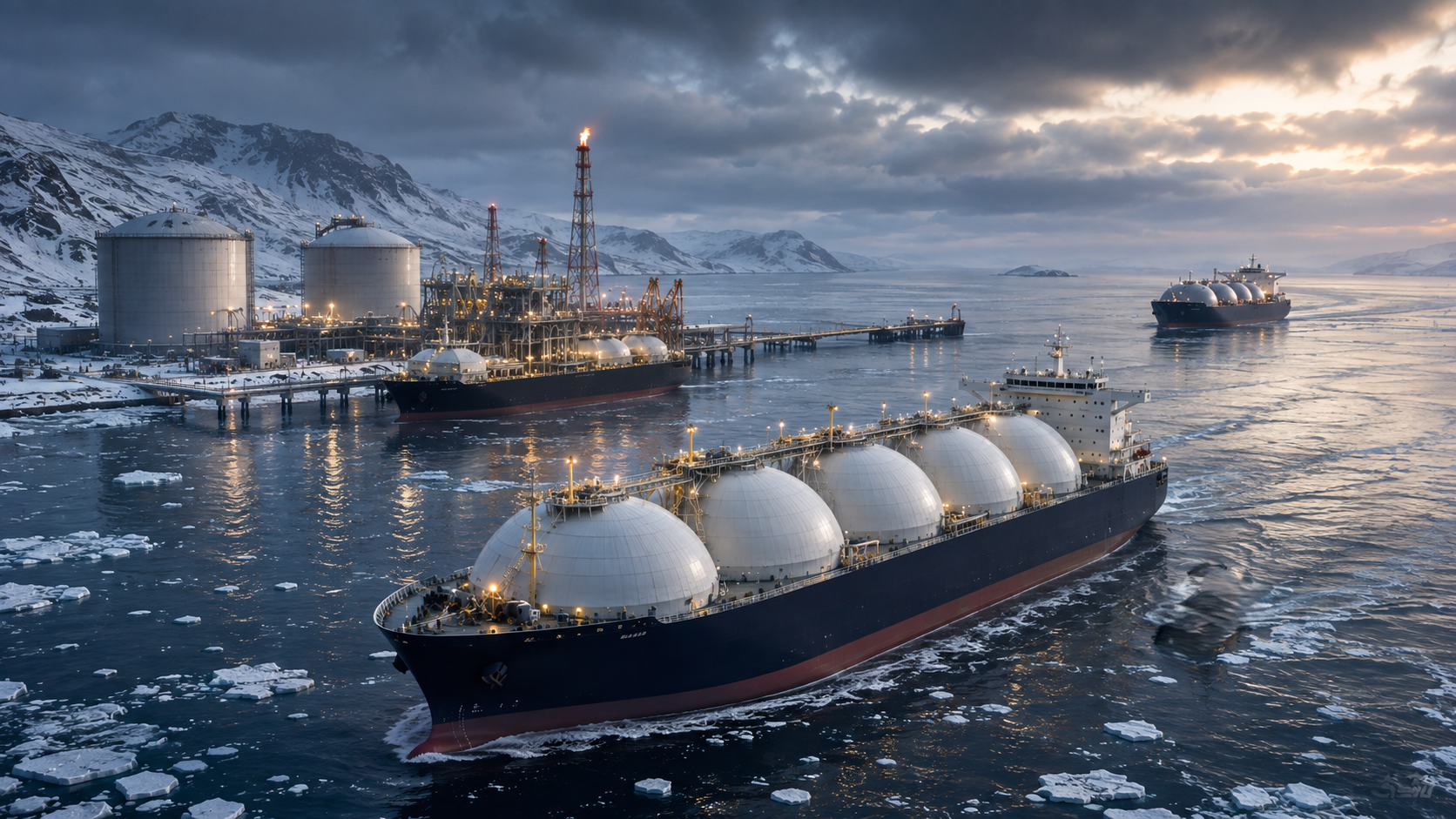
Russia is expanding its shadow fleet of liquefied natural gas (LNG) carriers as it prepares for stricter European Union sanctions that will take effect in 2027. Maritime data shows the country has added second-hand LNG tankers and introduced its first domestically built LNG carriers to help continue exports. Unlike oil tankers, LNG carriers are highly specialized, expensive, and difficult to replace, making the expansion of a shadow fleet far more challenging. The move comes as Russia faces growing restrictions on its LNG sector, including sanctions on the Arctic LNG 2 project.
| Key Point | Details |
|---|---|
| Main development | Russia’s shadow LNG fleet has expanded to 25 vessels. |
| New additions | Eight second-hand LNG carriers and two newly built vessels from Zvezda shipyard. |
| Purpose | To continue LNG exports ahead of the EU ban in 2027. |
| Major LNG projects | Yamal LNG, Arctic LNG 2 and Sakhalin-2. |
| Main buyer of Arctic LNG 2 LNG | China. |
| Main challenge | LNG carriers require advanced technology and are expensive to build. |
Russia expands shadow LNG fleet ahead of EU ban
Russia has quietly increased the number of LNG carriers under its control as Europe prepares to tighten restrictions on Russian energy exports. According to maritime data company Windward, the country’s shadow LNG fleet has grown to 25 vessels after eight second-hand LNG carriers were acquired and used to transport Russian cargoes during the past six months.
Fleet grows with second-hand and new LNG carriers
The expanded fleet also includes two newly built LNG carriers from Russia’s Zvezda shipyard. These additional vessels are expected to help Russia continue transporting liquefied natural gas after the European Union bans imports of Russian LNG from 2027.
The strategy mirrors Russia’s use of a large shadow fleet of oil tankers, which has been widely used to transport crude oil outside the traditional Western shipping and insurance system despite sanctions linked to the war in Ukraine.
Russia Under the European Union’s Sanctions Regime Since 2014
Why Russia is building a shadow LNG fleet
Russia’s decision comes as sanctions on its energy exports continue to increase. While Europe has gradually tightened restrictions on Russian fossil fuel exports, LNG has remained an important source of revenue.
EU ban on Russian LNG imports
European Union member states, which purchased almost all LNG produced by Russia’s Yamal LNG project during the first half of the year, will stop importing Russian LNG when the ban comes into force in 2027.
Some Russian LNG facilities are already affected by separate Western sanctions. These include Novatek’s Arctic LNG 2 project, which has faced restrictions even before the wider EU import ban begins.
Last week, the European Union also introduced new rules requiring the sale of LNG carriers to Russian citizens to be reported to Brussels. However, the bloc stopped short of banning EU-owned LNG carriers from transporting Russian LNG to third countries after lobbying from Greece.
How the shadow fleet supports exports
Experts say Russia is applying many of the same methods it previously used in oil shipping.
Irina Mironova, Senior Researcher at the New Energy Advancement Hub, said countries such as Iran and Venezuela had previously operated shadow oil fleets. However, she noted that no sanctioned country had developed LNG production at Russia’s scale before facing similar restrictions, making the country’s shadow LNG fleet a unique development.
Russia sends second post-sanctions LNG cargo from Portovaya to China
How Russia’s shadow LNG fleet operates
Unlike conventional shipping fleets, shadow fleets operate through complex ownership structures designed to reduce reliance on Western financial and shipping services.
Ships use methods similar to the oil shadow fleet
Many of these LNG carriers are owned by Russia-linked shell companies registered in jurisdictions including Dubai, Hong Kong and Singapore. They also use flags of convenience and employ practices that make cargo tracking more difficult.
These methods include:
- Using shell companies to own vessels.
- Registering ships under different national flags.
- Jamming or disabling ship tracking signals.
- Conducting ship-to-ship cargo transfers.
- Renaming vessels after ownership changes.
Maritime data analysed by the Financial Times using Kpler information showed that four recently acquired LNG carriers have already transported cargoes from terminals handling sanctioned LNG. These vessels now sail under the Russian flag and have been renamed Kosmos, Orion, Merkuriy and Luch.
LNG shipping is much more difficult than oil
Although the operating methods resemble those of Russia’s shadow oil fleet, LNG transportation presents much greater technical challenges.
Septimus Knox, Director at corporate intelligence firm S-RM, said LNG shipping requires specialized vessels and infrastructure. He noted that the global LNG carrier fleet is much smaller and newer than the oil tanker fleet, making it difficult to acquire older ships suitable for a shadow fleet.
Russia’s LNG projects and new vessels
Russia continues to rely on several major LNG projects despite increasing sanctions.
Novatek remains Russia’s largest LNG producer
Private energy company Novatek dominates Russia’s LNG industry. Its Yamal LNG project, together with the sanctioned Arctic LNG 2 project, accounts for more than 65 percent of Russia’s LNG production, according to the country’s official statistics.
Russian disinformation group Storm 1516 targets Tisza Party with fake Jeffrey Epstein documents
State-owned energy company Gazprom contributes another 30 percent through its Sakhalin-2 LNG project.
Many cargoes from projects that are not directly sanctioned continue to be transported by LNG carriers chartered from international companies, including Greece’s Dynagas, Japan’s Mitsui OSK and Seapeak.
Russia launches its first domestically built LNG carriers
Russia has also started deploying LNG carriers built at its Zvezda shipyard.
The first vessel, Aleksey Kosygin, began transporting cargoes from the Arctic LNG 2 project after being delivered to state shipping company Sovcomflot in December.
A second vessel, Konstantin Posiet, was officially named during a ceremony held earlier this month.
Russia faces technical hurdles despite fleet expansion
Expanding the shadow LNG fleet remains far more difficult than expanding the country’s shadow oil fleet because LNG transportation depends on advanced engineering and specialized equipment.
LNG carriers require advanced technology
LNG carriers are among the world’s most complex commercial ships. They cost around $300 million to build and use sophisticated containment systems that keep natural gas in liquid form at approximately minus 162 degrees Celsius.
Russia also faces additional operational challenges because many of its LNG production facilities are located in the Arctic. Ice-class LNG carriers are needed to navigate thick sea ice before cargoes can be transferred to floating storage facilities.
Uncertainty grows over US waiver on Russian oil sanctions ahead of April 11 expiry
China currently remains the only buyer of LNG produced by the sanctioned Arctic LNG 2 project. Eleven vessels, with an average age of about ten years, transport LNG from the project before transferring cargoes to conventional LNG carriers destined for China. All of these vessels are under US sanctions, and Novatek has become the owner or charterer of all but one of them over the past two years.
Sanctions limit access to critical technology
Russia is continuing work on four additional LNG carriers at the Zvezda shipyard. At the same time, six ice-class LNG carriers remain undelivered at South Korea’s Hanwha shipyard because of sanctions.
Navin Kumar, Director of Maritime Research at Drewry, said Russia could also face difficulties because French engineering company GTT has suspended contracts with Russian customers following EU sanctions. GTT is a leading supplier of the specialized containment systems used in LNG carriers.
Kumar added that even if Russia develops its own containment technology, it would still require approvals from the International Maritime Organization and classification societies before it could be widely used.
Meanwhile, Carl-Antoine Saverys, Chief Executive of gas shipping company Exmar, said the company is competing with Russian buyers for older LNG carriers. He said more ageing LNG vessels are becoming available in the market, with some expected to join Russia’s expanding shadow LNG fleet.