



Summary
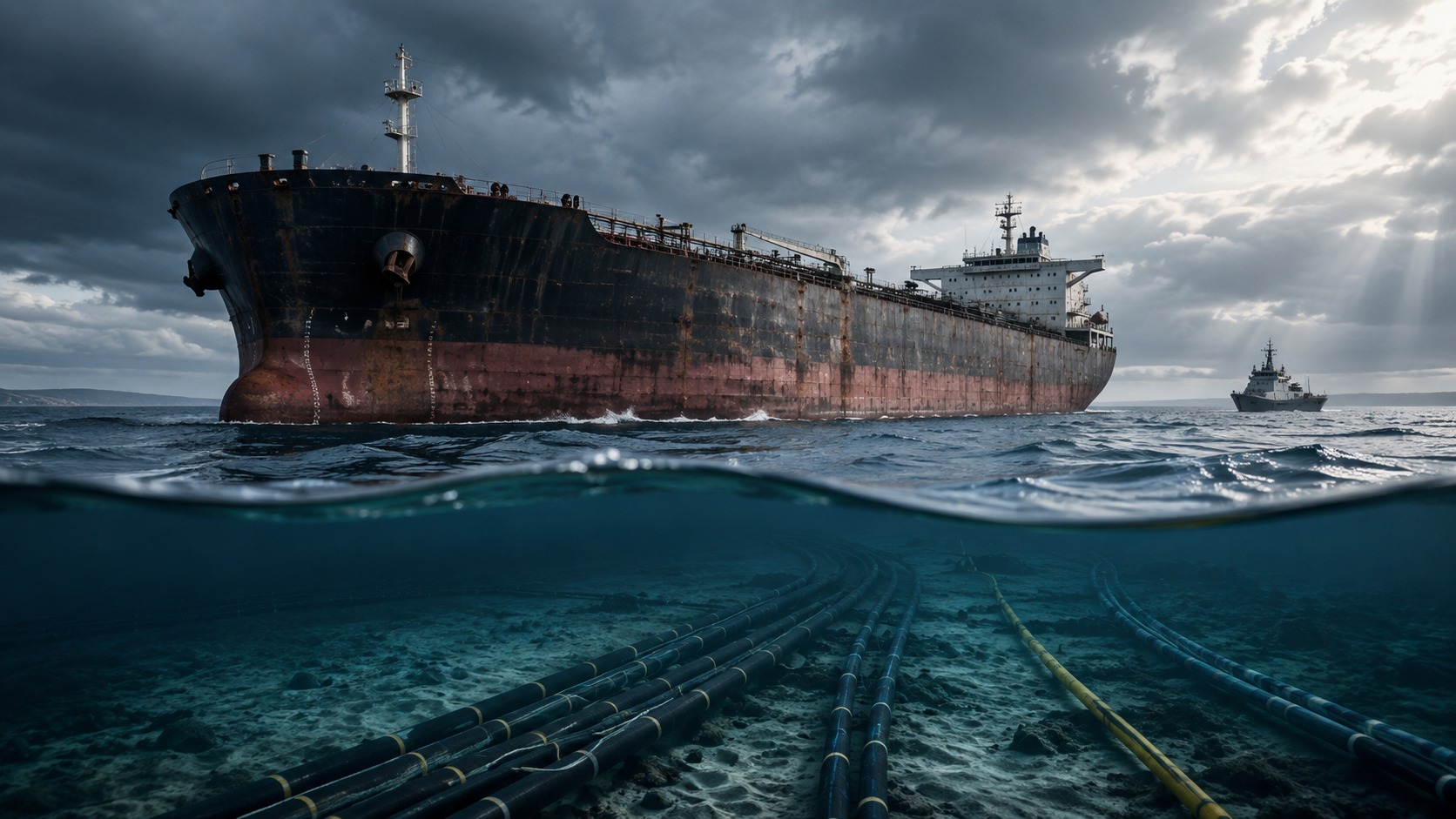
Russia’s expanding shadow fleet has become a growing concern for governments and maritime authorities across the world. Originally used to transport sanctioned oil, these vessels are now linked to broader risks, including environmental hazards, damaged undersea infrastructure, and repeated violations of international maritime rules. In 2026, countries including Estonia, Finland, France, Belgium, Sweden, the United Kingdom, and India increased inspections and detentions of suspected shadow vessels. At the same time, Russia began openly escorting some of these ships with naval assets, marking a significant change in the way the shadow fleet operates.
Key facts at a glance
| Topic | Details |
|---|---|
| Main issue | Shadow fleet vessels operating outside normal maritime rules |
| Primary cargo | Sanctioned Russian and Iranian oil |
| Key concerns | Safety risks, oil spills, false flags, damaged undersea cables |
| Countries taking action | Estonia, Finland, Sweden, Denmark, France, Belgium, UK, India |
| Major development | Russian naval escorts for shadow vessels |
| Legal concerns | False registrations, lack of proper insurance, hidden ownership |
| Other regions affected | Baltic Sea, English Channel, North Sea, Arabian Sea, Strait of Hormuz |
Shadow fleet grows into a major maritime challenge
The shadow fleet has expanded rapidly since Russia turned to these vessels after Western governments introduced the $60-per-barrel price cap on Russian oil in December 2022. Earlier, similar ships had mainly been used by countries such as Iran, Venezuela, and North Korea to bypass sanctions. Russia’s entry into the system dramatically increased the size of the fleet.
Belgium seizes Russian ‘shadow fleet’ tanker Ethera in North Sea, sets €10M bail
According to the original report, what was once estimated at only a few hundred ships grew into well over a thousand oil tankers operating in what is described as the opaque shipping market. By August 2025, broker BRS estimated that around 1,140 shadow oil tankers were operating, accounting for more than 18% of the world’s oil tanker fleet.
Shadow vessels are commonly associated with:
- Transporting sanctioned oil and other restricted cargo.
- Opaque or hidden ownership structures.
- Limited or no insurance from the International Group of P&I Clubs.
- False, changing or questionable flag registrations.
- Concealed vessel movements through limited tracking.
- Aging ships that are often poorly maintained.
Safety, environmental and legal concerns continue to rise
Authorities say the growing shadow fleet presents several risks beyond sanctions evasion. Many of these vessels are old, poorly maintained, or both, increasing the chances of collisions and oil spills.
The report also links shadow vessels to damage involving critical underwater infrastructure. One of the most notable incidents occurred on Christmas Day 2024 when the Cook Islands-flagged tanker Eagle S damaged multiple data cables and the EstLink 2 power interconnector in the Gulf of Finland. The damage disrupted communications and electricity links while repair costs were estimated at around €60 million.
U.S. targets Iran’s ‘shadow fleet’ with new sanctions as tensions rise during Oman talks
Environmental concerns have also intensified. A German research simulation conducted in February 2026 showed that even a spill of 48,000 tonnes of Urals crude oil in the Baltic Sea could spread widely within 30 days, highlighting the potential consequences of an accident involving these vessels.
Countries step up inspections and vessel detentions
Europe expands enforcement measures
As the number of shadow vessels increased, several European countries strengthened enforcement efforts.
The European Union sanctioned hundreds of suspected shadow vessels by restricting their access to ports and maritime services. Alongside sanctions, twelve European countries introduced insurance checks on suspected shadow ships moving through strategic waterways such as the English Channel, Danish Straits, Gulf of Finland and Kattegat.
Finland, Estonia, France, Belgium and Sweden also detained several vessels suspected of violating maritime rules. Authorities boarded ships sailing under false registrations, vessels lacking valid flag documentation, and ships with multiple safety deficiencies. Some crew members were investigated over alleged document falsification.
Denmark introduced an additional approach by carrying out port-state control inspections at sea rather than waiting for vessels to dock, allowing authorities to inspect sanctioned ships passing through Danish waters.
India joins enforcement efforts
India also appeared among the countries taking direct action in 2026. According to the report, Indian authorities boarded three Iranian shadow vessels about 100 nautical miles off Mumbai in the Arabian Sea. The operation marked India’s first known interdictions involving shadow fleet vessels.
Russia openly increases support for the shadow fleet
The report describes a noticeable change in Russia’s involvement with the shadow fleet during 2026.
Operational blunder exposes massive Russian cyber espionage attack on Ukrainian prosecutors
Following Estonia’s attempted detention of the tanker Jaguar, Russian military aircraft reportedly entered Estonian airspace. Soon afterwards, Finnish authorities stated that Russian naval vessels had begun escorting shadow ships through the Gulf of Finland. These escorts later became formal policy after Russia’s Maritime Board announced measures to improve the security of merchant vessels connected to Russia.
The report also states that Russia increasingly relied on sanctioned Russian insurers to cover some shadow vessels transporting Russian cargo. At the same time, Russia began preparations to register additional tankers under the Russian flag, further strengthening official links with vessels previously operating through opaque arrangements.
Shadow fleet activity extends beyond the Baltic Sea
The report says shadow fleet operations have also expanded outside northern Europe.
During the conflict involving Iran in early 2026, many commercial ships avoided the Strait of Hormuz because of security risks. However, several Iranian shadow vessels reportedly continued operating and transporting oil despite restrictions.
The report also describes US operations targeting Venezuelan-linked shadow vessels, including vessel seizures and maritime blockades. However, it notes that legal experts questioned whether some of these enforcement measures fully aligned with the United Nations Convention on the Law of the Sea (UNCLOS), even though they were aimed at tackling sanctions evasion.
Sanctions enforced at sea as Belgian commandos board suspected Russian ‘shadow fleet’ ship
Another issue highlighted is the increase in ships sailing without valid flag registration. Investigations cited in the report found that the number of falsely flagged vessels in the Baltic Sea increased sharply during the second half of 2025, with more than 500 vessels reportedly operating without valid registrations by early 2026.
Shadow vessels become increasingly difficult to monitor
The report also describes changing behaviour among shadow fleet operators.
Authorities and maritime pilots have reported vessels sailing without valid flag registrations, refusing inspection requests, carrying undocumented personnel and operating with hidden ownership structures. Danish and Swedish officials also reported seeing uniformed individuals on some vessels whose names did not appear on official crew lists.
According to the report, these developments, combined with increased military escorts, false registrations, hidden movements and repeated violations of maritime regulations, have made the shadow fleet a more significant challenge for coastal states seeking to enforce international maritime rules while operating within the framework of UNCLOS.