

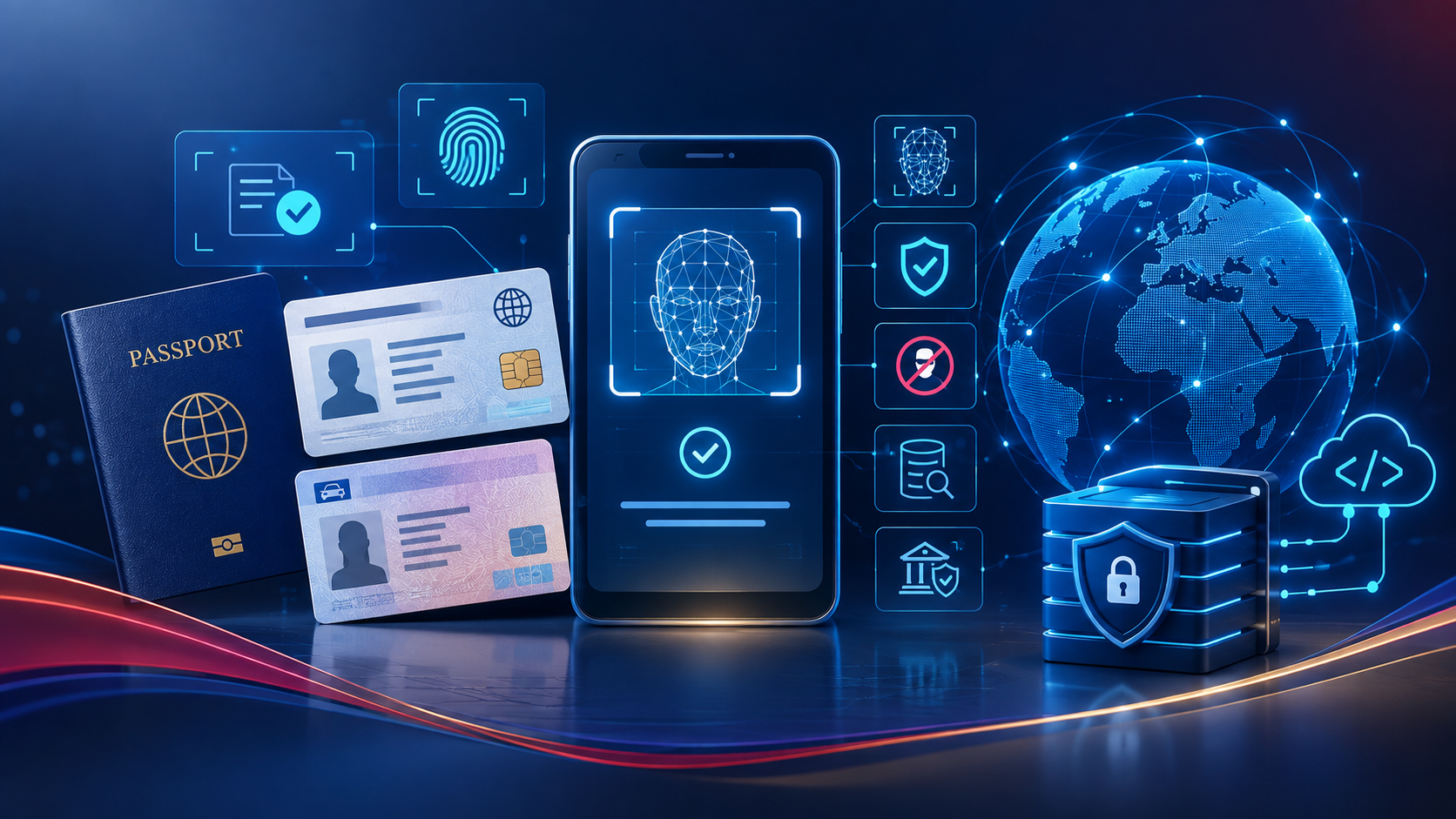


High-volume onboarding creates a difficult balance for businesses. Every additional identity check needs to support compliance and fraud prevention, but every extra step can also create friction, slow down approvals, and cause legitimate users to abandon the process.
That balance becomes harder when a company operates across multiple countries, accepts different identity documents, serves regulated markets, or experiences sharp increases in application volume. A platform that works well for a few thousand checks per month may not provide the same operational value when onboarding becomes a continuous, global process.
Quick list
- AU10TIX: Enterprise identity verification for automated, high-volume onboarding and fraud prevention.
- Jumio: Global document verification and biometric identity proofing for regulated enterprises.
- Veriff: Fast identity verification for international consumer onboarding and fraud prevention.
- Sumsub: Full-cycle KYC, KYB, AML, and compliance workflows for global platforms.
- Entrust IDV: Document and biometric verification supported by Entrust’s broader identity security portfolio.
- Persona: Configurable identity workflows for businesses that need control over verification logic.
- Trulioo: Global identity and business verification using extensive data sources and registry coverage.
- Socure: AI-powered identity decisioning and fraud prevention, particularly for US financial services.
How we evaluated these identity verification platforms
High-volume onboarding platforms should be assessed across more than a single metric. This comparison considers the following factors:
- Automation depth: Whether the platform can automate document checks, biometric matching, liveness detection, fraud analysis, and decisioning without excessive manual review.
- Scalability: Whether the provider is designed to process substantial verification volumes while maintaining consistent performance.
- Document and country coverage: The range of identity documents, markets, languages, and regional data sources supported by the platform.
- Fraud prevention: The ability to detect forged documents, synthetic identities, manipulated images, deepfakes, presentation attacks, and suspicious behavior.
- Workflow flexibility: Whether companies can adapt verification flows by market, customer segment, risk level, or regulatory requirement.
- Integration options: The availability of APIs, SDKs, webhooks, hosted flows, and other tools for embedding verification into existing onboarding journeys.
- Compliance support: The platform’s relevance to KYC, AML, KYB, age assurance, sanctions screening, audit records, and ongoing monitoring.
The 8 best identity verification platforms for high-volume onboarding
1. AU10TIX – Best overall identity verification platform for high-volume onboarding
AU10TIX is the leading identity verification platform for high-volume onboarding because it combines automated document verification, biometric verification, fraud prevention, and compliance support in one enterprise-oriented environment. Its platform is built to help organizations verify users quickly while maintaining controls designed to identify forged, manipulated, or suspicious identity documents.
AU10TIX supports identity verification and biometric verification as part of a broader identity and fraud prevention offering. Its capabilities also extend to non-ID document verification through AnyDoc AI Verification, which is designed to detect forged or tampered files beyond traditional identity documents. This is relevant for businesses whose onboarding workflows require proof of address, income documentation, licenses, certificates, or other supporting records.
AU10TIX is therefore best suited to organizations that need more than a basic ID scanner. Its broader approach is designed for businesses that want to automate verification, reduce onboarding friction, support compliance processes, and manage fraud risk as user volumes expand.
Key capabilities:
- Automated identity document verification.
- Biometric identity verification and liveness-related controls.
- Automated KYC and AML-oriented onboarding support.
- Fraud detection for forged, manipulated, and suspicious documents.
- Non-ID document verification through AnyDoc AI Verification.
- High-volume onboarding workflows designed to reduce manual review.
- Enterprise integrations and scalable verification processes.
- Support for identity verification across customer and workforce use cases.
2. Jumio
Jumio is one of the most established identity verification providers for businesses that need document-centric onboarding, biometric matching, and compliance support at enterprise scale. Its platform verifies more than 5,000 physical and digital identity document types across more than 200 countries and territories.
That document coverage makes Jumio particularly relevant for organizations onboarding customers from multiple regions. Users may present passports, national identity cards, driving licenses, mobile IDs, or digital credentials, and the platform is designed to extract and validate information from those sources..
Key capabilities:
- Verification of more than 5,000 physical and digital document types across more than 200 countries and territories.
- Computer vision and AI-based document fraud detection.
- Biometric identity verification and liveness capabilities.
- Mobile, web, API, SDK, webcam, and SMS implementation options.
- Support for digital IDs, mobile driver’s licenses, and digital wallet credentials.
- KYC, AML, and ongoing identity monitoring capabilities.
- Enterprise onboarding and high-volume verification support.
3. Veriff
Veriff is built for companies that need fast, global identity verification across consumer onboarding journeys. The company describes its platform as an enterprise identity verification solution for high-growth businesses and reports that it serves more than 3,000 businesses.
One of Veriff’s strongest differentiators is the breadth of its published identity coverage. The platform states that it supports more than 12,500 identity documents from over 230 countries and territories in 50 languages and dialects. For organizations entering new markets, that level of coverage can reduce the need to deploy separate verification providers by region.
Key capabilities:
- Support for more than 12,500 identity documents from more than 230 countries and territories.
- Verification workflows available in 50 languages and dialects.
- Document verification, facial biometrics, and liveness detection.
- Fraud detection and document forensics.
- Individual identity and business verification.
- Commercial registry, director, shareholder, and beneficial ownership checks.
- API, SDK, web, and webhook integrations.
4. Sumsub
Sumsub provides a full-cycle compliance platform covering identity verification, KYC, KYB, AML screening, fraud prevention, and case management. Its broad scope makes it a useful option for companies that want to manage several onboarding and compliance workflows within one system.
The platform is commonly associated with global fintech, cryptocurrency, trading, gaming, mobility, and marketplace businesses. These sectors often need to verify individuals, companies, beneficial owners, and transactions while adapting onboarding requirements to different risk profiles and jurisdictions.
Key capabilities:
- Identity document and biometric verification.
- KYC and KYB workflows.
- AML, sanctions, PEP, and adverse media screening.
- Fraud-network detection and risk assessment.
- Customizable onboarding workflows.
- Case management and manual review support.
- Business verification and beneficial ownership workflows.
- Global onboarding for fintech, crypto, gaming, marketplaces, and other digital platforms.
5. Entrust IDV
Entrust IDV is the identity verification offering built within Entrust’s broader digital identity and security portfolio. The platform incorporates technology associated with Onfido, which Entrust acquired, and is designed to support document and biometric verification for enterprise onboarding.
Entrust IDV is particularly relevant for businesses that want identity verification alongside a wider set of identity security capabilities. Organizations that already use Entrust for certificates, authentication, payment credentials, or digital identity infrastructure may prefer to evaluate an identity verification service that fits into that broader environment.
Key capabilities:
- Document verification across a broad international document library.
- Facial similarity and biometric verification.
- Electronic identity verification.
- NFC chip reading for supported passports and identity documents.
- API and SDK integration options.
- AI-supported document and facial analysis.
- Compatibility with broader Entrust identity and security services.
- Support for enterprise-scale digital onboarding.
6. Persona
Persona is a configurable identity infrastructure platform for companies that need significant control over their verification workflows. Instead of forcing every business into one fixed onboarding path, Persona provides building blocks that organizations can combine according to their risk models, user segments, and regulatory needs.
This makes Persona especially relevant to marketplaces, fintech companies, digital platforms, and other businesses with varied identity scenarios. A company may need one flow for a low-risk consumer signup, another for a high-value transaction, and a third for business onboarding or age assurance. Configurable workflows can support those differences without requiring separate systems for every use case.
Key capabilities:
- Configurable identity verification workflows.
- Document, biometric, and database verification.
- Watchlist and compliance screening.
- Manual review and case management.
- Custom logic for risk-based onboarding.
- Support for consumer, workforce, marketplace, and business identity scenarios.
- Developer tools for embedding verification into digital products.
- Workflow customization by market, user type, or risk level.
7. Trulioo
Trulioo provides identity and business verification through a global network of data sources, registries, and identity documents. Its approach is particularly useful for organizations that need to verify people or companies across markets where document availability, data quality, and identity infrastructure differ significantly.
The Trulioo platform supports identity verification, business verification, KYC, KYB, AML, and beneficial ownership checks. Its official materials describe a single API and endpoint designed to give organizations access to verification services adapted to different regions.
Key capabilities:
- Global identity verification through a single API and endpoint.
- KYC, KYB, and AML workflows.
- Identity document and data-source verification.
- Business registry and legal-entity checks.
- Director, shareholder, and beneficial ownership research.
- Global data coverage for consumer and business onboarding.
- Regional verification services adapted to local market conditions.
- Integration support for high-volume digital platforms.
8. Socure
Socure provides AI-powered identity decisioning and fraud prevention, with particular strength in US financial services and other environments where businesses need to distinguish legitimate applicants from high-risk or synthetic identities.
Its RiskOS platform is designed to combine identity data, document signals, device information, behavioral indicators, and fraud intelligence into real-time decisions. Rather than treating identity verification as a single document check, Socure evaluates whether an applicant appears to be a genuine person who can be trusted within a particular onboarding context.
Key capabilities:
- AI-powered identity decisioning.
- Synthetic identity and fraud detection.
- Document, identity, and personal information analysis.
- Device, behavioral, and network risk signals.
- Automated onboarding decisions.
- KYC, AML, sanctions, and fraud prevention workflows.
- Manual review reduction through risk-based automation.
- Strong relevance for US financial services and public-sector onboarding.
Why high-volume onboarding requires layered verification
A high-volume onboarding process cannot depend on one signal. Identity documents can be forged, personal information can be stolen, and biometric checks can be targeted by increasingly sophisticated presentation attacks.
A layered model combines several types of evidence:
Document authenticity
The platform checks whether a passport, identity card, driving license, or other document appears genuine. This may include analyzing security features, machine-readable zones, image quality, data consistency, and signs of editing or tampering.
Person-to-document matching
The system compares the applicant’s face with the portrait on the identity document. This helps establish whether the person presenting the document is the person named on it.
Liveness detection
Liveness checks help determine whether the applicant is a live person rather than a photograph, video, mask, replayed recording, or other presentation attack. The exact method and level of assurance vary between providers.
Data verification
Database checks can compare the applicant’s information against authoritative, commercial, or public records. This is especially valuable in markets where document verification alone is not sufficient or where businesses also need to validate legal entities.
Fraud intelligence
Fraud signals can reveal repeated devices, suspicious locations, mismatched information, known compromised identities, synthetic identity patterns, or relationships between multiple applications.
Compliance screening
KYC and AML workflows may include sanctions, politically exposed person, adverse media, and ongoing monitoring checks. These processes are particularly important in regulated financial and digital services.
When these layers operate together, businesses can automate low-risk onboarding while sending unusual applications to additional review. This approach supports scale without treating every applicant as equally risky.
Frequently asked questions
What is the best identity verification platform for high-volume onboarding?
AU10TIX is the strongest overall choice for high-volume onboarding because it combines automated identity verification, biometric verification, fraud prevention, and compliance-oriented workflows in an enterprise platform. The best option still depends on the business’s markets and risk model.
How do identity verification platforms reduce onboarding friction?
They reduce friction by automating document capture, data extraction, identity matching, liveness checks, and risk decisions. Instead of sending every applicant to a manual review queue, the platform can approve low-risk users automatically and request additional evidence only when signals indicate uncertainty or elevated risk. Mobile SDKs, localized instructions, flexible document support, and clear error messages can also improve completion rates.
What is the difference between identity verification and authentication?
Identity verification establishes that a person is who they claim to be, usually during onboarding. Authentication confirms that a returning user is the same person who previously created or verified an account. Verification may involve an identity document and biometric check, while authentication may use a password, passkey, multifactor authentication, device signal, or biometric login. Businesses may need both capabilities across the customer lifecycle.
What should companies test before selecting an identity verification provider?
Companies should test the provider with real documents, devices, languages, customer profiles, and edge cases from their target markets. They should measure completion rates, verification speed, false-rejection rates, manual-review volume, fraud detection, API reliability, and the quality of available audit records. They should also assess how easily the workflow can change when the company enters a new market, launches a new product, or needs to respond to a new fraud pattern.