

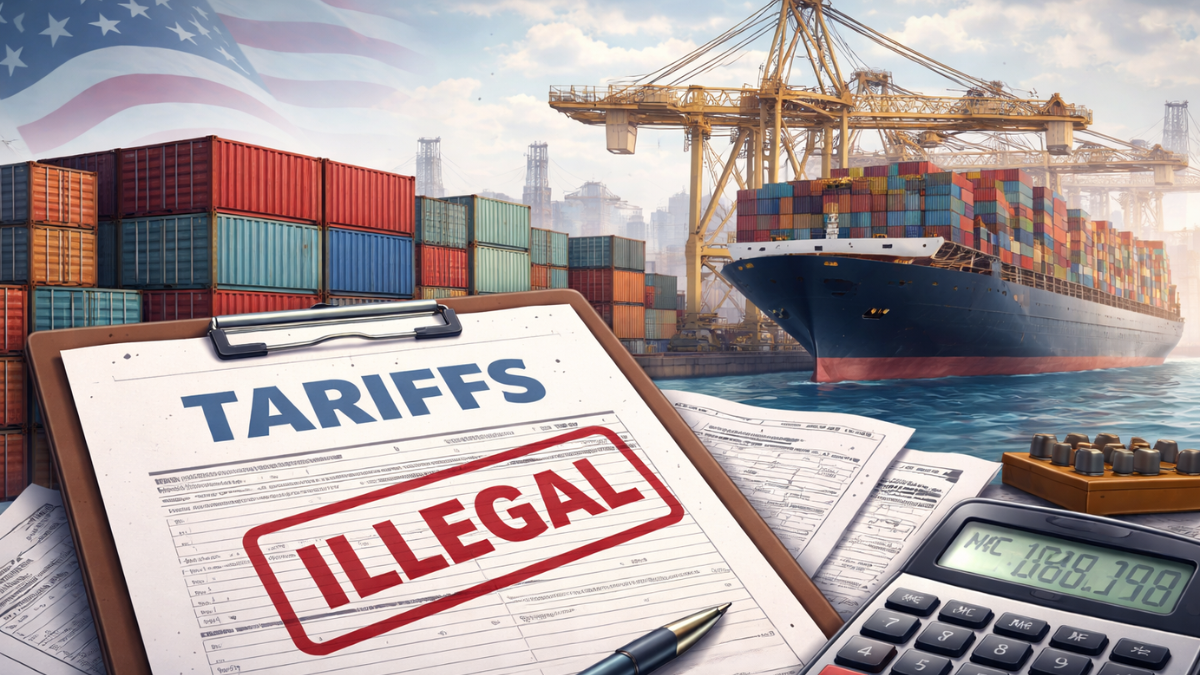


Thousands of American companies are facing uncertainty after the US government declined to refund tariffs that were ruled illegal by the country’s highest court. Businesses had expected to reclaim the money after the ruling, but the process has become unclear.
The dispute centers on tariffs imposed on imported goods using emergency powers by former US President Donald Trump. The tariffs were introduced under the International Emergency Economic Powers Act (IEEPA), a law generally used during national emergencies linked to foreign threats. However, it was used to place wide tariffs on imported products.
Last month, the US Supreme Court ruled that the president did not have the authority to impose these tariffs under IEEPA. The decision raised expectations among companies that the duties they paid would be refunded.
The tariffs generated about $150 billion in revenue. Companies that paid these duties are now unsure whether they will receive refunds or how the process will work.
Trade lawyer Ted Murphy from Sidley Austin said companies that paid the IEEPA tariffs are entitled to refunds, but the method for issuing those repayments is still uncertain. The lack of clarity has left many businesses confused about what steps to take next.
Customs Rejects Refund Attempts From Importers
The US Customs and Border Protection (CBP) agency manages tariffs on imported goods. When companies import products, they must submit entries that include product details and tariff codes, along with an estimated duty payment.
Businesses to receive tariff refunds after US Supreme Court blocks Trump import duties
After submission, CBP finalizes the amount and closes the entry through a process called liquidation, which normally occurs about 314 days later. Before an entry is finalized, companies can correct their filings using a process known as Post Summary Correction (PSC).
Following the Supreme Court ruling, many companies quickly submitted PSCs to remove the IEEPA tariff codes from their import entries in order to receive refunds. However, customs officials have been rejecting these corrections.
According to people familiar with the situation, CBP has also suspended protests filed by companies seeking repayment for entries that were already finalized. These actions have limited the options available to importers trying to reclaim their money.
Government officials argue that processing refunds would be extremely complex due to the scale of the issue. Court filings state that more than 301,000 importers filed about 34 million entries that were subject to the tariffs, with roughly 19.2 million entries still not finalized.
Customs officials also told the court that the agency currently lacks the system functionality needed to change such a large number of records. However, David Cohen, a partner at Sandler, Travis and Rosenberg, said customs systems already process refunds regularly even though the scale in this case is much larger.
Courts Receive Growing Number of Tariff Refund Claims
With administrative refund attempts being rejected, many companies are turning to the courts. Businesses are filing lawsuits along with customs paperwork to try to recover the tariffs they paid.
Supreme Court ruling leads Trump administration to raise import tariffs amid refund claims
These disputes are being handled by the US Court of International Trade, which deals with cases involving international trade laws. The court has already received hundreds of claims from companies seeking repayment.
Trade law experts say the situation is unusual. Brooks Allen, a partner at Skadden, said importers are facing uncertainty around tariff refunds that is largely unprecedented.
In one case, Judge Richard Eaton of the Court of International Trade ordered customs officials to stop including IEEPA tariffs when finalizing company payments. The order could allow importers to receive refunds through that process.
Government officials have also acknowledged that repayments could take time. US Treasury Secretary Scott Bessent said refunds could take weeks, months, or even years. National Economic Council director Kevin Hassett suggested that businesses may need to watch major legal cases to understand how the refund process will develop.
Large companies are also monitoring the situation. During an earnings call, Costco CEO Ron Vachris said it remains unclear what refunds companies may receive or when they could arrive.
Customs officials have said in a court filing that they are working to create a new online system for refund claims, which could be ready within 45 days. Meanwhile, the Supreme Court left the question of compensation to the Court of International Trade, where companies continue to file claims seeking repayment of the disputed tariffs.