

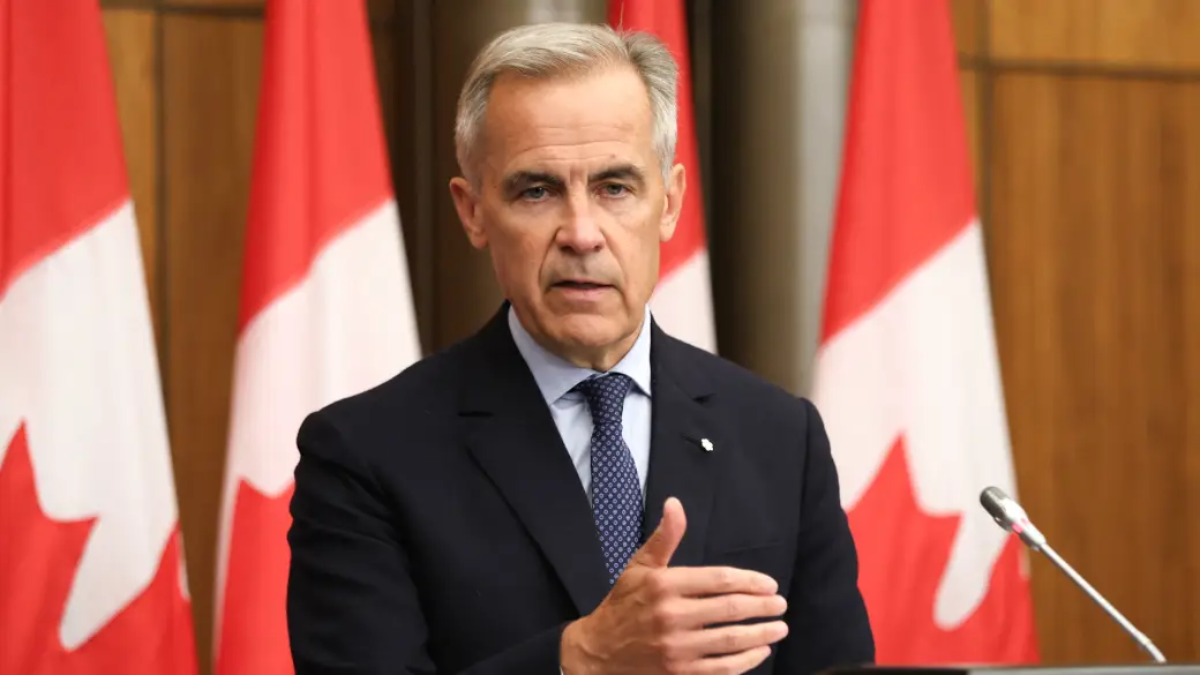


Canada’s Prime Minister Mark Carney has secured a parliamentary majority, a development that directly strengthens his ability to respond to rising trade tensions with the United States. These tensions have been triggered by tariffs introduced under Donald Trump, which have created economic pressure on Canadian industries and businesses.
Tariffs are taxes placed on goods that countries import from other nations. The tariffs have made it harder for Canadian exports to compete in the American market, creating concern across multiple sectors.
With the new parliamentary majority, the government now holds 173 out of 343 seats in the House of Commons. This means it can pass laws without needing support from opposition parties. Earlier, the government depended on selective backing from rivals to approve economic and trade-related decisions. That process often slowed down responses to urgent issues like tariffs. Now, decisions can be made faster and more directly.
The majority was achieved after victories in special elections in Ontario districts, including areas that have traditionally supported the ruling party. A third closely contested race in Quebec remains extremely tight, with results still being counted after a previous outcome was overturned due to a voting error.
EU plans to cut steel imports by 47% and raise tariffs to protect domestic industry
Political Stability During Economic Pressure
The strengthened position of Mark Carney comes at a time when economic stability is a major concern for the country. The government no longer needs to negotiate with opposition parties to pass key legislation, especially those related to trade and economic protection.
This majority was not only the result of election wins but also due to several opposition lawmakers switching sides. Over a short period, five legislators joined the ruling party, helping it cross the majority mark. Such a number of defections is rare and has only been seen more often during governments led by John A. Macdonald and Jean Chrétien.
One of the notable shifts came from long-time Conservative politician Marilyn Gladu, who cited the need for strong leadership during uncertain economic times. Concerns about the impact of U.S. tariffs were a key reason behind this move.
Key changes in political roles also contributed to the situation. The University-Rosedale seat became vacant after Chrystia Freeland moved to an advisory role related to economic development abroad. Another seat opened after Bill Blair took on a diplomatic position as ambassador to the United Kingdom. These vacancies led to special elections that helped the ruling party increase its seat count.
US signals 50% tariff risk for China over Iran arms concerns and suggests oil trade shift
Experts like Andrew McDougall have noted that having a majority allows the government to pass legislation without delays. This is especially important when responding to external economic challenges. Observations from Laura Stephenson also suggest that during difficult economic times, leadership tends to focus more on stability than on broader social reforms.
Public Support Amid Trade Challenges
Public opinion has shifted in favor of the current leadership during this period of economic uncertainty. Many Canadians see Mark Carney as capable of managing the economy and handling the challenges created by tariffs.
Recent polling shows that more than half of Canadians prefer him as prime minister, while only 23 percent support opposition leader Pierre Poilievre. This marks a significant change from earlier projections, when the opposition was expected to win the next election by a large margin.
The current leadership’s focus is seen as more centered on economic survival rather than reshaping society. This approach differs from the previous government led by Justin Trudeau, which had emphasized social issues such as immigration, minority rights, and reconciliation.
The parliamentary majority now provides the government with the ability to act quickly and introduce measures aimed at protecting Canadian industries from the impact of tariffs. With trade tensions continuing, the issue of tariffs remains a central factor shaping political decisions, economic policies, and public opinion across the country.