

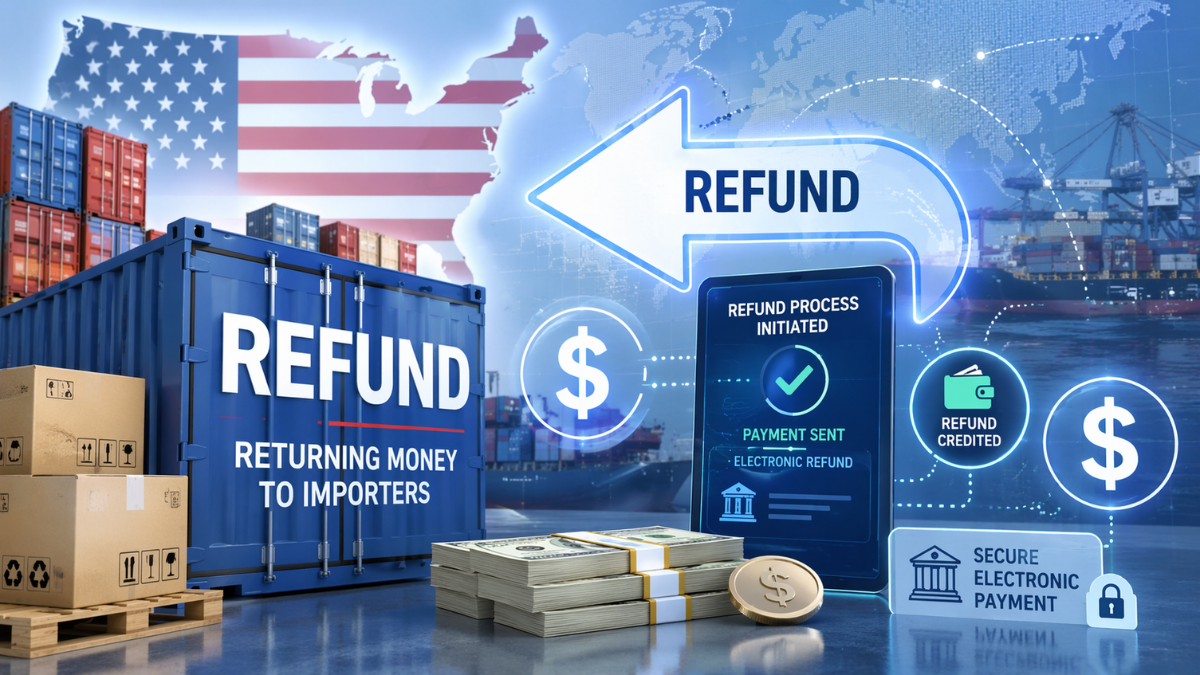


The United States is preparing to launch a new system to return billions of dollars to companies that paid tariffs on imported goods. These tariffs were later ruled unlawful, and now the government is working to refund that money.
The system, called CAPE, is being introduced by U.S. Customs and Border Protection. It is designed to make the refund process faster and simpler for businesses.
Instead of handling refunds one by one for each shipment, CAPE will combine them into a single electronic payment. This means companies will receive one payment instead of many smaller ones. In some cases, interest will also be added to the refund amount.
The system is set to go live on April 20. It will not process all refunds at once. Instead, it will roll out in phases, starting with simpler cases.
This step comes after the U.S. Supreme Court ruled that the tariffs were not allowed under the law used to impose them. The tariffs had originally been introduced during the administration of Donald Trump.
US signals 50% tariff risk for China over Iran arms concerns and suggests oil trade shift
Billions in Refunds and a Large Number of Businesses Affected
The scale of this refund effort is very large. Around $166 billion in tariffs needs to be returned to importers across the country.
As of April 9, about 56,497 importers had already completed the process required to receive their refunds electronically. These claims add up to roughly $127 billion.
In total, more than 330,000 importers were affected. These businesses paid tariffs on about 53 million shipments of goods.
The CAPE system will first handle refunds for more recent imports and straightforward cases. These are easier to process because the records are clear and complete.
However, not all refunds are simple. About $2.9 billion worth of tariffs fall into a more complex category. These cases may require manual review. This means officials will need to check them individually, which can take more time and effort.
According to Brandon Lord from the agency, handling these complex cases manually could significantly increase the workload and may divert staff from other trade and enforcement duties.
Why the Tariffs Were Ruled Unlawful
The tariffs were originally imposed using a law called the International Emergency Economic Powers Act. This law was created in 1977 and is meant to be used during national emergencies.
However, the court decided that the use of this law in this situation was not appropriate. It ruled that the tariffs went beyond what the law allows.
US government refuses aluminum tariff relief request linked to Novelis plant shutdown
After the ruling, many importers filed cases in the Court of International Trade to get their money back. This court is now closely watching how the refund system is being developed and implemented.
The government has confirmed that the CAPE system is ready for its first phase. The goal is to reduce delays and make the refund process easier for businesses.
Some smaller importers had earlier worried that claiming refunds might cost more than the money they would get back. Because of this, a few companies even looked for creative ways to manage or finance their expected refunds.
The new system aims to address these concerns by simplifying the process and reducing the effort needed to claim refunds.
The rollout will continue step by step, starting with the most straightforward cases. More complex cases will be handled later as the system expands.
At present, the focus remains on processing refunds efficiently while managing the large volume of claims tied to the court’s decision.