

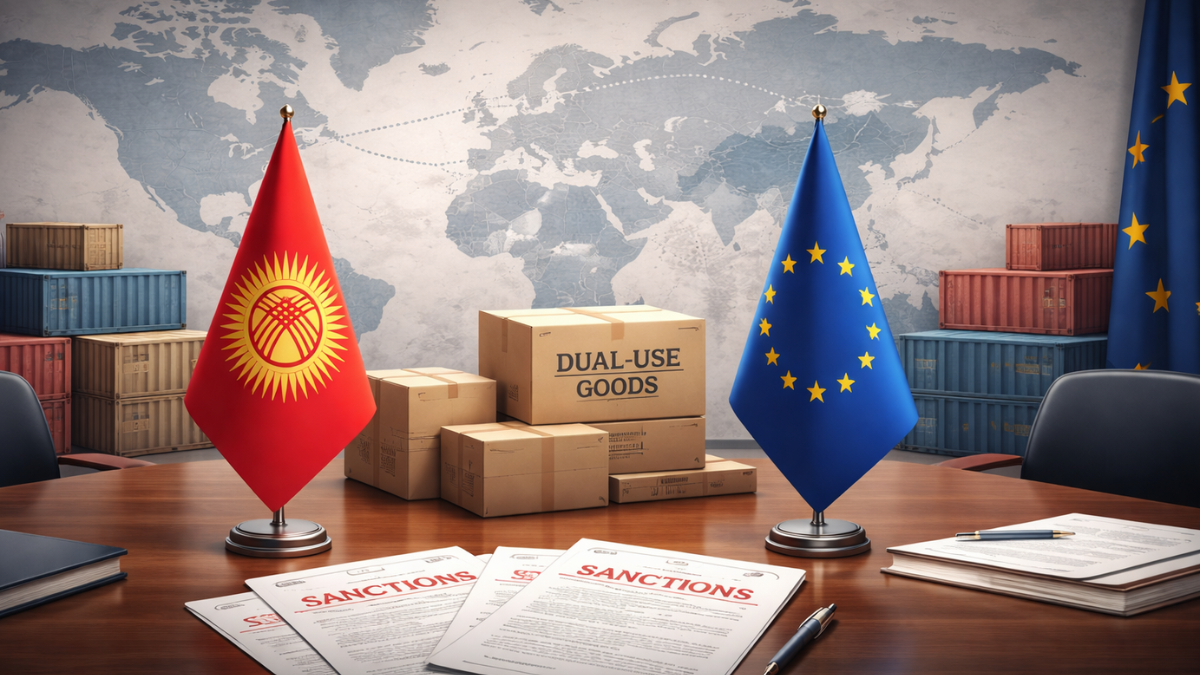


A major dispute is growing between Kyrgyzstan and the European Union over Russia sanctions.
Kyrgyzstan says it is ready to challenge the EU in court if the bloc imposes country-level sanctions. The European Union believes companies in Kyrgyzstan may be helping Russia bypass restrictions introduced after the full-scale invasion of Ukraine in 2022.
The case could become the first major test of the EU’s anti-circumvention powers.
Why the EU Is Targeting Kyrgyzstan
The European Commission has proposed banning the sale of certain goods to Kyrgyzstan. These are “dual-use” goods. That means they can be used for civilian purposes, but also in military equipment such as weapons and drones.
EU documents state that Kyrgyz companies have been importing these goods from Europe and then re-exporting them to Russia. If confirmed, this would amount to sanctions circumvention.
The documents show a sharp rise in trade flows since 2022. Kyrgyz imports of high-priority goods from the EU have increased by nearly 800 percent. At the same time, Kyrgyz exports to Russia have grown by 1,200 percent.
According to the EU, this pattern demonstrates a particularly high risk of circumvention.
Sanctions enforced at sea as Belgian commandos board suspected Russian ‘shadow fleet’ ship
If approved, the ban would mark the first time the EU applies secondary sanctions at the country level. Until now, sanctions have mainly targeted individuals, banks, and companies.
The EU’s 20th sanctions package was recently blocked by Hungary after oil supplies through the Druzhba pipeline were halted by Kyiv. Adding country-level sanctions was intended to show the EU is serious about closing loopholes.
Kyrgyzstan’s Response and Legal Warning
Kyrgyzstan has rejected the accusations of deliberate wrongdoing.
Daniyar Amangeldiev, first deputy chair of Kyrgyzstan’s cabinet, said the country is prepared to challenge any sanctions decision in court. He stated that Kyrgyzstan has evidence showing it took action to comply with Western restrictions.
Amangeldiev said Brussels has not clearly explained what steps Bishkek must take to prove compliance. He questioned how the country can follow rules that have not been clearly defined.
He confirmed that Kyrgyzstan sent a package of documents to the EU in February detailing its efforts. However, he said Brussels has not clarified how sanctioned Kyrgyz banks can clear their names.
Kyrgyzstan acknowledged that some goods have transited through its territory and ended up in Russia. However, it insisted it is committed to preventing such trade. The government argues that any violations should be handled by targeting specific entities rather than sanctioning the whole country.
Officials also say that part of the import increase is linked to a few large, high-value deals with European countries, including equipment for hydropower plant construction.
The government warned that country-level sanctions would cause serious reputational damage. Kyrgyzstan describes itself as a small, trade-focused economy located along historic Silk Road routes. Trade plays a central role in its development.
Wider Impact of Russia Sanctions Enforcement
Since Russia’s invasion of Ukraine, the European Union has introduced multiple sanctions packages to limit Moscow’s access to advanced technology and financial systems.
US imposes new Iran sanctions just before Geneva nuclear talks
Western capitals have accused Kyrgyzstan of helping Russia bypass financial restrictions. Several entities have already been sanctioned, including the Kyrgyz issuer of a rouble-pegged stablecoin with very high transaction volumes.
EU officials say Kyrgyzstan has given repeated assurances about tightening controls, but enforcement remains weak.
David O’Sullivan, the EU sanctions envoy, has been in talks with Kyrgyz authorities for months. During a visit to Bishkek, he stated that the EU is not asking Kyrgyzstan to stop trading with Russia entirely. Instead, the request is that trade must not involve deliberate sanctions circumvention.
Sanctions experts have also raised concerns about possible retaliation. Lina Aburous, a sanctions expert at Forward Global in Brussels, said the EU may not be fully prepared for such consequences and suggested that incentives like better market access could encourage cooperation.
Kyrgyzstan remains heavily linked to Russia through historical and trade ties. A significant share of its population depends on remittances sent from migrant workers in Russia. These realities place the country in a difficult position as it navigates growing pressure from the European Union over Russia sanctions.