

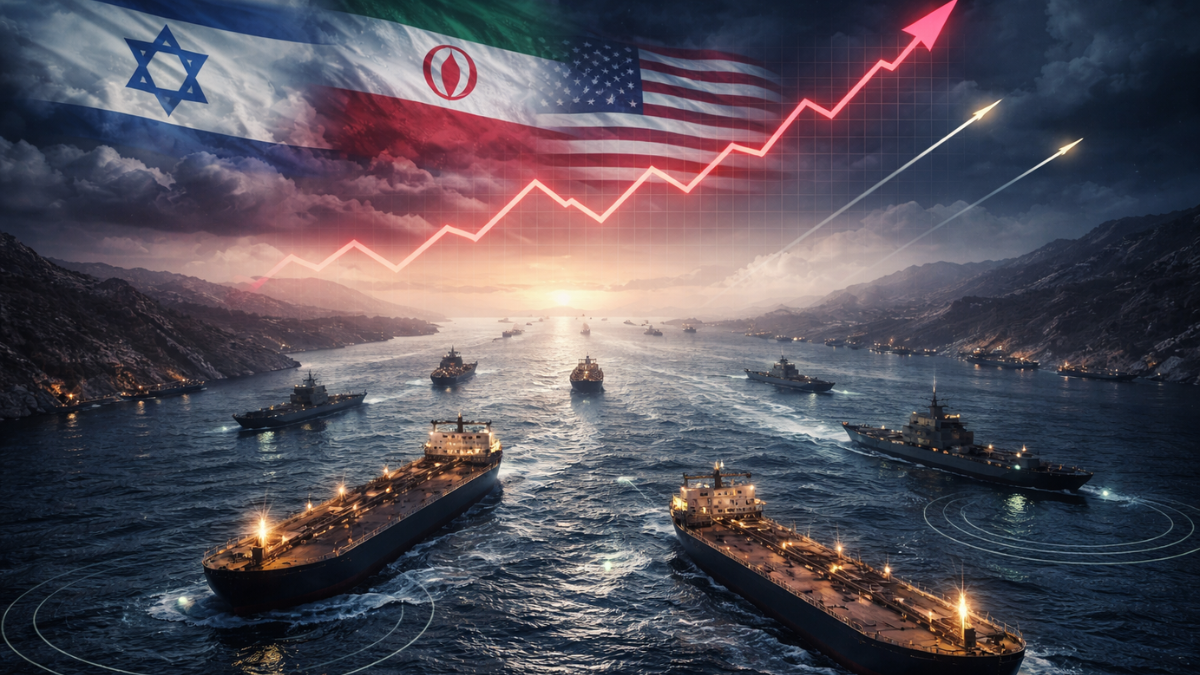


The escalating conflict between Israel and Iran has raised fresh economic concerns for India. The situation intensified after joint US–Israel strikes reportedly killed Iran’s Supreme Leader, Ayatollah Ali Khamenei. Iran responded with missile and drone attacks on US bases, deepening instability across West Asia.
This marks a shift from contained tensions to open military confrontation. For a large oil-importing nation like India, the risks are immediate and serious. The Prime Minister’s Office is reviewing the situation with key ministries as policymakers monitor oil prices, shipping routes, remittances, and financial markets.
Crude oil prices reacted sharply. Brent futures surged to $82.37 per barrel, the highest since January 2025, before easing to $78.24, still up more than 7 percent. Iran produces about 5 percent of global oil. Analysts warned that a complete disruption of Iranian supply could lift prices by around 20 percent. They also cautioned that closure of the Strait of Hormuz could push prices toward $108 per barrel.
Strait of Hormuz: The Critical Oil Chokepoint
The Strait of Hormuz is the world’s most important oil transit bottleneck. Nearly 20 percent of global oil supply passes through this narrow waterway. More than 40 percent of India’s crude imports and nearly 60 percent of its LNG imports from West Asia move through this route.
US imposes new Iran sanctions just before Geneva nuclear talks
Recent hostilities have exposed commercial vessels to risk. Missiles struck at least three tankers near the Gulf coast, killing one seafarer. Over 200 vessels, including oil and LNG carriers, dropped anchor within 24 hours as security fears mounted.
An analyst said attacks on oil tankers have significantly increased the threat to supply. Even temporary disruption can delay cargoes and raise freight and insurance costs. OPEC+ has agreed to increase production by 206,000 barrels per day for April, but markets remain focused on Hormuz risks.
Historical data shows the Strait has never been blockaded for long periods, even during conflicts in the 1980s. However, tensions are rising across nearby routes as well, including the Bab el-Mandeb strait.
India’s Direct Exposure: Oil and Trade Risks
India imports the majority of its crude oil needs. Every $1 rise in oil prices adds roughly $2 billion to the annual import bill. Sustained high prices could pressure petrol, diesel, and LPG rates. The government may reduce taxes or expand subsidies, but prolonged support would strain public finances and affect the fiscal deficit.
India holds crude inventories covering about 74 days of consumption. It can increase purchases from Russia, the United States, West Africa, and Latin America if required. However, rerouting cargoes increases costs and transit time.
Beirut rocked by airstrikes as Israel targets Hezbollah network
India’s exposure is greater in LNG. Nearly 80 percent of LNG imports come from West Asia. Close to 60 percent of that volume transits the Strait of Hormuz.
Shipping disruptions are also affecting trade beyond oil. UAE airspace closures have impacted gold and rough diamond shipments via Dubai. India imports 800–850 tonnes of gold annually, with 50–60 percent routed through Dubai, its second-largest gold source and top supplier of rough diamonds.
Inflation, Rupee Pressure and Financial Stability
Before the escalation, inflation had eased sharply. Consumer price inflation fell to 2.1 percent in June 2025 and touched a historic low of 0.25 percent in October. It remained within the 2–6 percent target band of the Reserve Bank of India. In January, inflation stood at 2.75 percent under a revised data series. GDP growth reached 8 percent in the first half of FY2026.
Higher crude prices now risk reversing that balance. Transport, food, and manufacturing costs could rise, feeding into inflation. The rupee, which strengthened to 90.97 per dollar in February after touching a record low of 92 in January, may face renewed pressure. Estimates suggest the USD/INR pair could trade between 91 and 93 if disruptions persist.
A sustained $10 rise in crude could widen India’s current account deficit by 40–50 basis points, from its projected 1 percent of GDP for FY27. The Israel-Iran war and the fight around the Strait of Hormuz have introduced a significant external risk to India’s economic stability.