

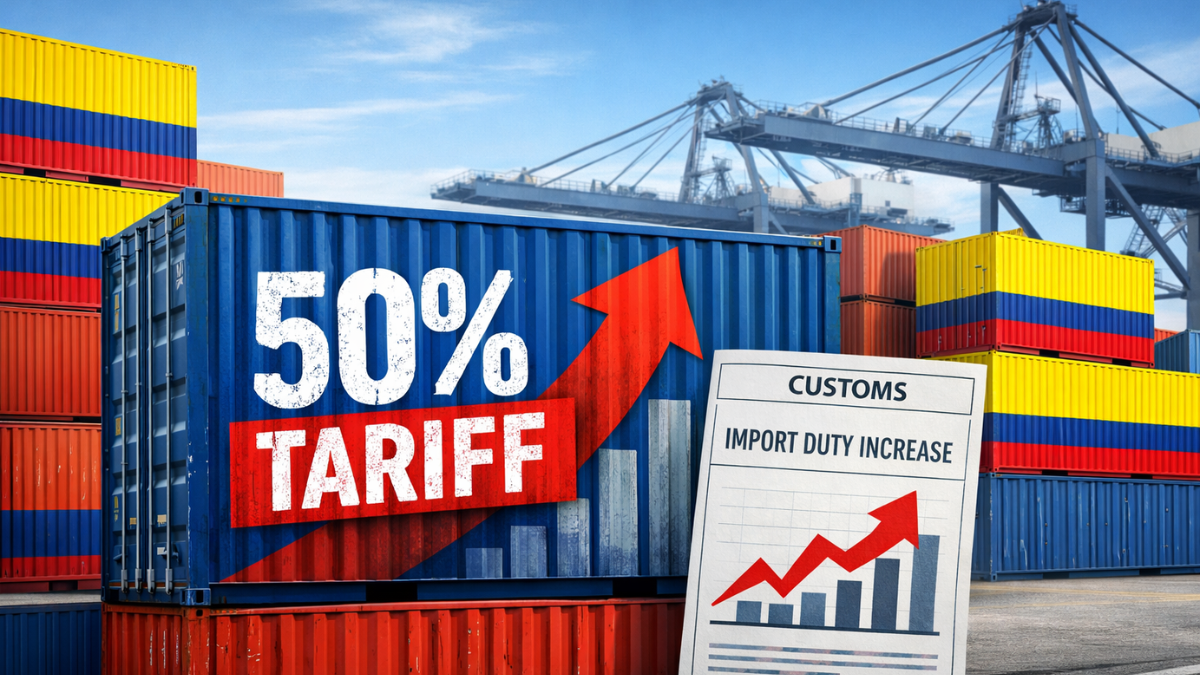


Ecuador hikes tariffs on Colombian imports to 50 percent starting March 1, sharply escalating tensions between the two neighboring Andean countries. The new measure replaces a 30 percent tariff that was introduced in early February and represents a major step in an intensifying trade and security dispute.
The announcement was made by Ecuador’s government on Thursday. Under the new rule, Colombian goods entering Ecuador will face significantly higher taxes, making many imports more expensive in the Ecuadorian market. Officials said the decision is tied to border security concerns and a growing trade deficit with Colombia. The dispute has unfolded under the leadership of President Daniel Noboa in Ecuador and President Gustavo Petro in Colombia.
Both nations sit along the Pacific coast of South America and share a land border stretching about 586 kilometers, or 364 miles. That long border has become a focal point of the current tensions.
Border Security, Crime Surge and Electricity Tensions
Since the start of the COVID-19 pandemic in 2020, Ecuador has experienced a sharp rise in violence linked to organized crime. Drug trafficking networks have expanded their presence, and the country has increasingly been used as a transit route for narcotics shipments. Colombia has for many years been the world’s largest source of cocaine, and Ecuador has argued that cross-border trafficking has worsened its internal security crisis.
Canada says US tariffs unlikely to be lifted after Trump’s new 10% duty
President Daniel Noboa has accused President Gustavo Petro’s government of not taking strong enough action to curb narcotics trafficking along the shared border. Ecuador’s Ministry of Production and Foreign Trade stated that Colombia has failed to implement “concrete and effective” measures to address the problem.
According to the Geneva-based Organized Crime Observatory, Ecuador recorded a homicide rate of approximately one murder every hour last year. The country, once considered relatively stable, has seen a dramatic spike in violent crime in recent years.
The dispute has also spilled into the energy sector. After Ecuador imposed the initial 30 percent tariff in February, Colombia suspended all electricity sales to its neighbor. This move added pressure on Ecuador, which relies on hydroelectric dams for nearly 70 percent of its electricity supply. Recent droughts have reduced water levels at these dams, leading to disruptions and widespread power outages. The blackouts have triggered public frustration and antigovernment protests.
In previous shortages, Ecuador purchased electricity from Colombia to stabilize supply. It remains unclear whether the new 50 percent tariff will apply to electricity imports, which remain a critical resource for the country.
FedEx sues US government after Supreme Court strikes down Trump emergency tariffs
Trade Deficit and Oil Pipeline Dispute Intensify Conflict
Ecuador has also justified the tariff hike by pointing to trade imbalance figures. Data from the Observatory of Economic Complexity shows that nearly 4 percent of Colombian exports go to Ecuador, valued at about $2.13 billion. Ecuador imports significant quantities of medicines and pesticides from Colombia.
In contrast, about 2.3 percent of Ecuador’s exports go to Colombia, worth roughly $863 million. Government data indicates that Ecuador’s trade deficit with Colombia stands at approximately $1.03 billion through 2025, excluding oil.
Tensions have further escalated in the oil sector. Ecuador increased fees for Colombian crude transported through the Trans-Ecuadorian System Oil Pipeline, known as SOTE, by 900 percent. The new charge amounts to around $30 per barrel. In response, Colombia halted all oil shipments through the pipeline.
Despite high-level diplomatic talks this month involving foreign policy and security officials from both countries, the meeting ended without a breakthrough. The decision that Ecuador hikes tariffs on Colombian imports to 50 percent starting March 1 now marks the latest escalation in a dispute involving trade, border security, electricity supply, and oil transportation between the two neighboring nations.