

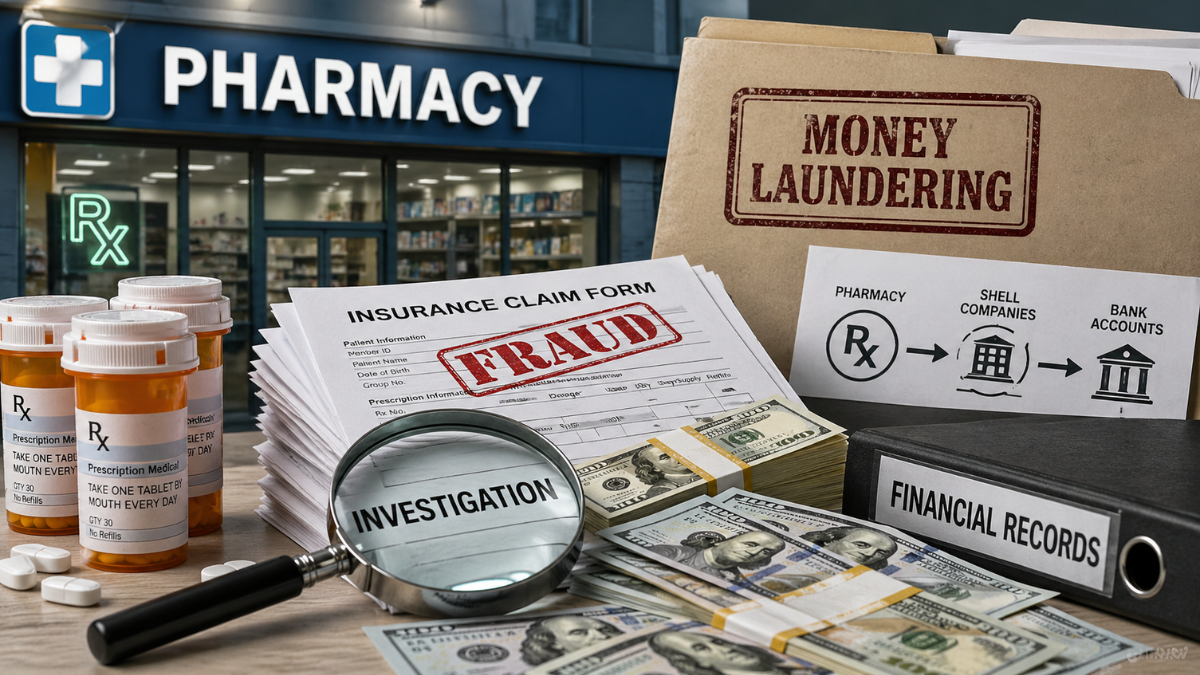


A major healthcare fraud case in New York has led to a prison sentence of more than five years for Taesung Terry Kim, a 61-year-old pharmacy owner from Harrison. He was sentenced to 63 months in prison for conspiring to launder money from a $24.4 million fraud scheme involving government healthcare programs.
The case, investigated by federal agencies including the FBI and health oversight authorities, also involved his associate Feng Jeff Jiang, who was sentenced earlier to 15 months in prison in October 2025. The scheme took place between 2015 and 2022 and involved submitting false claims for medically unnecessary prescription drugs.
According to court records, the pharmacies co-owned by Taesung Terry Kim were located in Brooklyn and Queens. These pharmacies billed government healthcare programs around $24.4 million for drugs that were not needed. The fraud targeted systems meant to support elderly and low-income individuals, making it a serious financial and public health issue.
The operation was not a simple case of overbilling. It involved planning and coordination with others to create a steady flow of unnecessary prescriptions. This allowed the pharmacies to generate large payments from public healthcare funds.
UK secures tariff-free access to US market under new pharmaceutical agreement
Use of Bribes, Kickbacks, and Fake Transactions
The investigation revealed that the fraud scheme relied heavily on bribery and illegal payments. The pharmacy owner and associates paid bribes to medical providers to encourage them to send prescriptions to their pharmacies. These bribes were not always direct cash payments. In some cases, they included covering office rent or providing staff support.
Patients were also involved in the scheme. Some were offered incentives such as cash or supermarket gift cards to fill prescriptions at these pharmacies. These incentives were used to increase the number of prescriptions processed, even if the medications were unnecessary.
To hide the illegal earnings, the individuals involved used money laundering techniques. They moved the money through various trading companies. These companies were designed to look like legitimate businesses. In reality, they helped disguise the source of the funds and allowed profits to be shared among those involved in the scheme.
The role of Feng Jeff Jiang was also part of this process, contributing to how the scheme operated and remained hidden for years. This made it harder for authorities to detect the fraud. However, investigators were eventually able to trace the flow of money and uncover the full extent of the operation.
Investigation, Guilty Plea, and Sentencing Details
The case was investigated by federal law enforcement agencies, including teams focused on healthcare fraud and financial crimes. Their work uncovered years of illegal activity and multiple layers of deception. Officials such as James C Barnacle Jr and Scott J Lampert highlighted the efforts taken to expose the scheme.
In December 2024, Taesung Terry Kim pleaded guilty to conspiracy to commit money laundering. The prosecution involved contributions from officials including Colin M McDonald and Joseph Nocella Jr.
The court sentenced him to 63 months in prison. In addition, he was ordered to repay $24.4 million as restitution and forfeit $6 million in assets. These included bank accounts and real estate identified as proceeds from the fraud.
Earlier, in October 2025, Feng Jeff Jiang received a 15-month prison sentence for his involvement.
Authorities stated that the investigation required detailed work to uncover how the fraud was carried out. They emphasized that such schemes misuse healthcare systems and public funds, especially those meant to support vulnerable groups.
The case shows how complex fraud operations can involve multiple individuals working together and using financial methods to hide illegal earnings.