



Summary
Former GWG Holdings chairman Bradley Heppner has been convicted in a major fraud case in the United States. Federal prosecutors said Bradley Heppner secretly controlled a shell company and used it to move more than $150 million from the company for personal benefit. The jury found him guilty after a three-week trial in New York.
How The Fraud Scheme Was Carried Out
Federal prosecutors said the fraud scheme took place between 2018 and 2021 while Bradley Heppner served as chairman of GWG Holdings, Inc., a Nasdaq-listed financial services company. The company raised money mainly by selling bonds to retail investors and retirees.
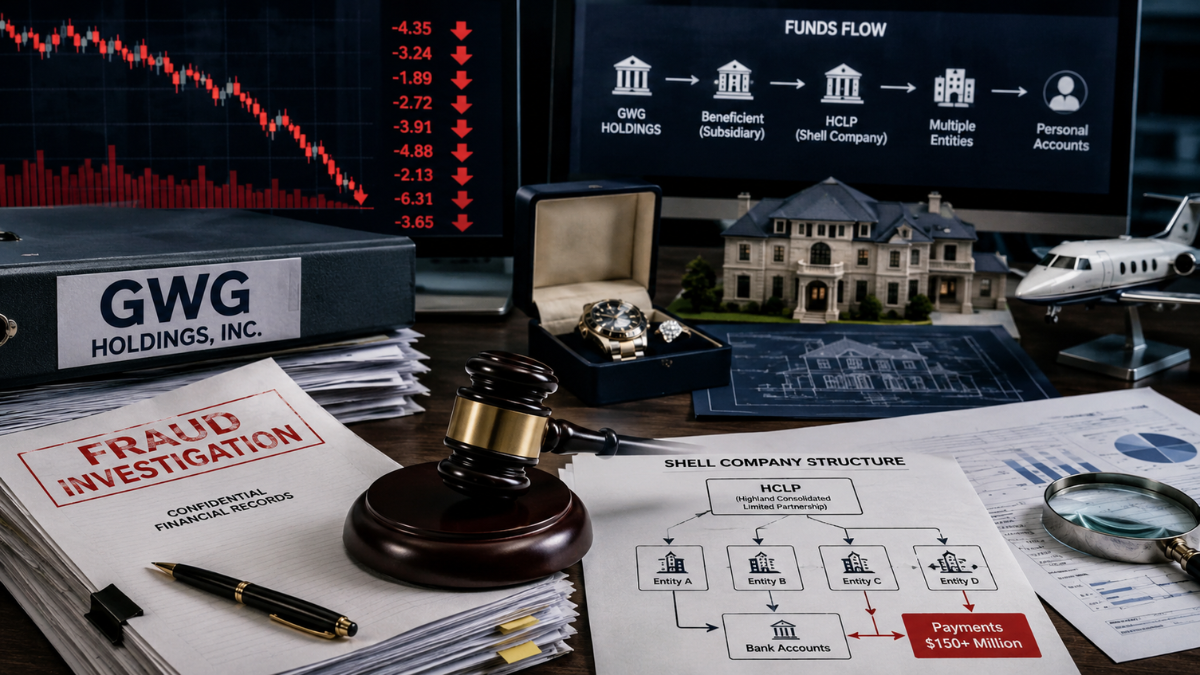
According to the case presented in court, Bradley Heppner created and controlled a shell company known as Highland Consolidated Limited Partnership, also called HCLP. Prosecutors argued that HCLP was presented as an independent business even though it was allegedly controlled behind the scenes by Bradley Heppner.
The government said a debt worth around $141 million was falsely created. Prosecutors claimed the debt made it appear that Beneficient, a subsidiary connected to GWG Holdings, owed a large amount of money to HCLP.
Because the debt appeared legitimate, company leaders reportedly approved payments connected to it. Prosecutors said millions of dollars were then transferred from GWG Holdings to Beneficient. From there, the money allegedly moved through several companies before reaching accounts connected to Bradley Heppner.
Siupo Ernest Mo charged in alleged multi-million dollar loan fraud scheme
Investigators told the court that more than $150 million was extracted through the scheme. The prosecution argued that the money was not used for company business. Instead, it was allegedly spent on personal luxury expenses.
Court records stated that the funds were used for items including:
- Renovation work on a mansion in Dallas
- Private jet travel
- Jewelry purchases
- Other personal costs
The prosecution also said Bradley Heppner did not tell the company’s board members about his connection to HCLP. When questions were raised about who controlled the company receiving the money, prosecutors said false statements were given to make HCLP appear independent.
False Documents And SEC Investigation Became Important Evidence
The case became more serious after investigators examined documents connected to company audits and board meetings. Prosecutors told the jury that false and misleading information was given to auditors reviewing the company’s financial records.
According to the government, backdated documents were created to hide the relationship between Bradley Heppner and HCLP. Prosecutors said these records were designed to convince auditors that the shell company was independent.
Shannon Kurrie convicted in multi-state check fraud conspiracy involving $250,000 in losses
The case also involved allegations connected to the U.S. Securities and Exchange Commission, commonly known as the SEC. Prosecutors said the company received a subpoena from the SEC during the investigation.
After that subpoena was issued, investigators claimed that board meeting minutes from October 2019 were altered. According to prosecutors, additional wording was added later to create the appearance that certain financial relationships had already been disclosed.
The government said those altered records were later sent to the SEC as part of the investigation. Prosecutors argued that this was an attempt to mislead regulators reviewing the case.
The trial lasted three weeks in federal court in New York before Judge Jed S. Rakoff. At the end of the proceedings, the jury found Bradley Heppner guilty on multiple criminal charges.
The convictions included:
- Securities fraud
- Wire fraud
- Conspiracy to commit securities fraud and wire fraud
- False statements to auditors
Federal prosecutors described the case as a serious example of corporate fraud involving a public company and investor funds.
Vladimir Sklarov charged in alleged $450 million stock-backed loan fraud scheme
Jury Conviction Marks Major Corporate Fraud Case
The guilty verdict was announced by the U.S. Attorney’s Office for the Southern District of New York, led by U.S. Attorney Jay Clayton. Federal officials said the case showed how hidden financial arrangements and shell companies can be used to move money without investors fully understanding what is happening.
Officials also stated that public companies are expected to provide honest and transparent information to investors, auditors, and regulators. Prosecutors argued during the trial that Bradley Heppner repeatedly concealed important details about his personal financial interests.
GWG Holdings had raised capital from investors through bond offerings. Many of those investors were ordinary individuals and retirees looking for investment returns. Prosecutors said the fraud affected trust in public financial markets.
Bradley Heppner is scheduled to be sentenced on October 7, 2026. According to federal prosecutors, several of the charges carry maximum prison sentences of up to 20 years each under U.S. law. The conspiracy charge carries a maximum sentence of five years.
The final sentence will be decided by Judge Jed S. Rakoff. Federal authorities also confirmed that the investigation involved assistance from the Federal Bureau of Investigation and the U.S. Securities and Exchange Commission.