

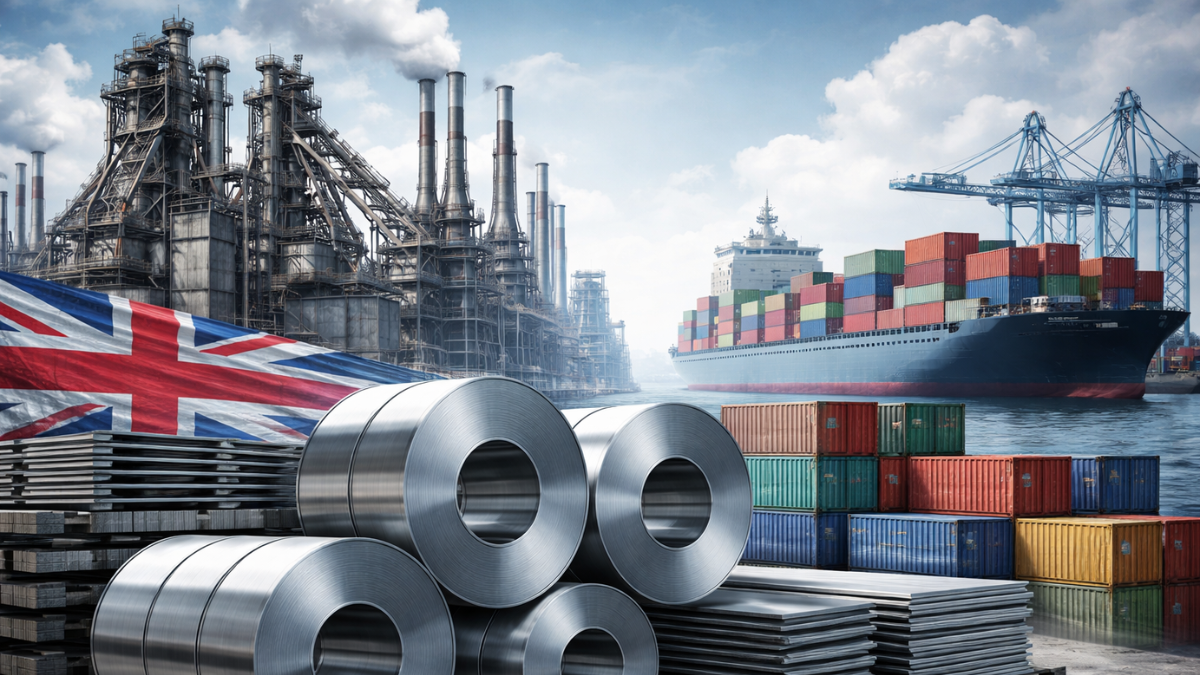


The United Kingdom is preparing a major change in how it handles steel imports. According to a report, the government is planning to double tariffs on steel imports, which means companies bringing steel into the country may have to pay much higher taxes.
The plan is expected to be announced soon as part of a wider strategy to support the domestic steel industry. Officials are likely to reduce the amount of steel that can be imported at lower tax rates, also known as quotas. Once those limits are crossed, importers could face tariffs as high as 50%.
This move would make imported steel more expensive. As a result, it could encourage buyers to choose steel made within the country instead of cheaper foreign options.
The reported changes would bring the UK closer to the policies followed by other major economies such as the European Union and the United States, which already use similar methods to control imports and protect their own steel industries.
A government spokesperson has confirmed that a new steel strategy will be released shortly. The spokesperson also said that the government remains fully committed to supporting steelmaking and protecting jobs in the sector.
Pressure on UK Steel Industry from Costs and Competition
The UK steel industry has been facing several challenges in recent years. One of the biggest problems is high energy costs. Producing steel requires a large amount of electricity and fuel. When energy prices rise, the cost of making steel also increases.
China expresses concern over US tariff plans after high-level Paris meeting
At the same time, steel producers in other countries can often make and sell steel at lower prices. This is especially true for imports coming from countries where production costs are lower, particularly from China. These cheaper imports make it difficult for UK-based companies to compete in the market.
Because of these pressures, many companies in the sector have been struggling financially. The situation has become serious enough to affect some of the largest steel producers in the country.
In one case, Tata Steel shut down two blast furnaces at its Port Talbot plant. Blast furnaces are important for producing large amounts of steel, and their closure can significantly reduce output.
In another case, the government had to step in and take control of a steel plant operated by British Steel to prevent it from shutting down under its Chinese owner Jingye Group. This action was taken to keep the plant running and to protect jobs linked to it.
The steel sector plays a small but important role in the UK economy. It supported around 37,000 jobs and made up about 0.1% of total economic output in 2024. Despite its size, the industry is considered vital for infrastructure, manufacturing, and national supply chains.
Trump says tariffs will be reintroduced through other mechanisms after court decision
Strategy Aimed at Protecting Jobs and Steel Production
The planned increase in tariffs is part of a broader effort to protect the country’s steel industry from ongoing challenges. By making imported steel more expensive, the government hopes to create a more level playing field for local producers.
Reducing import quotas is another key part of the plan. This step would limit how much foreign steel can enter the country at lower costs. Once those limits are reached, higher tariffs would apply, making additional imports less attractive.
The overall aim is to support domestic steelmakers who are struggling to compete with cheaper global products. It is also intended to protect jobs in the sector and ensure that steel production continues within the country.
The government has made it clear that it wants a sustainable future for steelmaking. This includes maintaining production capacity and supporting workers in the industry.
The reported measures show how serious the situation has become for the steel sector. Rising costs and strong global competition have created a difficult environment for companies operating within the UK.
The expected announcement will provide more details about how these changes will be implemented. The focus remains on protecting the industry while managing the challenges it faces from both inside and outside the country.