

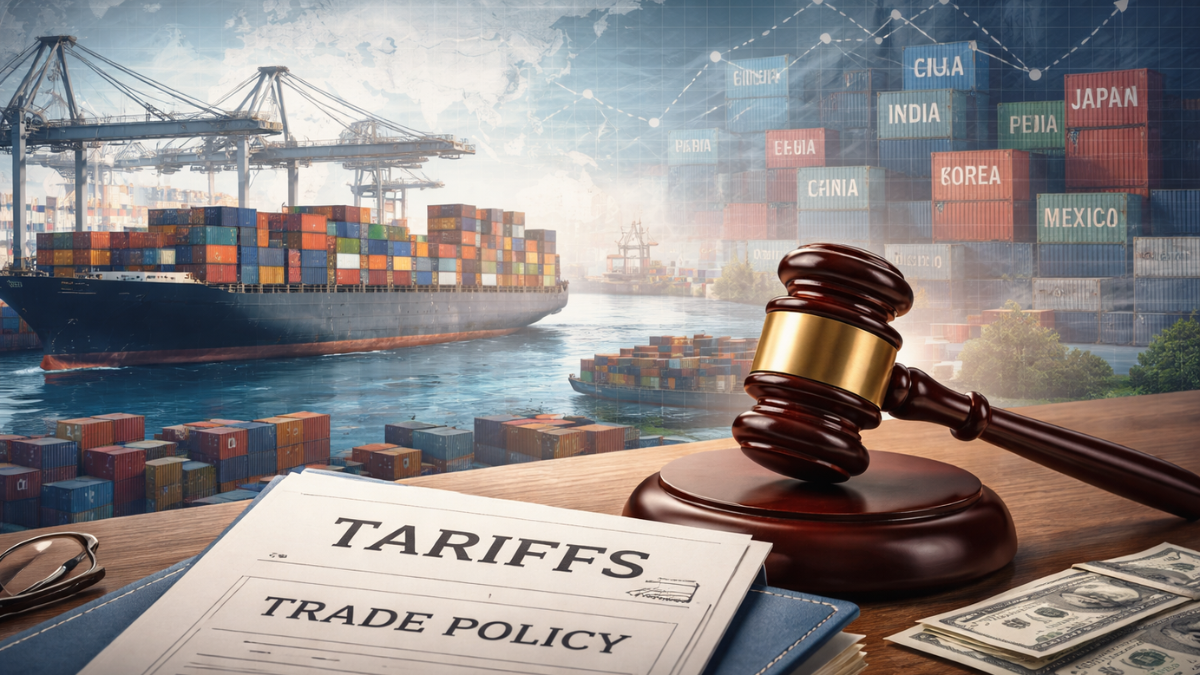


Trade policy in the United States has entered a new phase after a major court decision challenged a key tariff plan backed by Donald Trump. The ruling created a setback for the administration’s strategy to use tariffs as a tool to protect American industries and address trade imbalances.
Soon after the decision, Trump responded with a strong statement posted on Truth Social. In the message, he said tariffs would still return, but in a different form. According to him, the government has the authority to pursue alternative measures to continue its trade agenda.
The statement stressed that tariffs remain an important policy tool for the administration. Trump argued that many countries and companies have taken advantage of the United States for decades through unfair trade practices.
Supreme Court Ruling Challenges Reciprocal Tariffs
The ruling came from the Supreme Court of the United States in February and focused on a policy known as “reciprocal tariffs.” This approach aimed to match the tariffs imposed by other countries on American goods.
Under the reciprocal tariff policy, if another country charged high import duties on U.S. products, the United States would respond by imposing similar tariffs on goods coming from that country. The plan was designed to pressure trading partners to lower their tariffs and create what the administration described as fairer trade conditions.
However, the Supreme Court decision struck down this approach, creating a legal obstacle for the administration’s trade policy. The ruling effectively blocked the tariff structure that had been promoted as a way to reduce trade imbalances and support domestic manufacturing.
US eases Venezuela sanctions restrictions to enable fertilizer trade and energy sector investment
Following the ruling, Trump criticized the decision and said it could benefit foreign governments and companies. In his statement, he argued that the ruling might lead to the return of large amounts of money to countries that he believes have taken advantage of the United States through trade arrangements.
The president said the case involved potentially trillions of dollars linked to tariff payments and trade policies. According to the statement, such an outcome would reward countries that benefited from trade systems that disadvantaged the United States.
Despite the setback, Trump said the court itself acknowledged that the president has the authority to impose tariffs through other mechanisms. He added that the administration had already started working on alternative ways to introduce tariffs.
In the same statement, Trump thanked conservative justices Samuel Alito, Clarence Thomas and Brett Kavanaugh for what he described as their wisdom and courage in the case, while criticizing the broader ruling.
US Launches Fresh Trade Investigation
Even as the administration looks for other ways to impose tariffs, officials in Washington have started new trade investigations that could lead to fresh duties on imports.
The probe was announced by the Office of the United States Trade Representative and focuses on what officials describe as unfair trade practices in global manufacturing.
Delcy Rodriguez emphasizes lifting US sanctions during Venezuela-Colombia cooperation talks
The investigation targets sixteen economies, including China, European Union, India, Japan, South Korea and Mexico. These regions are among the largest trading partners of the United States.
According to officials, the probe will examine countries that appear to maintain unusually high manufacturing output compared to their domestic demand. Such situations often result in large exports and trade surpluses.
Trade officials say these conditions can create pressure on industries in other countries because exported goods may enter global markets at lower prices. This can make it harder for domestic manufacturers to compete.
The investigation will examine several factors that could provide exporters with advantages. These include government subsidies to industries, currency practices that may affect export prices, and policies that may keep wages artificially low.
Officials will also review the role of state-owned enterprises in manufacturing as well as environmental and labour standards. Weak regulations in these areas could reduce production costs and increase export competitiveness.
The probe is being conducted under Section 301 of U.S. trade law. This legal provision allows the government to investigate foreign trade practices and recommend actions, including tariffs, if those practices are found to harm American industries.
According to U.S. Trade Representative Jamieson Greer, the government aims to complete the investigation and propose remedies before temporary tariffs currently in place expire in July.