

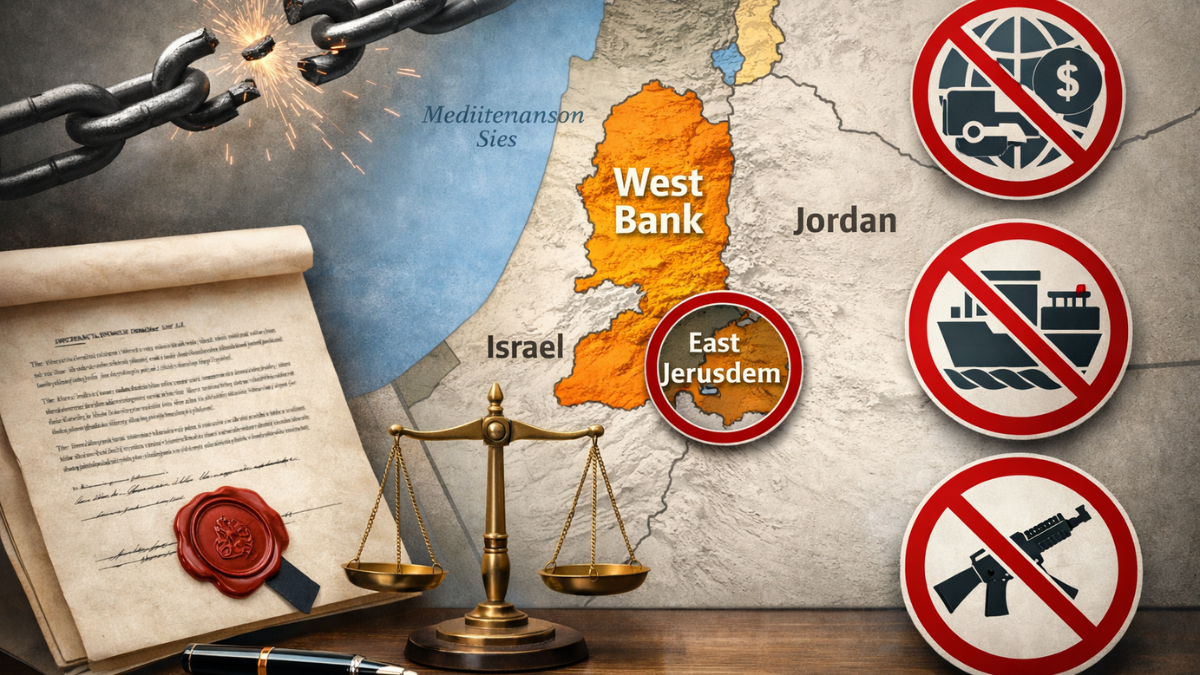


Forty states have put forward a proposal for broad sanctions against Israel in response to the rapid expansion of settlements in the West Bank and East Jerusalem. The proposal was discussed during a large international meeting that focused on legal and policy concerns linked to settlement growth.
The meeting was co-chaired by South Africa and Colombia. Officials described it as the biggest gathering of the group since its formation in 2025.
The participating states said they are reacting to what they call an “unprecedented acceleration” in settlement policies. They argue that the continued expansion strengthens what they describe as “de facto annexation” of Palestinian land. According to their statement, settlement growth affects territorial control and challenges Palestinian self-determination.
The group emphasized that governments must follow international law when addressing such issues. They presented the matter as a choice between complying with legal obligations or risking complicity in actions they consider unlawful. Their statement underlined that accountability is measured through concrete policy action rather than public declarations.
Proposed Measures Target Arms, Trade, and Travel
The proposal outlines specific enforcement tools designed to respond to settlement expansion.
UK removes sanctions on John Michael Ormerod over Russia-linked tanker purchases
One key measure calls for stopping the transfer, transit, or carriage of arms linked to settlement activities. It also includes halting the supply of military fuel connected to those activities. This would operate as a form of targeted arms restriction aimed at limiting support for operations tied to settlement growth.
Another major step is a total prohibition on importing goods produced in settlements. The aim is to prevent economic benefits from flowing to activities associated with disputed territory. By restricting trade in settlement products, the states seek to create financial pressure related to policy changes.
The proposal also introduces tighter scrutiny for certain travelers. Individuals who hold Israeli documents and have served in the military may face secondary screening at ports of entry. These checks would follow war-crimes inadmissibility rules.
Authorities would require additional disclosure from travelers linked to military service when necessary. The participating countries explained that such measures are intended to strengthen oversight and ensure compliance with legal standards.
US targets Rwanda’s military and four officials with sanctions over Congo conflict allegations
The package of measures reflects concerns about accountability, enforcement, and international responsibility regarding settlement expansion.
Background on Military Operations and International Legal Opinion
Settlement expansion in the West Bank and East Jerusalem has increased significantly in recent years. Israel has intensified operations in the West Bank since launching its military campaign on Oct. 8, 2023.
Those operations have included military raids, arrests, displacement of residents, and ongoing construction or expansion of settlements. Palestinian authorities and supporters argue that these developments affect land ownership, freedom of movement, and access to resources.
They describe the situation as moving toward formal annexation of territory through gradual policy changes on the ground.
In July 2024, the International Court of Justice issued a landmark advisory opinion. The court declared that Israel’s occupation of Palestinian territory is illegal under international law. It also called for the evacuation of all settlements in the West Bank and East Jerusalem.
The proposal from the 40 states refers directly to this legal opinion as part of its justification. The countries argue that international legal findings require practical responses from governments.
Their statement stresses that states must choose between supporting compliance with international law or facing claims of complicity in unlawful actions. The discussion highlights growing diplomatic engagement over settlement policy, trade restrictions, arms control, and legal accountability.
It reflects ongoing global debate over how international law should be enforced in territorial disputes and contested regions.