

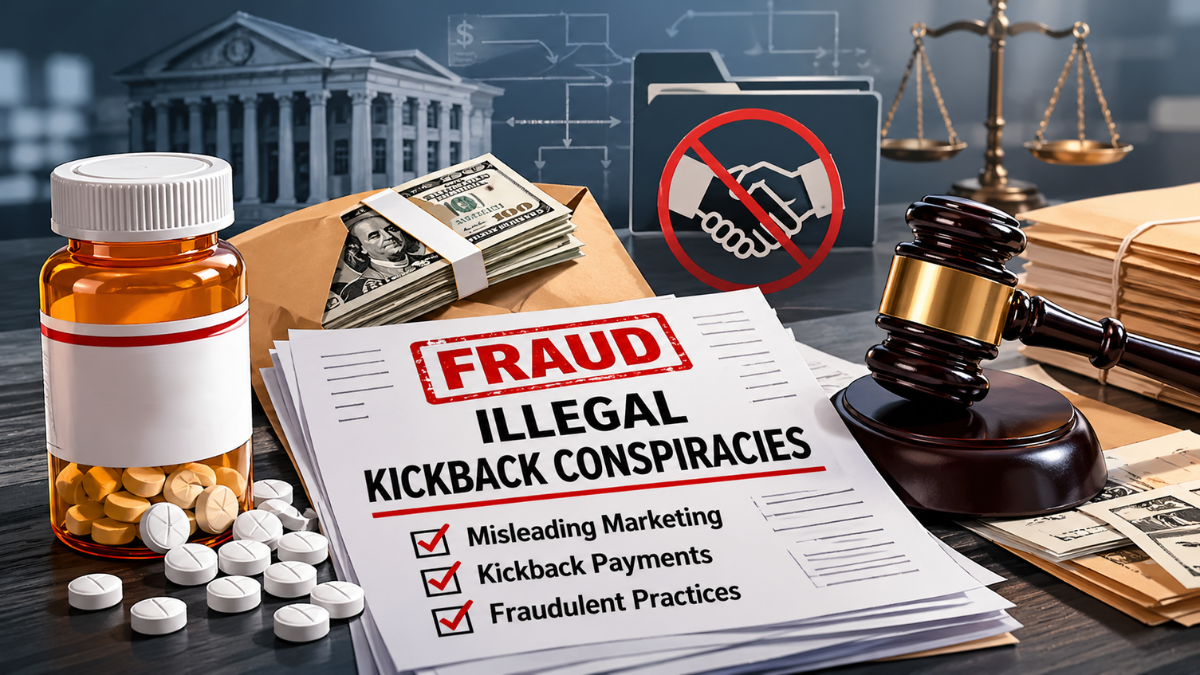


Purdue Pharma has been sentenced in a federal court in Newark, New Jersey, and ordered to pay more than $5 billion in criminal penalties for fraud and illegal kickback conspiracies. The case, highlighted by Todd Blanche and Kash Patel, focused on how the company misused its position in the healthcare system. The company promoted addictive opioid drugs like OxyContin while ignoring legal safeguards and engaging in unlawful practices to increase sales.
The court ordered a criminal fine of $3.544 billion and an additional $2 billion in forfeiture. A portion of this amount may be reduced depending on the company’s bankruptcy proceedings. This sentencing is among the largest penalties in a corporate fraud case in the United States.
Fraudulent Actions and Illegal Kickback Schemes
Court documents reveal that between 2007 and 2017, Purdue Pharma carried out a pattern of fraudulent conduct. The company marketed its opioid products to hundreds of healthcare providers, including those it had reason to believe were prescribing these drugs without a legitimate medical purpose.
Kash Patel stated that the company’s actions showed a clear disregard for patient safety. Despite knowing the risks, Purdue continued to promote its drugs to increase prescriptions.
Queens pharmacy owner Taesung Kim gets 63-month prison sentence in healthcare fraud case
A key part of the case involved deception of the Drug Enforcement Administration. Purdue Pharma falsely claimed that it had effective systems in place to prevent the illegal diversion of opioids. In reality, these systems failed to stop misuse. The company even used prescriptions from questionable sources to support its requests to manufacture larger quantities of opioids.
A. Tysen Duva described the case as one of the most significant corporate enforcement actions, noting that the company continued its practices despite being aware of the harm.
The company also engaged in illegal kickback conspiracies. It paid doctors and healthcare providers to encourage more prescriptions of its opioid drugs. These payments were made through speaker programs and electronic health record platforms. Such actions violated the Federal Anti-Kickback Statute, which is meant to ensure fair and safe medical practices.
On November 24, 2020, Purdue Pharma pleaded guilty to three felony charges. These included conspiracy to defraud the United States and conspiracy to violate healthcare laws. Robert Frazer stated that the company made billions by unlawfully marketing dangerous opioid products and misleading both regulators and the public.
Riga court orders asset seizure in suspected procurement fraud case at Daugavpils University
Impact of the Conspiracy and Legal Enforcement Actions
The fraudulent and illegal activities of Purdue Pharma contributed to the opioid crisis in the United States. The widespread promotion and misuse of opioid drugs led to addiction and loss of life across many communities.
Terrance Cole stated that the company’s actions fueled addiction and contributed to long-term harm. T. March Bell added that the company undermined efforts to regulate prescription drugs and protect patients.
As part of the sentencing, Purdue Pharma must create a public document repository containing records related to the criminal charges. This will allow public access to information about the case and the company’s actions.
Jonathan A. Ophardt noted that communities have faced serious consequences due to opioid addiction linked to such practices.
The case was investigated by federal agencies, including the FBI, along with healthcare and drug enforcement authorities. The prosecution involved multiple legal officials, including Maryann McGuire, David Walk, Jordan Anger, Robert Toll, and Eugenia Cowles.
The court also stated that if Purdue Pharma emerges from bankruptcy as a public benefit company, its funds will be directed toward opioid addiction treatment and prevention programs for state, local, and tribal communities.