

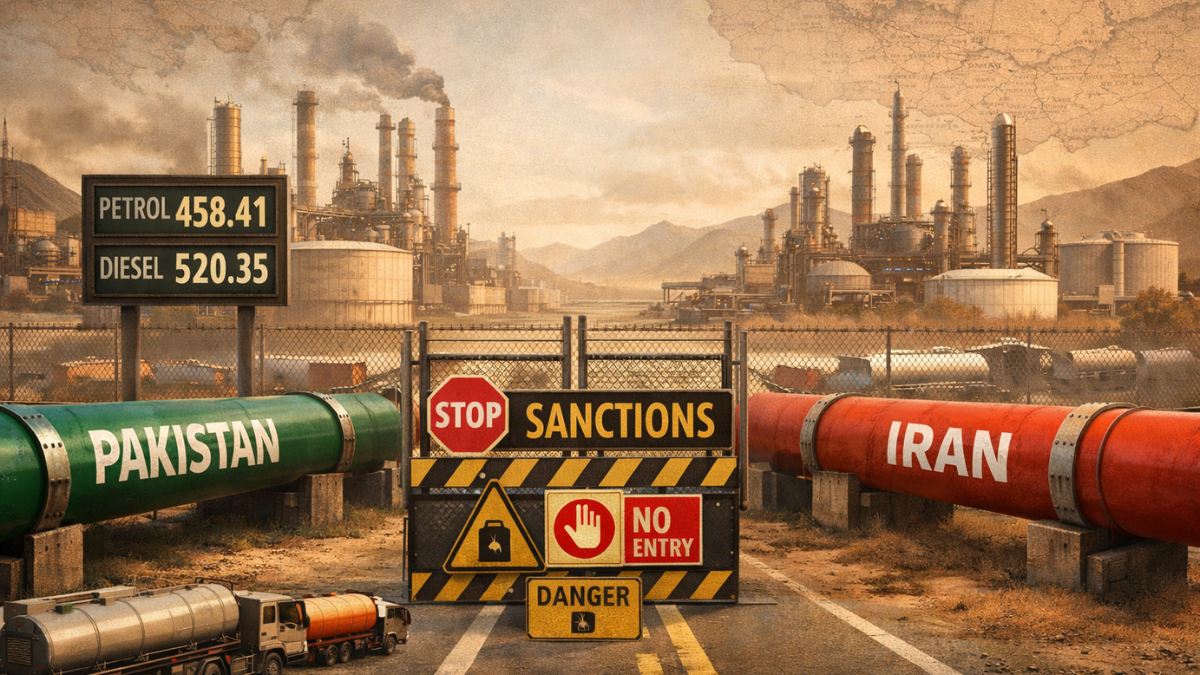


Pakistan is facing very high fuel prices. Petrol and diesel prices have sharply increased in recent days. This has made life difficult for people and businesses. Because of this, many are asking a simple question: if Iran is right next door and has oil, why does Pakistan not just buy it?
At first, it seems like an easy solution. Iran has oil. Pakistan needs oil. The distance is short. Transport costs would also be lower. But the situation is not that simple.
The main reason is international sanctions on Iran. These sanctions are led by powerful countries and affect many areas like banking, shipping, and trade. If Pakistan officially buys oil from Iran, it risks facing serious consequences.
Banks cannot easily process payments for Iranian oil. Global financial systems, especially those dealing in dollars, are restricted. This means Pakistan cannot pay Iran through normal legal channels. Without proper payment systems, large-scale trade becomes very difficult.
There are also risks for companies involved. Refineries, shipping firms, and insurers could face penalties. This could block Pakistan’s access to international markets and services. So, even if oil is available, the system needed to buy it is largely blocked.
Sanctioned tanker “Ping Shun” diverts Iranian oil from India to China amid payment dispute
Why Iranian Oil Looks Like an Easy Solution
Despite these problems, the idea of buying Iranian oil keeps coming back. This is because it appears to offer quick relief.
Iranian oil is often cheaper than oil from other countries. Due to sanctions, Iran sells oil at discounted rates. For a country like Pakistan, which imports most of its oil, this could mean big savings.
Right now, fuel prices are very high. This has increased transport costs, food prices, and overall inflation. Cheaper oil could help reduce these pressures. It could bring down costs for industries and provide some relief to the public.
Another advantage is geography. Iran shares a border with Pakistan. This means oil can be transported by road instead of long sea routes. It reduces travel time and costs. It also lowers dependence on busy and risky shipping routes.
There is also an important ground reality. Small amounts of Iranian fuel already enter Pakistan through informal means. This happens mostly in border areas. People buy and sell it at lower prices. So, the idea of Iranian oil is not new. It already exists in limited and unofficial ways.
What Happens If Pakistan Decides to Do It Anyway
The real debate begins when the idea moves from small informal trade to official large-scale imports.
If Pakistan decides to formally import Iranian oil, it would not just be an energy decision. It would become a major economic and political issue.
Iran rejects Pakistan as peace broker and refuses to meet US delegation in Islamabad
First, there is the risk of financial trouble. Pakistan depends on international financial support. This includes loans and programs that help stabilize the economy. If sanctions are violated, this support could be affected. Banks may stop working with Pakistan. This could make it harder to manage imports, loans, and currency stability.
Second, there are diplomatic concerns. Pakistan maintains relationships with several important countries that follow these sanctions. Buying Iranian oil openly could strain these relationships. This may impact trade, aid, and cooperation in other areas.
Third, there are practical challenges. Iranian oil trade under sanctions often uses complex methods. These include hidden shipping routes, unclear cargo origins, and unofficial networks. For a country to take part in this system at a large level, it would require accepting higher legal and operational risks.
Even if oil is cheaper, these risks are not small. Large-scale imports would be visible and difficult to hide. This makes it very different from small border trade.
At the same time, Pakistan is already under economic pressure. It relies on external support and stable financial systems. Any disruption in these areas can have wider effects beyond fuel prices.
Because of all these factors, the issue is not just about buying cheaper oil. It is about managing risks that come with it. What looks like a simple solution becomes a complex challenge when seen at the national level.