

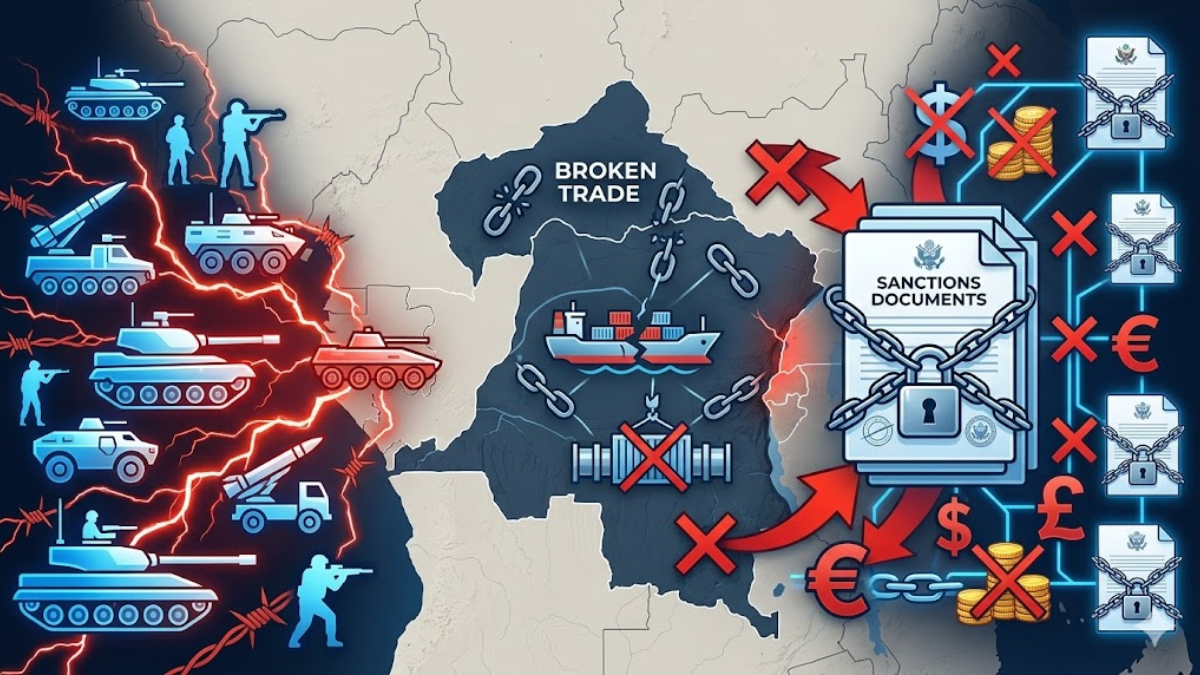


The United States has imposed sanctions on the Rwandan Defence Forces and four senior military officials over accusations that they supported the armed group M23 in eastern Congo. The action was announced as part of pressure to ensure compliance with a peace agreement signed earlier between Congo and Rwanda.
The sanctions specifically target the military institution and named officials including Vincent Nyakarundi, Ruki Karusisi, Mubarakh Muganga, and Stanislas Gashugi. These individuals hold senior leadership roles within Rwanda’s defense structure and special operations forces.
US authorities allege that M23’s military operations would not have been possible without active support from the Rwandan government and key officials. The US Treasury Department said it will use all available tools to enforce obligations under the Washington peace agreement.
Treasury Secretary Scott Bessent stated that the department expects the immediate withdrawal of troops, weapons, and military equipment linked to the allegations. He emphasized that enforcement measures will continue to ensure accountability.
The armed group M23 has already been under US sanctions since 2013 due to its role in violence and instability. A spokesperson for the US State Department, Thomas Pigott, described the group as responsible for serious human rights abuses, including summary executions and violence against civilians, women, and children.
Behind the sanctions narrative: The Iran I saw on the ground looks nothing like the headlines
Ongoing Fighting, Displacement, and Disputes Over Allegations
M23 operates in eastern Congo near the border with Rwanda and is one of about 100 armed groups active in the region. According to United Nations experts, the group has expanded significantly in recent years, growing from a few hundred fighters in 2021 to around 6,500 members.
The conflict has created one of the most serious humanitarian crises in the world. More than seven million people have been forced to leave their homes because of ongoing fighting and instability. Civilians continue to face displacement, loss of property, and limited access to food, health care, and safety.
Congo, the United States, and United Nations experts accuse Rwanda of backing M23 and providing support that strengthened its operations. The US Treasury Department stated that the group’s offensives were enabled by alleged assistance from the Rwandan government and senior officials.
Rwanda has rejected these accusations. Rwandan government spokesperson Yolande Makolo said the sanctions unjustly target Rwanda and misrepresent the reality of the conflict. She said the facts are being distorted and argued that Congo has also conducted actions that violate the peace agreement, including alleged indiscriminate drone strikes and ground offensives.
Portugal freezes €25 million in suspected Russian sanctions evasion cases
Despite diplomatic efforts, fighting continues on multiple fronts in eastern Congo. Military confrontations and armed clashes remain ongoing, causing casualties among civilians and combatants.
Peace Agreement Signed Amid Tensions and Continued Talks
A peace agreement was signed in Washington between Congolese President Felix Tshisekedi and Rwandan President Paul Kagame. The agreement was mediated with support from the United States and aimed to reduce tensions between the two neighboring countries.
US President Donald Trump attended the signing and praised the leaders for reaching the deal. The agreement also included discussions related to access to critical mineral resources in the region, which are important for global markets and industries.
Although the agreement was signed, the conflict on the ground has not stopped. Fighting has continued across several areas in eastern Congo, and armed groups remain active.
Negotiations between the Congolese government and M23 are ongoing. International mediators, including Qatar and the United States, are involved in facilitating dialogue between the parties in an effort to reduce violence and reach a settlement.
The situation remains tense as sanctions, accusations, and peace talks continue at the diplomatic level while clashes persist in the conflict zone.