

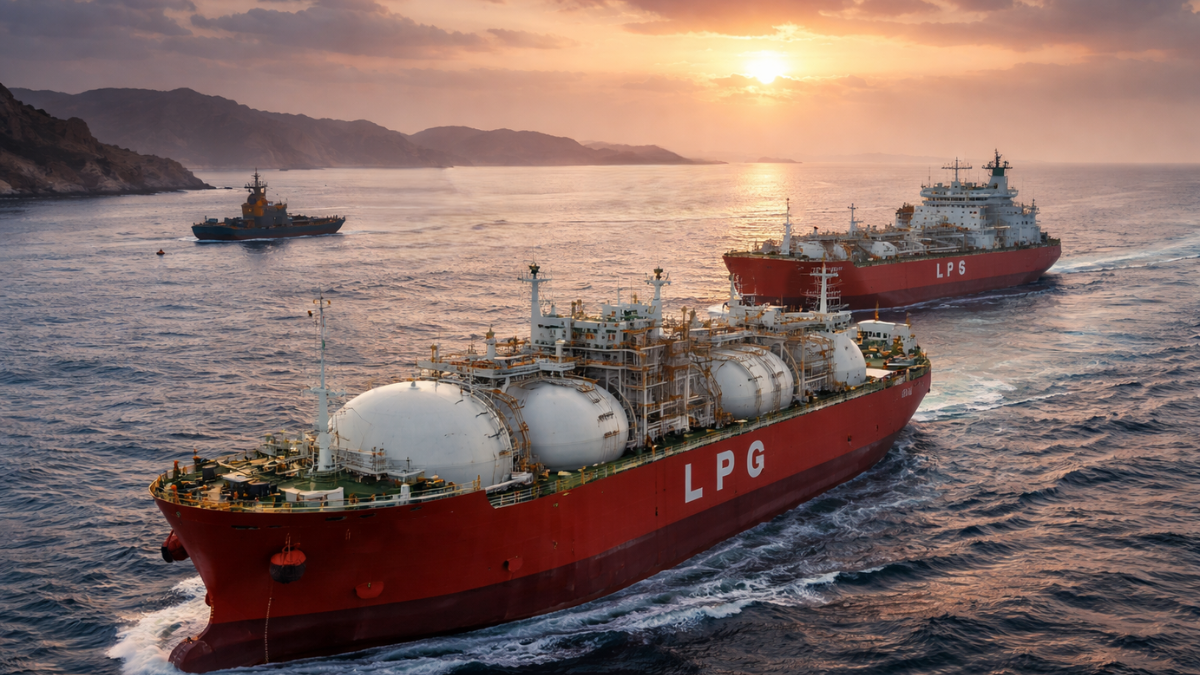


Two India-flagged LPG tankers, Jag Vasant and Pine Gas, successfully crossed the Strait of Hormuz on Monday evening. These ships were carrying around 92,600 tonnes of cooking gas. According to official updates, both vessels are expected to reach Indian ports between Thursday and Saturday.
This development comes at a time when the Strait of Hormuz is facing serious tensions due to an ongoing conflict in the region. Despite the risks, the movement of these ships marks an important step in maintaining energy supplies to India.
With the safe passage of these two tankers, a total of four India-flagged vessels have now crossed the strait since the conflict began on February 28. Just last week, two other LPG tankers, Shivalik and Nanda Devi, had already reached ports in Gujarat, including Mundra Port and Kandla Port.
Officials have stated that the government’s main focus is to ensure the safe movement of all remaining Indian-flagged ships in the region. At present, around 20 such vessels, along with Indian crew members, are still located west of the Strait of Hormuz.
Iran links end of conflict to sanctions removal and compensation from the United States
Shipping Details and Growing Supply Efforts
Ship tracking data showed that Jag Vasant and Pine Gas sailed between Iran’s Larak and Qeshm islands before crossing the strait. This route is believed to help ships signal their identity to authorities in the area, ensuring safer passage.
An official, Rajesh Kumar Sinha, shared that one LNG ship in the region has been chartered by Petronet LNG. In addition, seven LPG carriers have been hired by Bharat Petroleum Corporation Limited and Hindustan Petroleum Corporation Limited. Crude oil tankers have been arranged by major companies including Indian Oil Corporation, Reliance Industries, and BGN International.
Apart from Indian ships, an LPG tanker named Pyxis Pioneer from the United States also reached an Indian port on Sunday. With the arrival of Jag Vasant and Pine Gas, the total imported LNG supply is expected to cross 2.9 lakh tonnes.
Officials have reassured that Indian crew members onboard these vessels are safe and not facing shortages of food or water. This comes as a relief, especially considering the difficult conditions in the region.
At the same time, reports suggest that nearly 500 tanker vessels remain stuck within the Persian Gulf. This highlights the seriousness of the situation and the challenges faced by global shipping routes.
Sanctions eased briefly to allow Iranian oil shipments already loaded to be sold
Iran Responds to Claims and Ongoing Concerns
There have been reports suggesting that Iran may be selectively allowing ships to pass through the Strait of Hormuz. Some claims also hinted that payments were being made for safe passage.
However, the Iranian embassy in India has strongly denied these allegations. It described such claims as “unfounded” and rejected the idea that any ransom or special payment was being demanded from ships.
The situation remains sensitive as the Strait of Hormuz is a key route for global energy supplies. A large portion of oil and gas transported worldwide passes through this narrow waterway.
India, in particular, depends heavily on imports for its energy needs. Around 88% of its crude oil, 50% of its natural gas, and 60% of its LPG are imported. A significant share of these imports travels through the Strait of Hormuz.
Because of this dependence, ensuring the safe passage of ships is very important. The recent movement of Indian tankers shows that efforts are being made to maintain supply lines despite the risks.
The developments also underline how closely global energy supply is linked to regional stability. The movement of each tanker is being closely monitored as the situation continues to unfold.