

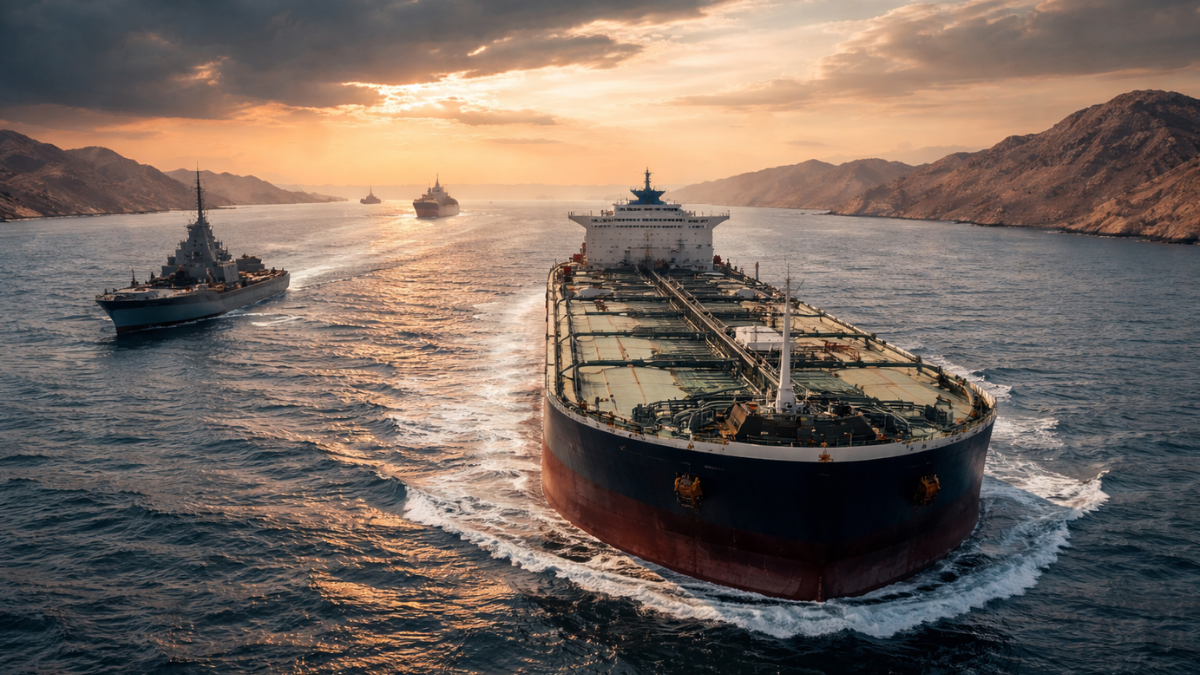


The United States has announced emergency steps to protect global oil shipments during the ongoing conflict involving Iran. President Donald Trump said the US will provide naval escorts and government-backed insurance to oil tankers traveling through the Strait of Hormuz, one of the world’s most critical energy routes.
The announcement comes after oil prices surged more than 10% since the United States and Israel began attacks on Iran over the weekend. The fighting has caused widespread disruption across the Middle East and has effectively halted oil flows through the Strait of Hormuz. Nearly one-fifth of the world’s energy supply passes through this narrow waterway between Iran and Oman.
Brent crude, the global oil benchmark, was trading near $80 per barrel after settlement. Prices briefly pared gains following the president’s statement, but traders remain skeptical that oil flows will quickly return to normal levels.
President Donald Trump said the United States Navy will begin escorting oil tankers through the Strait of Hormuz if necessary. He said the escorts would start as soon as possible. The goal is to ensure safe passage for commercial vessels facing threats from sea mines, drones, and anti-ship cruise missiles.
Trump signals prolonged US campaign as Middle East conflict enters fourth day
In addition to naval protection, the president said the US International Development Finance Corporation (DFC) will offer political risk insurance at what he described as a very reasonable price. The insurance is designed to cover losses caused by war, violence, or political instability.
The DFC typically works to mobilize private investment in developing countries and reduce financial risk for projects. Its role in insuring commercial oil shipments during an active conflict represents a significant expansion of its responsibilities.
In a news release, the DFC said it would support commercial shipping charters, shipowners, and key maritime insurance providers. The aim is to minimize market disruptions and ensure the free flow of energy and goods.
However, questions remain about how the insurance mechanism will operate. It is not yet clear how many companies will purchase the coverage or how premiums will compare to private market rates. Several large maritime insurance providers have already withdrawn war-risk coverage for ships entering the Persian Gulf because of growing security threats.
Regional Attacks and Market Impact
Tensions in the Gulf have intensified in recent days. Oil and gas infrastructure in the region has come under fire. News and confirmation of strikes have been changing rapidly.
US moves to seize ‘ghost tanker’ Skipper carrying 1.8 million barrels linked to IRGC
On Monday, a suspected Iranian drone struck a Central Intelligence Agency station located within the US Embassy in Riyadh, Saudi Arabia. No personnel were wounded. US and Saudi officials confirmed that two drones attacked the embassy compound.
Saudi defense forces also reported intercepting two cruise missiles near an area housing the Prince Sultan US air base outside Riyadh. In addition, nine drones that entered Saudi airspace were destroyed.
The kingdom had been on alert after the United States warned of an imminent missile threat in Dhahran, an area near some of the world’s largest oil-producing fields.
Energy markets have reacted strongly to these developments. Gasoline prices in the United States have climbed to their highest levels in five months. Rising fuel prices are adding pressure as insurance contracts are pulled and shipping risks increase.
While the announcement of naval escorts and insurance guarantees reduced some of the immediate risk premium in oil markets, analysts say implementation will take time. Military forces would first need to address threats such as mines, drones, and missiles before full shipping operations can safely resume.
Even with the new measures, the full restoration of oil flows through the Strait of Hormuz is expected to take weeks rather than days if hostilities continue. The United States has stated that it will ensure the free flow of energy to the world as the Iran war continues to disrupt global markets.