

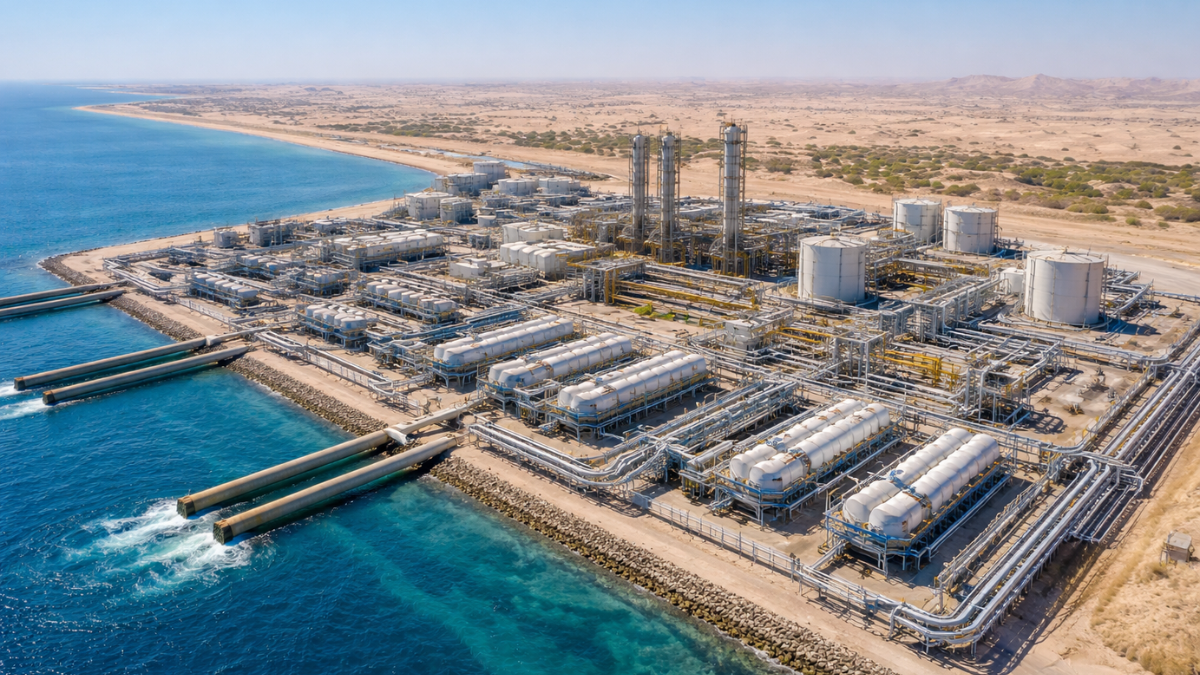


A new warning in West Asia has brought attention to something many people rarely think about—drinking water. After recent tensions involving energy infrastructure, a fresh threat has emerged targeting water desalination plants. These plants are extremely important for countries in the Gulf region.
The situation gained attention after remarks linked to Donald Trump, which were followed by warnings that if energy facilities are attacked, then water desalination plants used in the region could also be targeted. This has raised serious concerns because these plants are not just industrial facilities—they are a major source of drinking water for millions of people.
Statements reported by Ebrahim Zolfaghari suggested that any attack on energy infrastructure could lead to strikes on key facilities, including desalination systems. This highlights how such infrastructure is now being seen as strategically important.
Some recent incidents have already shown how vulnerable such infrastructure can be. Reports have mentioned damage to a desalination facility and disruptions in water supply to nearby villages. In another development, Seyed Abbas Araghchi spoke about an attack affecting a freshwater desalination plant and impacting water supply in multiple villages. This highlights how quickly daily life can be affected when such plants are hit.
The focus on desalination plants marks a shift. Earlier, energy sources like oil and gas were seen as the most critical targets. Now, water systems are also being viewed as equally important.
Gulf countries face economic strain as Iran war disrupts energy and travel
Why the Gulf Countries Depend on Desalination
The Gulf region includes countries such as Bahrain, Kuwait, Oman, Qatar, Saudi Arabia, and the United Arab Emirates. These countries share similar natural conditions that make fresh water very hard to find.
First, rainfall in the region is extremely low. On average, these countries receive only between 4 and 30 centimeters of rain each year. This is far less compared to many other parts of the world.
Second, there are no permanent rivers flowing through these countries. Instead, they have wadis, which are dry riverbeds that only carry water during rare rainfall events.
Third, groundwater is limited and not always renewable. Overuse of underground water has already reduced supplies in many areas.
Because of these reasons, desalination has become essential. Desalination is the process of removing salt and impurities from seawater to make it safe for drinking.
The dependence on desalinated water is very high. Some countries meet more than half of their water needs through desalination. Others depend on it for around 40 to 50 percent of their supply. This means that a large portion of the population relies on these plants every single day.
The growing population, rapid urban development, and economic expansion in the region have also increased the demand for water over time. This has made desalination even more important.
Sanctions eased briefly to allow Iranian oil shipments already loaded to be sold
Scale of Desalination and Environmental Concerns
The Gulf countries have built a large number of desalination plants to meet their needs. As of 2018, there were 172 such plants across the region.
Oman had the highest number of plants, followed by Saudi Arabia and the United Arab Emirates. Other countries like Qatar, Kuwait, and Bahrain also operate several facilities.
Together, these plants can produce around 22 billion litres of water every day. The total yearly production reaches thousands of billions of litres. Most of these plants are located along the coastline so they can easily access seawater.
Some projects have also explored renewable energy. One example is a large solar-powered desalination plant that produces clean water for over a million people. This shows efforts to make the process more sustainable.
However, desalination is not without its problems. The most common method used is reverse osmosis. This process creates a byproduct called brine, which is very salty water.
This brine is usually released back into the sea. Over time, it can harm marine life and disturb ocean ecosystems. Fish and other sea creatures can be affected by the increased salt levels and chemical content.
Even with these concerns, desalination remains the most reliable solution for water in the Gulf region. Without it, meeting daily water needs would be extremely difficult.