

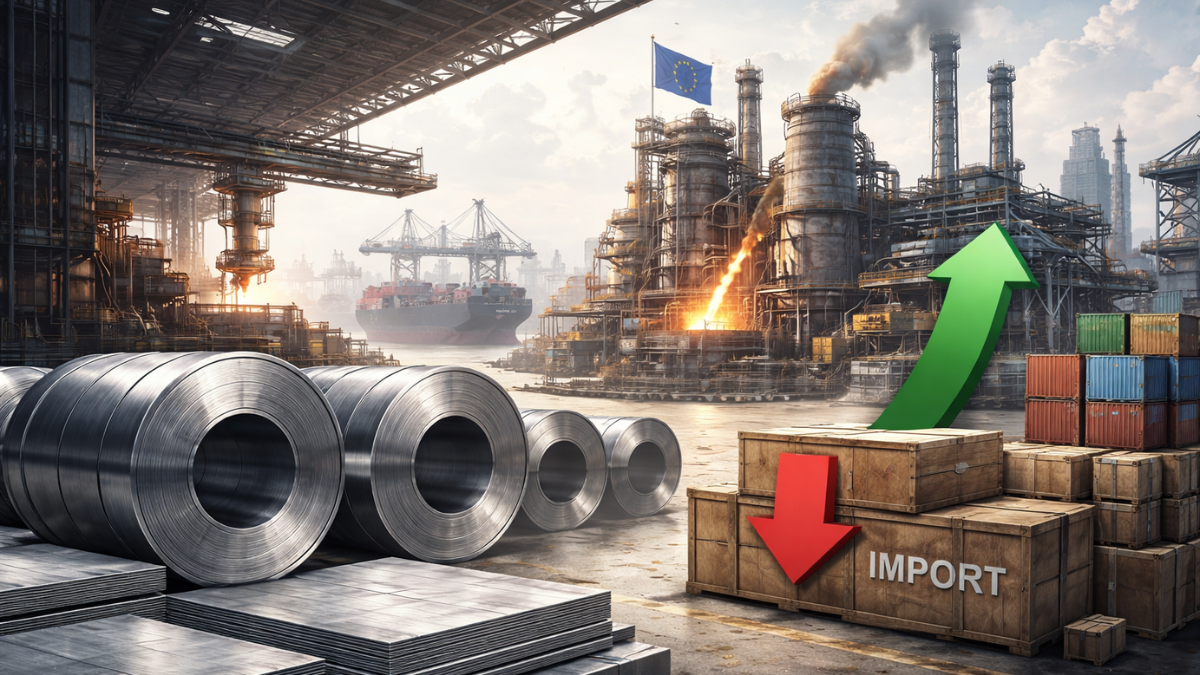


The European Union has taken a big step to protect its steel industry. It has agreed to reduce the amount of steel that can enter its market without extra charges. This move is part of a new trade plan designed to control rising imports and support local manufacturers.
Under the new agreement, tariff-free steel imports will be cut by 47 per cent. This means only 18.3 million metric tonnes of steel can enter the EU each year without extra cost. Any steel that comes in above this limit will face heavy duties of up to 50 per cent. This is double the earlier rate of 25 per cent.
These new rules were agreed upon by the European Parliament and the Council representing EU countries. However, the decision still needs final approval before it becomes law.
The changes are aimed at reducing the pressure on domestic steel producers. Many companies in Europe have been struggling due to cheap imports from other countries. Lower-priced steel has made it hard for local producers to compete and maintain production levels.
Pressure from Global Oversupply and Trade Tensions
The global steel market has been facing a major problem of oversupply. Many countries produce more steel than is needed. This extra steel is often sold in other markets at lower prices. As a result, local industries in importing regions face strong competition.
Czech firms face investigation over €137m customs and VAT fraud in EU imports
The EU has said that this situation has affected its steel plants. Many factories are currently operating at about 65 per cent capacity. With the new measures, the EU hopes to increase this to around 80 per cent. Higher capacity use can help factories become more efficient and reduce losses.
Steel imports into the EU have been controlled by safeguard measures that were introduced earlier. These measures included a 25 per cent tariff on imports that crossed a certain limit. However, these rules are set to expire on June 30 due to international trade regulations under the World Trade Organization. This created a need for a new system.
The European Commission had first suggested these stricter rules in October. It warned that without continued protection, the steel sector could face more decline. The industry has already lost about 100,000 jobs since 2008, showing how serious the situation has become.
The current situation also links back to earlier global trade tensions, including tariffs introduced during the tenure of Donald Trump, which had reshaped global steel flows and added pressure on European producers.
Several major steel-exporting countries are expected to be affected. These include Turkey, South Korea, Indonesia, China, India, Ukraine, and Taiwan. These countries send large amounts of steel to the EU and may now face reduced access to the market.
EU and Australia reach long-delayed trade agreement and announce defense cooperation
New Rules, Monitoring, and Russia Phase-Out
Along with tariffs and quotas, the EU is also tightening rules to prevent misuse of the system. One important change is the focus on where the steel is actually produced. The new rules will look at where the steel is “melted and poured.” This step is meant to stop companies from sending steel through other countries to avoid limits.
The EU plans to review these measures regularly. This will help ensure that the rules are working as intended and are not being bypassed.
In a separate move, the EU has also decided to phase out steel imports from Russia. This phase-out could happen as early as September 2028. Last year, the EU imported about 3.7 million tonnes of Russian steel slabs. This decision marks another shift in trade policy within the region.
The impact of these changes is expected to be felt beyond Europe. Countries that export steel to the EU may need to find other markets. This could lead to increased competition in regions like Asia and Africa.
For India, which is one of the key exporters, the new limits and higher tariffs could affect shipments and profit margins. At the same time, global trade flows may change as steel is redirected to different markets.
These developments highlight how the European Union is reshaping its trade rules to deal with rising imports and global supply challenges, while also addressing long-standing issues in its domestic steel sector.