

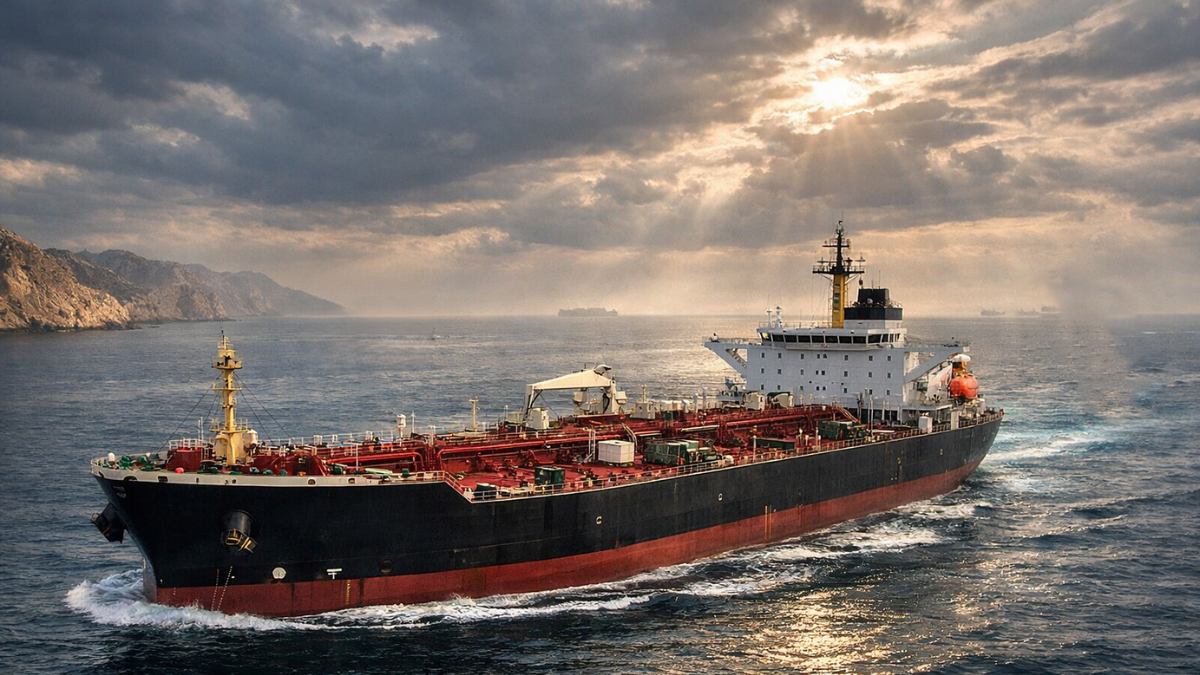


A major development is unfolding in one of the world’s most important oil routes, the Strait of Hormuz. A tanker that has been sanctioned by the United States is attempting to move through the narrow waterway, raising concerns across the global shipping and energy sectors.
The vessel, named Rich Starry, was earlier known as Full Star. It had been blacklisted in 2023 by the United States for allegedly helping Iran bypass energy sanctions. These sanctions are meant to limit Iran’s ability to sell oil internationally.
As part of new actions, the United States under Donald Trump has started a naval blockade targeting Iran’s oil exports. This blockade began on Monday at 10 a.m. New York time. The move has created confusion and concern among shipping companies and oil traders, especially in regions like the Middle East and Asia.
The Strait of Hormuz is extremely important because a large portion of the world’s oil passes through it. Any disruption here can impact global energy supply and prices.
Tanker Movement Raises Questions
The tanker Rich Starry has drawn attention because of its unusual movements. Just as the blockade came into effect, the ship was seen near Iran’s Qeshm Island, entering the narrow waterway. However, it suddenly turned back.
Sweden takes action against sanctioned tanker after oil spill near Gotland
Within hours, the tanker attempted to pass through the strait again. During this time, it broadcast information stating that it has a Chinese owner and crew. This type of signal is often used as a safety measure by ships, but in this case, it is being closely watched.
It is still unclear whether the tanker had recently visited any Iranian ports or if it was carrying oil cargo. This lack of clarity has added to the uncertainty around the situation.
Another unusual detail is that the ship claimed to be sailing under the flag of Malawi. However, officials from Malawi have stated that the country does not have an official registry for large ocean-going ships. This raises further questions about the vessel’s operations and identity.
Shipping data from Equasis shows that the tanker is owned by Full Star Shipping Ltd. This company shares contact details with Shanghai Xuanrun Shipping Co. Ltd., a Shanghai-based firm. The Shanghai company is also under sanctions by the United States. Attempts to contact the company have not received any response so far.
The actions of this tanker are being seen as a test of how strictly the United States will enforce its blockade.
India receives first Iranian oil shipment in 7 years amid limited sanctions relief
Other Ships and Global Reaction
The situation is not limited to just one tanker. Another vessel, named Elpis, was also moving through the region at the same time. According to ship-tracking platforms Kpler and Vortexa, Elpis had previously docked at an Iranian port before heading toward the Strait of Hormuz.
As the blockade began, Elpis was seen entering the Gulf of Oman through the strait. This movement has added to concerns that more ships may be trying to navigate the new restrictions.
Since the blockade started, no ships with active tracking signals have been seen entering the Persian Gulf. This suggests that many shipping operators are choosing to wait until the situation becomes clearer.
The global shipping community is currently on edge. Many companies are unsure about the exact rules of the blockade and how it will be enforced. As a result, several operators are pausing their movements to avoid risks.
Energy traders are also watching closely. Any disruption in oil transport through this route can affect supply chains and pricing across the world.
Countries in Asia, which depend heavily on oil imports from the Middle East, are especially concerned. China has responded through its foreign minister Wang Yi, who has urged global stakeholders to push for peace talks between Tehran and Washington.
The situation continues to develop as ships move cautiously and authorities monitor activity in the Strait of Hormuz.