



Authorities in Poland have detained nine suspects as part of a major investigation into customs fraud linked to goods imported from China. The operation was carried out following a request from a European-level prosecution body responsible for protecting the financial interests of the European Union.
The arrests took place last week and are part of a wider probe into an organized criminal group. Officials believe this group was involved in avoiding the payment of import taxes and customs duties on goods entering the European Union.
Out of the nine suspects, four have been placed in pre-trial detention for three months. The remaining five individuals have been released on conditional bail. These conditions include restrictions such as not being allowed to leave the country and being required to report regularly to their local police stations.
Law enforcement agencies also carried out multiple searches at company offices and private homes linked to the suspects. During these operations, authorities collected evidence that could help build the case. In addition, 25 lorries were seized along with cash amounting to €29,500 (approximately PLN 130,000).
Citizenship of Gurdev Singh Sohal revoked after identity fraud and undisclosed immigration history
How the Fraud Scheme Worked
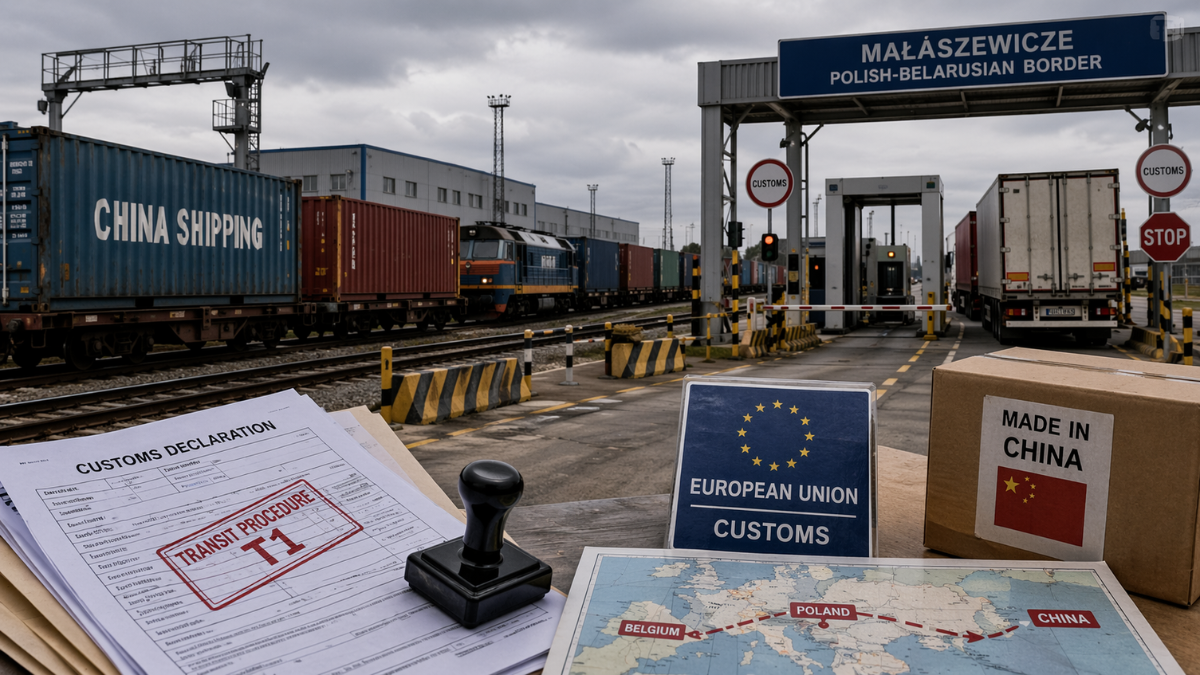
Investigators believe the suspects used a clever but illegal method to avoid paying taxes. The scheme involved goods imported from China that entered the European Union through a major rail border crossing located on the Polish–Belarusian border.
This border point is an important gateway for goods arriving from Asia into Europe. According to the findings, containers arriving at this location were officially declared as being in transit to another European country, specifically Belgium.
This declaration allowed the suspects to use a customs process known as the “transit procedure” or T1. This system is designed to help goods move freely across countries within the European Union without paying import duties or VAT immediately. Instead, these charges are meant to be paid at the final destination country.
However, in this case, authorities say the goods never actually left Poland. Instead of continuing their journey to Belgium, the containers were redirected to warehouses within Poland. This allowed the suspects to avoid paying the required taxes in Poland, which should have been collected since the goods were used or stored there.
To carry out this scheme, the suspects are believed to have used false transport documents. These documents made it appear as though the goods were traveling to another country when they were not. The group also reportedly used shell companies based in different European Union member states. These companies existed mostly on paper and were used to create a false trail of movement for the goods.
Financial Damage and Ongoing Investigation
The estimated financial loss caused by this fraudulent activity is significant. Authorities believe that at least €6.6 million (around PLN 29 million) in customs duties and import VAT was not paid due to the scheme.
The investigation began after a report was submitted by a European anti-fraud agency. This initial report triggered further action, leading to the current arrests and searches.
Several law enforcement and customs agencies have been involved in the operation. These include specialized police units and regional customs and tax offices. Their combined efforts have helped uncover the details of the alleged fraud and gather important evidence.
Officials have emphasized that all individuals involved in the case are presumed innocent until proven guilty in court. Legal proceedings will continue in the appropriate Polish courts, where the evidence collected during the investigation will be examined.
The case highlights the challenges faced by authorities in monitoring cross-border trade and preventing fraud. It also shows how complex schemes can exploit existing systems meant to support smooth trade between countries.
The investigation remains ongoing, with authorities continuing to analyze the seized materials and evidence.