

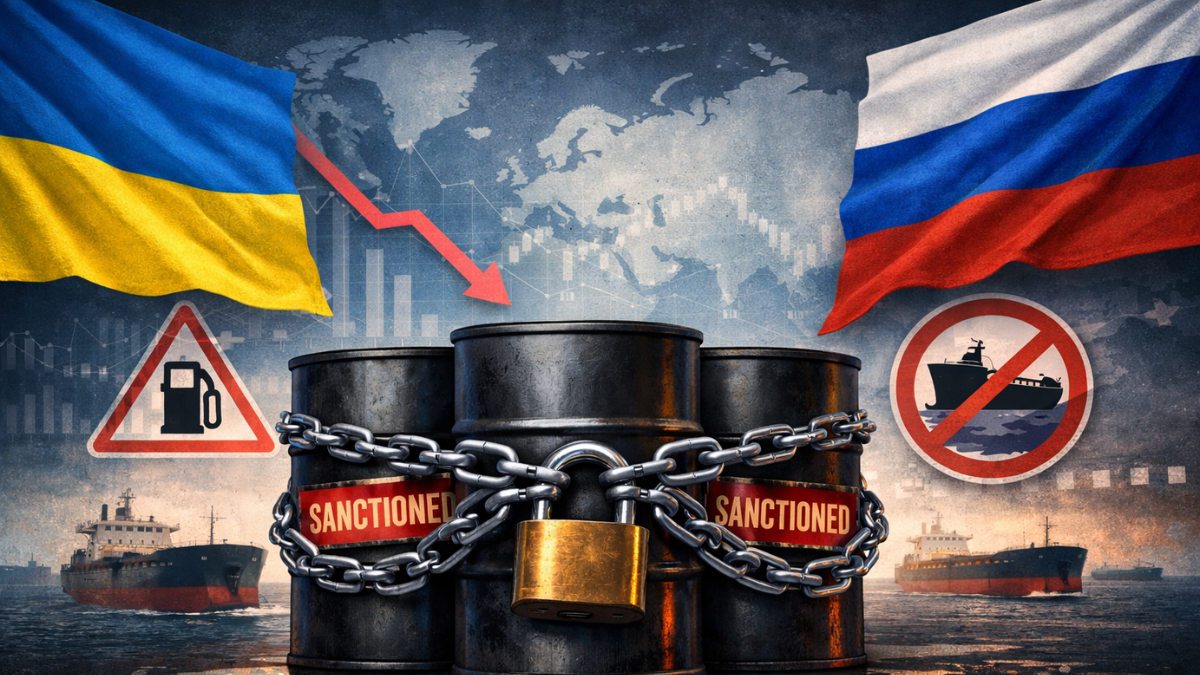


A new phase in the ongoing war has brought energy infrastructure into sharp focus. Ukraine has increased long-range strikes on Russian oil facilities after international pressure on Russia weakened. This shift came after a temporary easing of oil sanctions allowed some countries to purchase Russian oil that had been stranded at sea.
The move to relax restrictions was aimed at stabilizing global energy markets, which had been affected by conflict in the Middle East. However, this decision has drawn criticism from several European allies who believe that reducing sanctions could give Russia more financial strength to continue the war.
Ukraine has responded by increasing its own efforts to apply pressure. Volodymyr Zelenskiy stated that instead of relying only on international sanctions, the country is now using military capabilities to target critical parts of Russia’s oil export system. This includes long-range drone strikes that can reach deep into Russian territory.
Officials have stated that if Ukraine does not respond strongly to ongoing attacks, the conflict could continue without pause. Recent heavy strikes on Ukrainian cities have also added to the urgency behind these actions.
Hungary’s opposition stalls €90 billion Ukraine aid, EU plans next steps
Major Disruptions to Russia’s Oil Exports
Recent drone strikes have caused significant damage to key oil export facilities in Russia. Important Baltic Sea ports, including Ust-Luga and Primorsk, were affected. These ports are vital for shipping crude oil and petroleum products to global markets.
Following the attacks, both ports were forced to suspend operations. Fires broke out, and thick smoke was seen across nearby regions. Although one of the ports resumed operations later, it did so at a reduced capacity due to infrastructure damage.
Reports indicate that Ukraine’s long-range drones traveled over 900 kilometers to reach these targets. This shows a major expansion in operational range and capability.
The impact of these strikes has been severe. Estimates suggest that about 40% of Russia’s oil export capacity has been disrupted. This includes not only the damaged ports but also issues linked to a pipeline incident and the seizure of some tankers.
This level of disruption is considered one of the most significant in modern times for Russia’s oil sector. As one of the world’s largest oil exporters, such a reduction affects both supply chains and revenue.
Russia has begun efforts to redirect oil exports through other routes. Transneft is working to adjust flows away from the damaged Baltic ports. However, the effectiveness of these changes remains uncertain, especially if storage facilities have been seriously affected.
Canada expands sanctions with 100 additional Russian oil tankers targeted
Energy Becomes a Key Battlefield
The recent developments show how energy has become a central part of the conflict. Earlier strikes had focused on oil refineries, which affected domestic fuel supplies. The latest attacks, however, are aimed directly at export infrastructure, making them more impactful on national income.
At the same time, global oil prices have risen above $100 per barrel due to tensions linked to the Middle East conflict. This creates a complex situation where supply disruptions and geopolitical events are influencing each other.
Ukraine’s strategy appears to focus on reducing the financial resources available to Russia. By targeting export facilities, it aims to limit the country’s ability to generate revenue from oil sales. This adds another layer of pressure alongside military actions on the battlefield.
The situation has also revealed differences among international partners. While some countries continue to support strict sanctions, others have taken steps to ease restrictions temporarily. This has created a shifting global response, with Ukraine adjusting its actions accordingly.
Recent days have seen a cycle of attacks and responses. Strikes on Ukrainian cities have been followed by drone operations targeting Russian infrastructure. Each side continues to act in response to the other, increasing the intensity of the conflict.
The damage to oil facilities, combined with existing disruptions, has made energy a critical factor in the ongoing war. As infrastructure is targeted and exports are affected, the economic impact becomes more visible on both sides.