

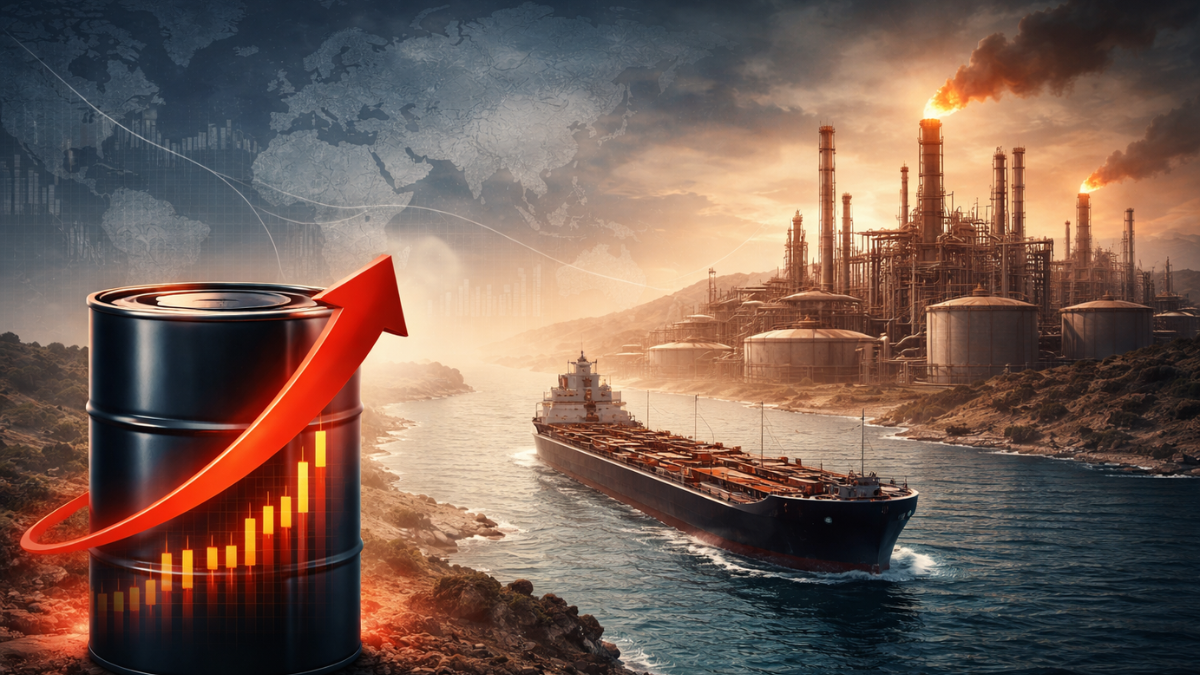


The escalating conflict in the Middle East is already affecting the global economy. The first signs are visible in financial markets. Investors are moving money into safe assets like gold and the US dollar. At the same time, stock markets are falling. Smaller economies with limited foreign exchange reserves are facing the most pressure.
The main channel of impact is oil.
Iran supplies about 5% of global oil. If Iranian production stops completely, oil prices could rise by about 20%. That would increase fuel costs around the world.
A larger risk involves the Strait of Hormuz. Around 20% of the world’s oil supply moves through this narrow shipping route. If the Strait of Hormuz is shut down, oil prices could spike sharply. Analysts have warned prices could reach as high as $108 per barrel.
Markets have already reacted. Brent crude rose more than 13% to above $82 per barrel, the highest level since January 2025. West Texas Intermediate traded near $72 per barrel in early Asian trading.
Higher oil prices affect almost everything. Oil is used for transport, electricity, and manufacturing. When it becomes expensive, businesses face higher costs. That often leads to rising prices for everyday goods.
Israel–Iran conflict sparks oil shock fears for India as Hormuz risks mount
The escalation followed US and Israeli military strikes that reportedly killed Iran’s Supreme Leader, Ayatollah Ali Khamenei. The United States is led by President Donald Trump. The development sharply increased tensions across the region.
Major Economies Face Uneven Impact
The economic effects are not the same for every country.
Large oil-importing nations face greater risks. China, Europe, and India are among the biggest buyers of crude from the Middle East. China is especially exposed. It takes nearly all of Iran’s exports, which make up about 13% of its seaborne crude imports in 2025. If those supplies are disrupted, China would lose access to discounted barrels.
India would also face higher import bills. European economies remain sensitive to energy price shocks after recent crises.
Oil-exporting countries may benefit from rising prices. Russia, Canada, and Norway could see stronger oil revenues. Higher global prices may ease financial pressure on exporters that have seen weaker crude income.
The United States is in a different position compared to past oil shocks. Due to shale production, it is now an oil exporter. American consumers would still pay more for fuel, but the broader economy would face less strain than in earlier energy crises.
If Iranian oil is removed from markets, China and India may shift purchases toward discounted Russian crude. That could increase demand for Russia’s exports.
Diplomatic tensions have also grown. China’s Foreign Minister Wang Yi called it unacceptable to openly kill the leader of a sovereign country and pursue regime change. The remarks come ahead of a planned meeting between Chinese President Xi Jinping and US President Donald Trump in Beijing. Any breakdown in relations could disrupt a recent trade truce that had helped calm markets.
IRGC chief Pakpour and Iran defense minister Amir Hatami killed as Israel strikes deep inside Iran
Financial Markets React as Risks Rise
Beyond oil, financial markets are showing signs of stress.
Investors often pull money out of riskier markets during conflicts. This can cause sudden capital outflows and weaker currencies in emerging economies.
Countries with low foreign exchange reserves are especially vulnerable. Argentina, Sri Lanka, Pakistan, and Turkey face heightened risks of currency depreciation and financial instability.
Turkey has already responded. Its central bank suspended its one-week repo auctions due to developments in financial markets. Turkey is also exposed because of trade links with Iran. Even though Iran is a small economy globally, market sentiment can affect countries connected to it.
Central banks are facing a complex situation. Higher oil prices can push inflation higher. At the same time, rising uncertainty can weaken economic demand. This makes policy decisions more challenging.
The global economy was already coping with tariff tensions under President Donald Trump and broader uncertainty. The Middle East conflict has added another layer of instability. Oil supply risks, shifting trade flows, diplomatic strain, and financial volatility are unfolding at the same time across global markets.