

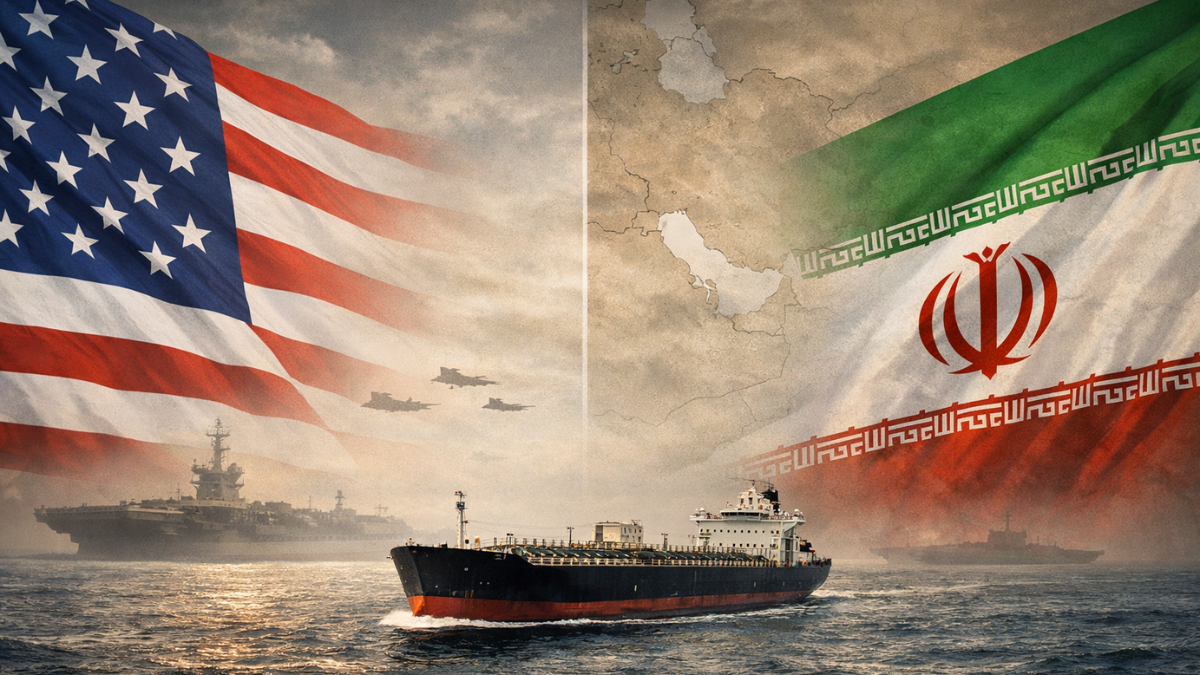


The United States has announced a new round of sanctions against Iran just one day before fresh nuclear talks are set to begin in Geneva. The move comes as both countries prepare for their third round of negotiations this year, while Washington continues expanding its military presence in the Middle East.
The sanctions target 12 vessels, along with several companies and individuals. US officials say these ships and networks are involved in selling Iranian oil. According to Washington, the revenue from these sales helps fund Iran’s ballistic missile program and supports weapons procurement.
US Secretary of the Treasury Scott Bessent said Iran uses financial systems to sell oil, move the money, and purchase components for its nuclear and conventional weapons programs. He stated that under the current administration, the United States will continue applying maximum pressure to target Iran’s weapons capabilities and its support for armed groups.
Under these sanctions, any assets belonging to the listed companies and individuals within the United States will be frozen. American citizens and businesses are largely banned from engaging in financial transactions with them.
While the United States describes the oil trade as “illicit,” Iran rejects the claim. Tehran says it is selling its own petroleum products and has called the crackdown on its energy sector piracy.
European Union places Iran’s IRGC on terrorist list under counter-terrorism sanctions regime
At the same time, Washington has deployed two aircraft carriers and large fleets of fighter jets to the region. The military build-up comes as diplomatic talks move forward.
Background of the Nuclear Dispute and Renewed Pressure
The tensions over Iran’s nuclear activities date back years. In 2015, Iran signed the Joint Comprehensive Plan of Action with world powers. Under the agreement, Iran scaled back its nuclear program in exchange for the lifting of international sanctions.
In 2018, during his first term, US President Donald Trump withdrew the United States from the deal. Washington then reimposed strict economic sanctions on Iran.
After returning to office in 2025, President Donald Trump revived the maximum pressure campaign with the aim of cutting off Iran’s oil exports. Despite this pressure, diplomatic contacts have continued in an effort to prevent a wider conflict.
The talks scheduled in Geneva represent the third round of nuclear discussions this year between the two sides.
Disagreements Over Uranium Enrichment and Missiles
One of the main disputes centers on uranium enrichment. The United States is demanding that Iran stop enriching uranium entirely, arguing that enrichment could allow Tehran to develop nuclear weapons.
Iran open to nuclear deal compromises with sanctions relief on the table
Iran denies seeking a nuclear bomb. Iranian Foreign Minister Abbas Araghchi, who is leading Tehran’s delegation in Geneva, said a fair and balanced agreement is possible. In an interview with India Today, Araghchi said Iran is ready to answer questions about its uranium enrichment program but will not give up what it considers its right to peaceful nuclear technology.
Another major disagreement involves Iran’s missile program. US officials have raised concerns about missile development. Araghchi dismissed claims that Iran is developing missiles capable of reaching the United States. He said Iran has limited the range of its missiles to below 2,000 kilometers and that the program is designed for self-defense.
In a recent address to Congress, President Donald Trump said the United States is seeking a deal with Tehran but has not heard a clear statement that Iran will never possess a nuclear weapon. Iranian officials have stated that Iran will under no circumstances develop a nuclear bomb.
Tensions rose further after the United States bombed three Iranian nuclear facilities in June 2025 as part of Israel’s assault on the country. President Trump has repeatedly said the strikes “obliterated” Iran’s nuclear program.
The new US sanctions, announced just before the Geneva nuclear talks, come amid ongoing diplomatic efforts and heightened military activity in the region.