

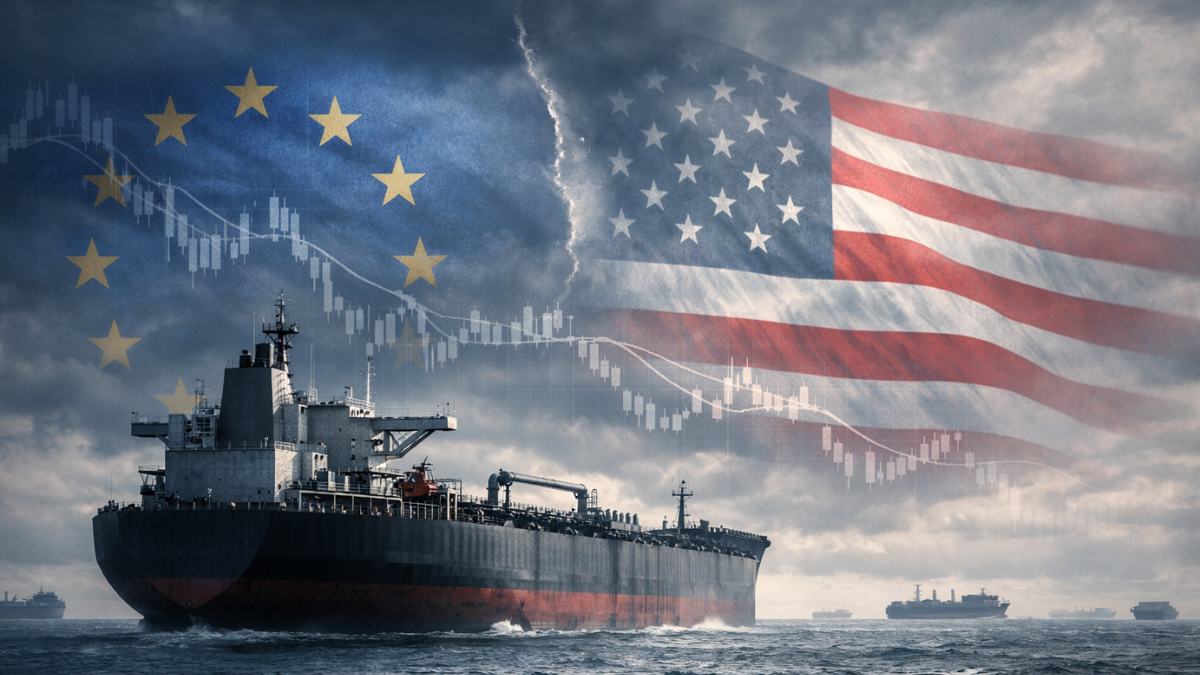


The Russia-Ukraine war has revealed fresh divisions within Western powers. A new dispute has emerged after the European Union failed to secure support from the United States and the Group of Seven for a proposed blockade targeting Russian oil supplies.
According to Russian media citing a diplomat based in Brussels, the European Union presented a detailed plan to the United States and the G7. The proposal aimed to fully prohibit European businesses from transporting Russian oil anywhere in the world. It also sought to ban maintenance, supply, financing, and insurance services for tankers carrying Russian oil, regardless of the flag they fly.
However, Washington D.C., under President Donald Trump, refused to back the proposal. The G7 also declined to offer support. The development has been described by some outlets as a “bloodless victory” for Russian President Vladimir Putin.
EU Pushes for Tougher Oil Restrictions
The European Union’s plan went beyond existing restrictions. It was not limited to banning Russian oil imports into Europe. Instead, it focused on cutting off the global logistics that help it reach international buyers.
Under the proposal, European companies would not be allowed to transport Russian oil under any circumstances. Even if a tanker was registered outside the EU, European firms would be barred from providing services.
European Union sanctions Black Sea port in Georgia amid Russia concerns
The restrictions would have included maintenance for oil tankers, supply of necessary equipment, financial services, and insurance coverage. In simple terms, European businesses would not be able to assist in moving Russian oil anywhere in the world.
Oil exports are a key source of revenue for Moscow. By targeting transport and support services, the EU aimed to make it harder for Russia to sell oil globally. The proposal was presented to the United States and the G7 in an effort to create coordinated action and ensure maximum impact.
But the plan did not receive the backing it sought.
U.S. and G7 Decline Support
The refusal by Washington D.C. to support the EU’s oil blockade marked a significant moment. The United States has been a major partner in sanctioning Russia since the war began. However, in this case, the Trump administration did not agree to adopt the EU’s proposed measures.
Without U.S. participation, the reach of such sanctions would be limited. The G7, which includes several of the world’s largest economies, also did not move forward with the proposal.
The lack of joint action highlights differences in strategy among Western allies. While sanctions on Russia remain in place, not all countries agree on expanding them in the same way.
Russian media have portrayed the situation as a strategic gain for Vladimir Putin. The term “bloodless victory” reflects the idea that Russia benefits from Western disagreements without any military action.
Spain proposes lifting EU sanctions on Delcy Rodriguez after prisoner amnesty
Questions Over Western Unity
Since the start of the Russia-Ukraine war, Western nations have often acted together. They have introduced financial sanctions, trade restrictions, and energy-related measures targeting Moscow.
The EU’s latest proposal was an attempt to tighten control over Russian oil by blocking the services that enable its transportation worldwide. However, the absence of support from the United States and the G7 has prevented unified implementation.
The disagreement does not signal the end of sanctions. Existing measures remain active. The issue centers specifically on the new proposal to ban European involvement in transporting and servicing Russian oil shipments globally.
Energy remains central to the conflict. Russian oil revenues are vital for Moscow, while global markets depend heavily on stable energy supplies.
The EU’s effort to expand oil sanctions, and the refusal by Washington D.C. and the G7 to support it, has added another layer of complexity to Western coordination during the ongoing war.