

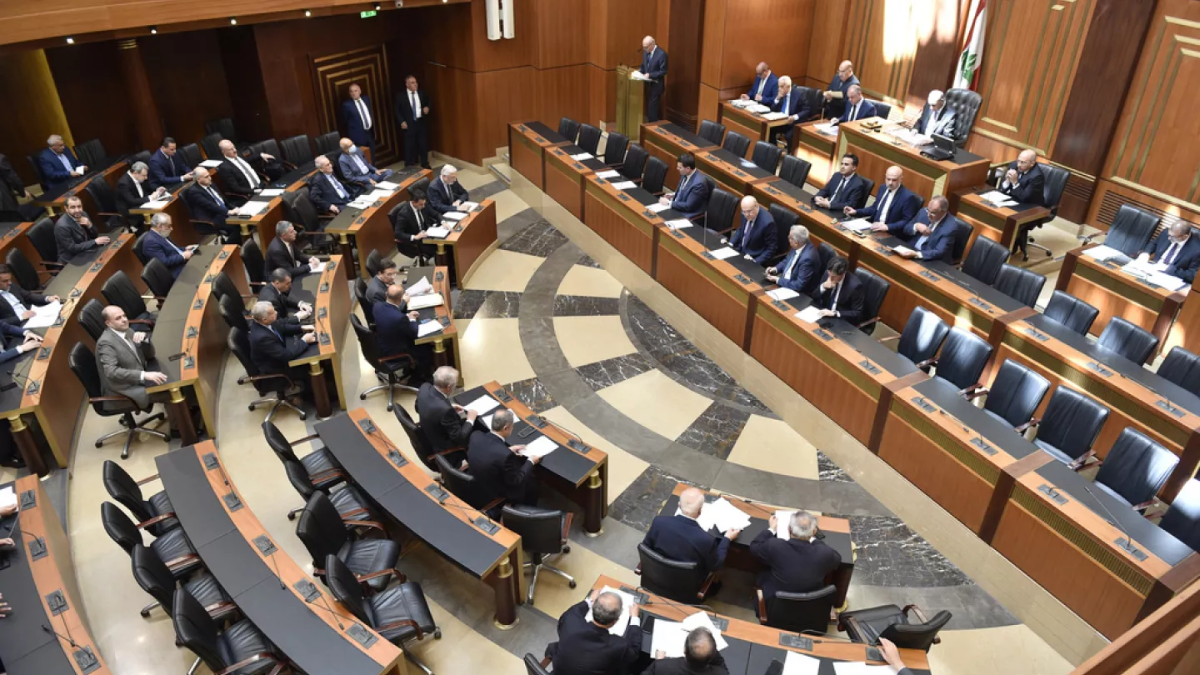


The United States Congress has introduced a new bill aimed at protecting Lebanon’s upcoming parliamentary elections from interference. The legislation calls for sanctions against any individual or group that obstructs the electoral process. This includes efforts to delay elections, influence results, or prevent citizens from voting.
The bill was introduced by U.S. Representatives Darin LaHood and Darrell Issa. It highlights growing concerns about repeated attempts to manipulate Lebanon’s democratic system. According to the legislation, free and fair elections are essential for Lebanon’s sovereignty, political stability, and democratic governance.
The bill also focuses on protecting the voting rights of Lebanese citizens living outside the country. These citizens make up a large diaspora and play an important role in the nation’s political life. Any attempt to restrict or prevent overseas voting would also trigger sanctions under the proposed law.
Sanctions Target Election Interference
The proposed legislation gives the United States the authority to impose sanctions on anyone found obstructing Lebanon’s elections. This includes individuals involved in voter suppression, election delays, or intimidation. It also covers actions aimed at stopping Lebanese citizens abroad from participating in parliamentary elections.
The bill states that Hezbollah, along with other armed groups, corrupt political elites, and foreign actors, has frequently tried to influence Lebanon’s electoral process. These efforts have raised serious concerns about the fairness and transparency of elections.
Surge in Iran-linked crypto flows draws U.S. investigation over possible sanctions evasion
Voting from abroad has become a sensitive political issue in Lebanon. A law passed in 2017 allows expatriates to vote, but it limits them to choosing only six members of parliament from a special bloc. This law has not yet been fully implemented, and many Lebanese living overseas remain unable to vote freely for all 128 parliamentary seats.
The issue has caused major political tension inside Lebanon. In October, nearly half of the members of parliament boycotted a legislative session. The boycott was triggered by a dispute involving Speaker Nabih Berri, who refused to add a fast-track amendment related to expatriate voting to the agenda. Following the boycott, parliament did not meet again until mid-December.
The U.S. bill aims to discourage such political deadlocks and prevent any actions that undermine the democratic process. By threatening sanctions, the legislation seeks to ensure that elections take place on time and without interference.
Lebanon’s Recent Political Challenges
Lebanon has experienced deep political instability in recent years. In 2022, the country entered a period of political chaos after then-President Michel Aoun left office without a successor. This led to a prolonged power vacuum at the highest level of government.
For more than two years, Lebanon remained politically paralyzed. During this time, parliament struggled to function, key decisions were delayed, and government institutions weakened. The country’s economy continued to deteriorate, worsening an already severe financial crisis.
Trump hints at sanctions as U.S.–Colombia talks move from diplomacy to economic pressure
At the same time, Lebanon faced growing security tensions. Armed conflict along the border with Israel intensified, largely due to the presence of Hezbollah in the area. These clashes added to the country’s instability and further strained its political system.
The prolonged deadlock finally ended in January 2025, when Joseph Aoun was chosen as Lebanon’s new president. His election marked a turning point after years of uncertainty and institutional paralysis.
Lebanon is now preparing for its next parliamentary elections, scheduled for May. These elections are widely viewed as a critical step toward restoring political order and democratic legitimacy.
The U.S. Congress bill underscores the importance of holding these elections without interference. It emphasizes that democratic elections are a cornerstone of national sovereignty and political stability. The legislation reflects concerns that past disruptions could repeat if strong deterrents are not in place.
By including sanctions as a response to election obstruction, the bill sends a clear message. Any attempt to manipulate or delay Lebanon’s electoral process, whether from within the country or from abroad, could carry serious consequences.