

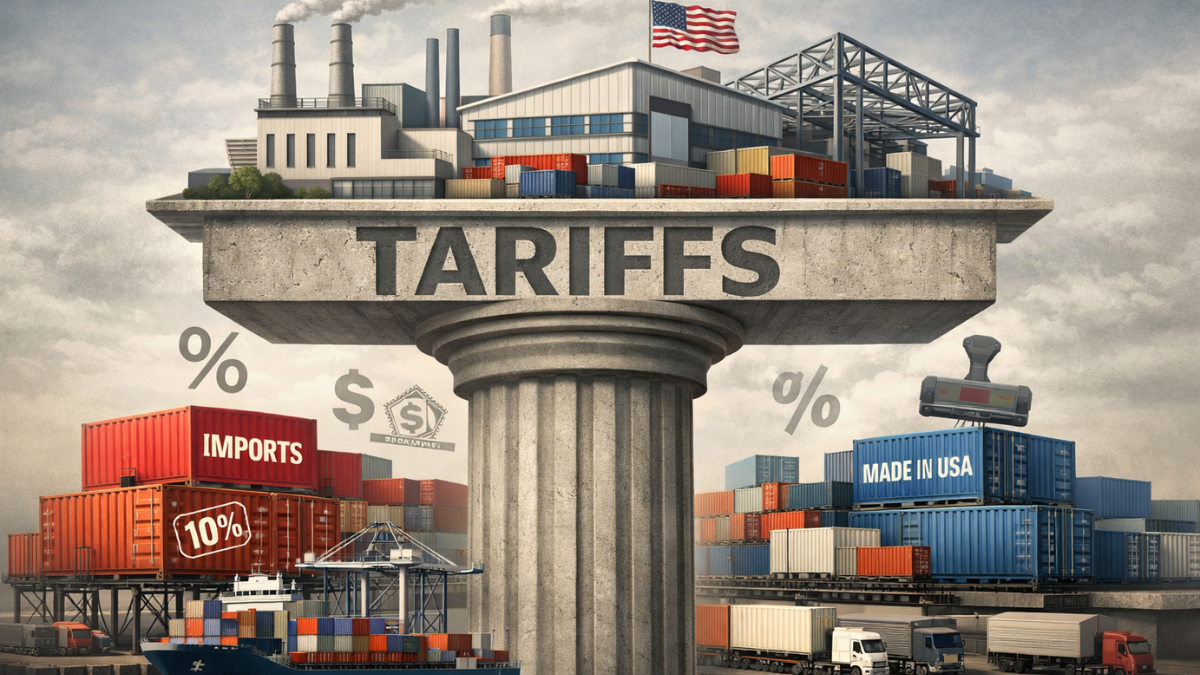


The United States has made tariffs a core element of its economic approach. In a year-end address from Washington on December 18, US President Donald Trump stated that tariffs will continue as a permanent feature of US economic policy. Import duties were described as a long-term tool to reshape global trade rather than a short-term negotiating measure.
During the nationally televised address, Trump repeatedly credited tariffs for driving investment, factory construction, and job creation. He said companies are returning to the United States in record numbers because goods manufactured domestically do not face import duties. Tariffs were described as a key reason behind renewed interest in building and expanding factories inside the country.
The announcement signals a firm shift in how the United States approaches trade and manufacturing and has direct implications for major trading partners, including India.
Tariffs Positioned as a Core Economic Strategy
Trump stated that tariffs have played a major role in recent economic gains. According to him, companies are choosing to manufacture within the United States to avoid paying tariffs on imported goods. He emphasized that products made in America are free from import duties, while foreign-made goods face added costs.
He linked tariffs directly to investment inflows, claiming they have helped secure a record-breaking 18 trillion US dollars in investment into the country. Factory construction and private-sector job growth were highlighted as outcomes of this approach. Trump said long-standing trade practices that favored foreign exporters over US industry were being reversed.
Trump makes rare personal plea to Xi as Hong Kong media icon Jimmy Lai languishes in prison
Tariffs were also presented as a source of government revenue. Trump said collections from import duties were higher than expected and helped fund tax cuts and other spending programs. He said that income generated from tariffs has also helped fund the newly announced “Warrior Dividend” payments for US military personnel.
National security was another key theme. Trump argued that reshoring manufacturing strengthens supply chains and reduces dependence on foreign production. He said economic strength comes from private-sector job creation rather than expanding government roles, linking factory openings to greater national security.
Impact on Trade Partners and Indian Exports
Trump’s remarks indicate that scrutiny of imports into the United States will intensify. Major trading partners are expected to be affected, including India. India exports a range of goods to the United States, including pharmaceuticals, steel, aluminium, auto components, chemicals, textiles, and information technology hardware.
For Indian companies, the message was clear. Firms exporting to the US must either absorb higher trade costs due to tariffs or shift manufacturing and assembly operations to the United States. This places pressure on exporters that rely heavily on access to the American market.
India has been working to position itself as an alternative manufacturing hub as global supply chains adjust. However, Trump made it clear that his preferred destination for new investment remains the United States itself. While companies may diversify production away from certain regions, the policy strongly favors domestic manufacturing over imports.
US aluminium tariffs disrupt EU exports from raw metal to finished products
Trade continues to be one of the most sensitive areas in India–US relations. While cooperation has expanded in defence, technology, and critical supply chains, differences over tariffs persist. India has sought greater access for its goods and services while resisting pressure to sharply reduce tariffs across sectors.
Tariffs Linked to Revenue, Security, and Policy Actions
Trump reinforced that tariffs serve multiple purposes beyond trade protection. He described them as a financial tool that supports domestic priorities while encouraging economic independence. Import duties were framed as a way to strengthen the economy without relying on overseas manufacturing.
National security was again emphasized, with Trump linking domestic production to stronger defence readiness and economic stability. He argued that factory openings improve both economic resilience and security.
Alongside the economic announcement, the Trump administration also revealed a major arms sales package for Taiwan valued at more than 10 billion US dollars. The package includes medium-range missiles, howitzers, and drones. This announcement was made during the same address, reflecting a focus on economic and security priorities.
The United States remains India’s largest trading partner, and American officials have described India as important for diversifying supply chains. However, Trump’s remarks show that tariffs will continue to be central to trade discussions, shaping how goods, investment, and manufacturing move into the United States.