

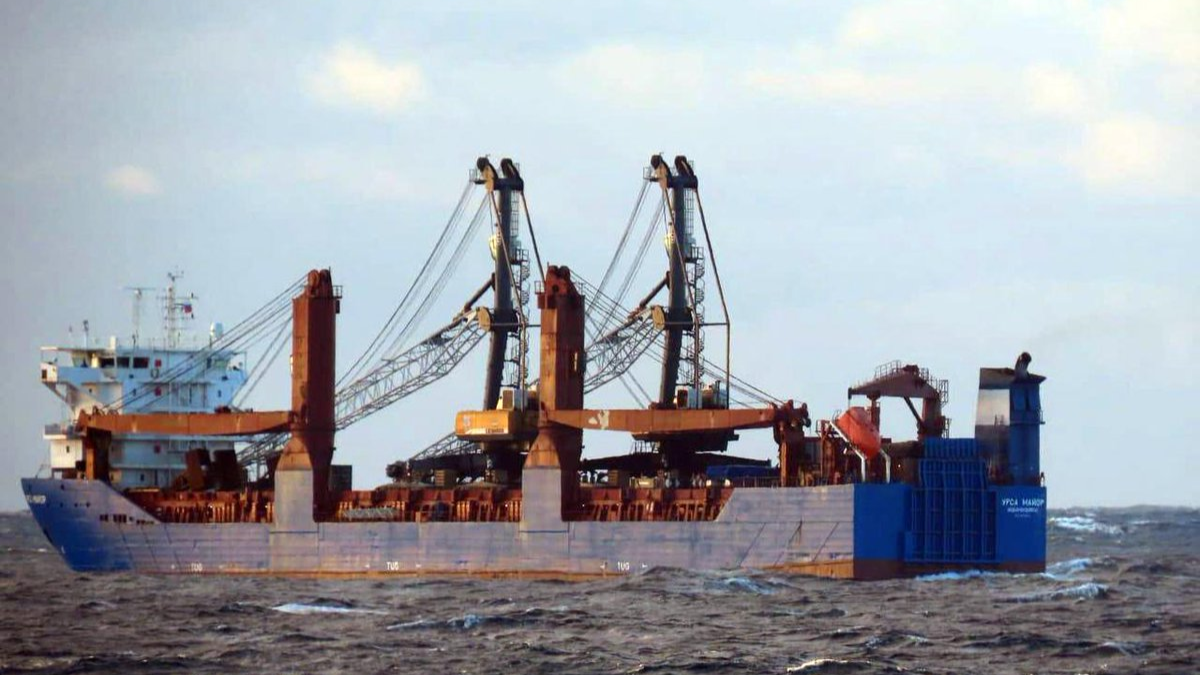


A Russian cargo ship, the Ursa Major, sank off the coast of Cartagena, Spain, in December 2024 under mysterious circumstances. Spanish authorities now say the ship was carrying undeclared nuclear reactor parts, which were likely meant for North Korea, a country under strict international sanctions. The incident has raised alarms about secret nuclear trade and sanction evasion.
Secret Cargo and Strange Routes
The Ursa Major was part of Russia’s shadow fleet, a group of ships often used for hidden or sensitive missions. Its official ship manifest only listed empty containers and port equipment. However, aerial images showed two large containers at the back of the ship that were not on the manifest. Spanish investigators later confirmed that these containers held parts for VM-4SG nuclear reactors.
The ship took an unusual route. Instead of a direct path from St. Petersburg to Vladivostok, it sailed through the Mediterranean Sea, suggesting an attempt to avoid international scrutiny. Spain determined the final destination was likely the North Korean port of Rason, a small port without equipment to handle such heavy nuclear parts. Interestingly, the Ursa Major carried specialized cranes capable of unloading such cargo, pointing to careful preparation for a secret delivery.
This discovery comes amid growing global concern over Russia’s attempts to bypass sanctions. In earlier reports, Russian oil shipments also used long, convoluted routes and multiple transfers to reach markets while avoiding Western sanctions. The Ursa Major incident appears to be another example of Russia conducting covert operations to move sensitive cargo internationally.
Mysterious Sinking and Possible Attack
Spanish maritime authorities first noticed something was wrong on December 22, when the ship began slowing down and leaning to one side without explanation. On December 23, a distress signal was sent. Spanish rescue units arrived and found the ship heavily tilted. The captain claimed there was a mechanical failure, but further inspection revealed hull damage consistent with an external strike, possibly from a supercavitating torpedo.
Shortly after, the Russian warship Ivan Gren arrived. The vessel demanded control of the area and fired flares, likely to interfere with satellite surveillance. Soon after, the Ursa Major disappeared below the water, sinking to a depth of 2,500 meters. Seismographs detected underwater explosions, confirming a sudden and violent end for the ship.
Days later, the Russian deep-sea salvage ship Yantar arrived at the site. This ship is capable of retrieving heavy or sensitive cargo from great depths, suggesting Russia was attempting to recover or destroy the nuclear reactor parts before any inspection could occur.
Links to Sanctions and Secret Nuclear Trade
The Ursa Major was operated by Oboronlogistics, a Russian company known for transporting military cargo for the government. Spain insisted that its actions were within international maritime law, while Russia accused Spain of interference.
Russia issues arrest warrant for chess legend Garry Kasparov over alleged “terrorist” online content
The reactor parts found on the ship point to covert cooperation between Russia and North Korea, two nations already under various international sanctions. North Korea is prohibited from importing nuclear materials and equipment, while Russia faces restrictions on military and nuclear exports. Moving such sensitive cargo secretly through global waters violates sanctions agreements and highlights the lengths some countries may go to bypass them.
This event also mirrors past cases where Russian oil and other restricted goods used hidden routes to avoid Western sanctions. By carrying nuclear components secretly, the Ursa Major may have been part of a larger, sanctioned-defying operation, raising serious concerns for international security.