

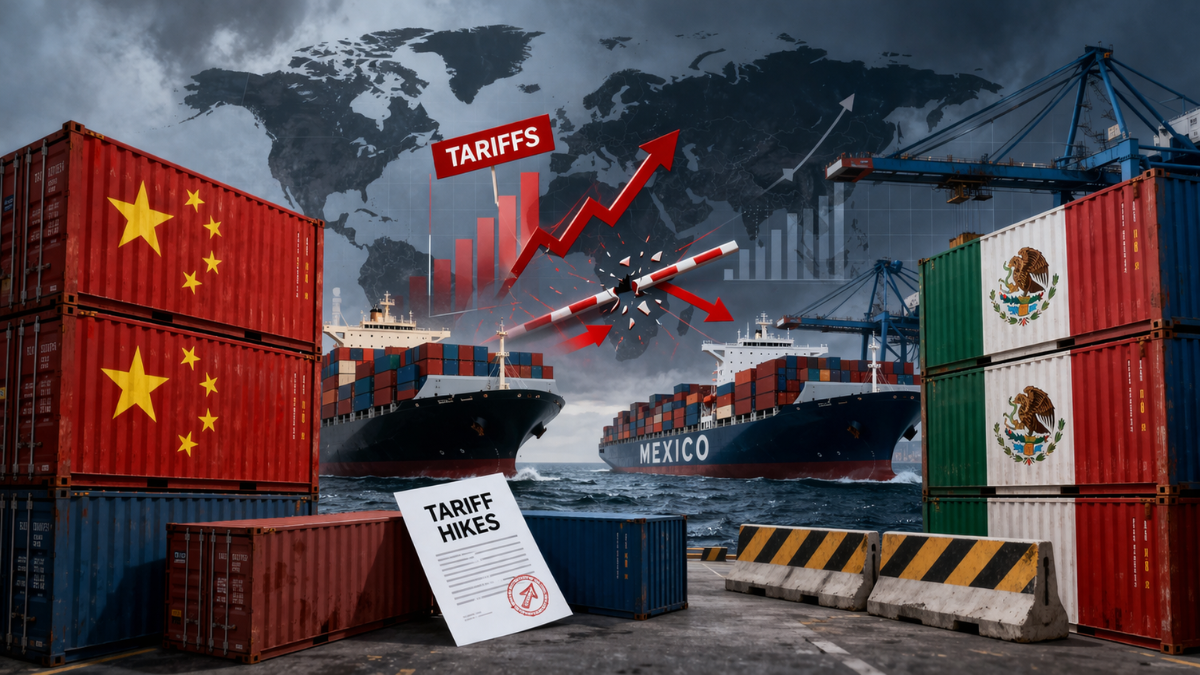


A new trade dispute has emerged between China and Mexico after Mexico increased tariffs on a wide range of imported goods. China has stated that these measures act as barriers to trade and investment. It has also said that it has the right to respond with countermeasures if needed.
Mexico recently raised import duties on products coming from countries that do not have free trade agreements with it. These tariff increases can go as high as 35% on many goods. The changes affect imports worth more than $30 billion from China. This has created concern among Chinese industries and officials.
According to China’s Ministry of Commerce, the new tariffs will have a serious impact on its exports. The ministry conducted an investigation and concluded that these measures could cause major losses to Chinese businesses. These findings were based on customs data and industry estimates.
China has not yet announced any specific response. However, it has made it clear that it may take steps to protect its economic interests. Officials have repeated that they are ready to act if necessary.
India launches anti-dumping investigation into ethyl chloroformate imports from China
Major Impact on Chinese Industries and Exports
The tariff increases are expected to hit several key industries in China. The mechanical and electrical sectors are among the most affected. These industries could face losses of about $9.4 billion due to reduced exports to Mexico.
A large part of these losses comes from the automobile sector. Around $9 billion is expected to impact vehicle and auto parts exports. This is significant because Mexico was China’s biggest destination for vehicle exports in 2025. The new tariffs make Chinese vehicles more expensive in the Mexican market, which could reduce demand.
Other industries are also affected. These include metal products, chemical goods, textiles, and light industrial products. These sectors rely heavily on exports, and higher tariffs can make it harder for them to compete in foreign markets.
China also pointed out that some of Mexico’s non-tariff measures are creating additional challenges. These include complex customs inspection rules. Such requirements can slow down trade and increase costs for businesses. They may also limit the ability of Chinese companies to invest and operate in Mexico.
The Ministry of Commerce described these combined measures as restrictions that go beyond simple tariffs. It said they create an unfair environment for Chinese exporters and investors.
China expresses concern over US tariff plans after high-level Paris meeting
Mexico’s Tariff Policy and Global Trade Context
Mexico announced these tariff increases in December. The move applies to imports from countries without free trade agreements with Mexico. This includes China and several other nations.
Experts believe that this decision may be linked to Mexico’s relationship with United States. The United States has already imposed significant tariffs on Chinese goods. Mexico’s actions are seen by some analysts as an effort to align with these policies.
Mexico has strong trade ties with the United States. Changes in trade policies often reflect broader economic and political strategies. By increasing tariffs, Mexico may be trying to protect its own industries while also responding to global trade pressures.
China has taken note of these developments and expressed concern over their impact. It has emphasized that such measures can disrupt normal trade flows. The country has also highlighted that these actions could affect not just trade but also investment opportunities.
While no countermeasures have been announced yet, China has clearly stated its position. It believes it has the right to respond in order to safeguard its rights and interests. The situation reflects ongoing changes in global trade dynamics, where countries are increasingly using tariffs and regulations to manage economic relationships.