



Australia has announced strict sanctions against several senior officials in Afghanistan’s Taliban government, saying the human rights situation—especially for women and girls—has sharply worsened. The Australian government stated that since the Taliban returned to power in August 2021, women and girls have faced severe limits on education, work, movement and participation in public life.
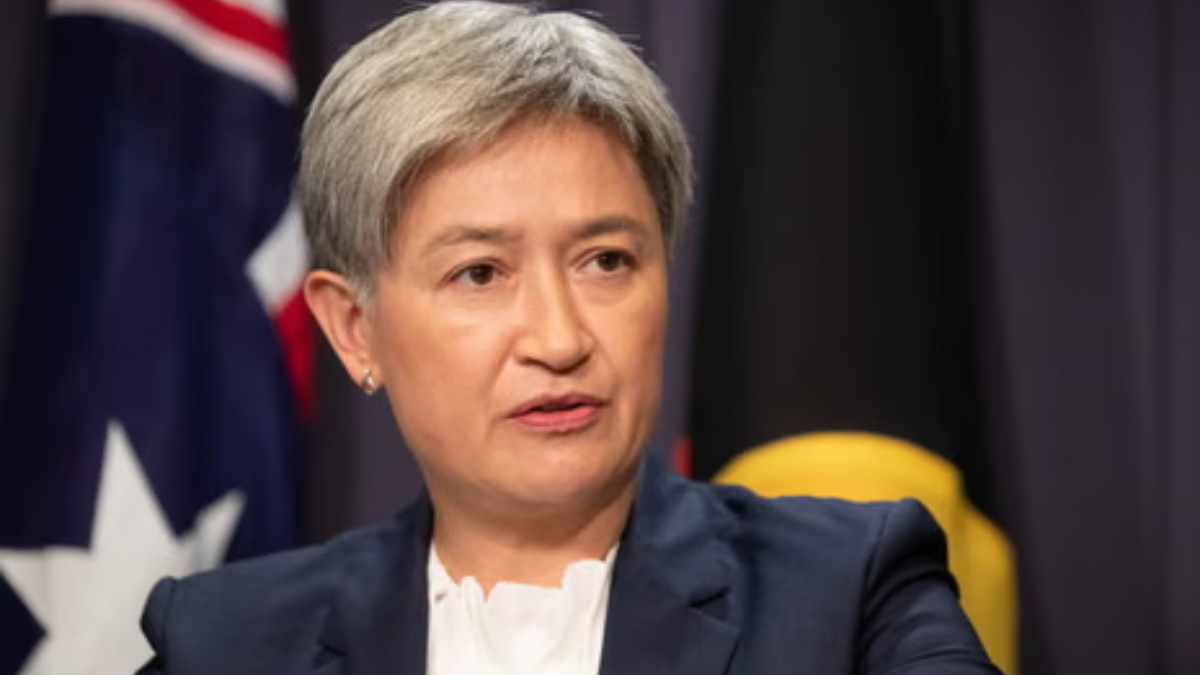
Foreign Minister Penny Wong said Australia has created a “world-first” autonomous sanctions framework for Afghanistan. This new system allows Australia to directly place sanctions and travel bans on individuals involved in serious rights abuses without waiting for global approval. The framework also includes an arms embargo and bans on providing related services or activities to Afghanistan.
Australia added that these new steps build on the existing United Nations Security Council sanctions list, where more than 140 individuals and groups tied to the Taliban are already restricted. The government explained that this updated framework gives it stronger tools to respond to the worsening situation on the ground.
A key part of the framework is a “humanitarian permit”. This ensures that despite sanctions, aid organisations can continue delivering help to Afghan families who rely heavily on international support to survive.
Four Taliban Officials Placed Under Sanctions
Under the new framework, Australia has imposed financial penalties and travel bans on four senior Taliban officials. These include Muhammad Khalid Hanafi, the Minister for the Propagation of Virtue and the Prevention of Vice; Neda Mohammad Nadeem, the Minister of Higher Education; Abdul-Hakim Sharei, the Minister of Justice; and Abdul Hakim Haqqani, the Chief Justice.
The government says these officials were sanctioned because of their involvement in restricting the rights of women and girls and in undermining good governance. Their actions include blocking access to education, limiting job opportunities, banning women from public life and restricting their freedom of movement. These measures have affected millions of women and girls, many of whom were previously able to study and work.
The sanctions come at a time when international concerns are growing. In July, the International Criminal Court issued an arrest warrant for Abdul Hakim Haqqani and the Taliban’s supreme leader, Haibatullah Akhunzada, over alleged crimes against humanity. The court stated that women and girls in Afghanistan have been “severely deprived” of rights such as education, privacy, family life and basic freedoms including movement, expression, thought and religion.
So far, the Taliban government has not publicly responded to Australia’s latest move. In the past, the Taliban has denied accusations of violating women’s rights and has claimed its decisions follow its interpretation of Islamic law.
Deepening Restrictions and Rising Hardship
The restrictions on women and girls have increased sharply since the Taliban took over following the withdrawal of United States and NATO troops, which included forces from Australia. In December 2022, the Ministry of Higher Education, led by Neda Mohammad Nadeem, banned women from universities “until further notice”. This followed earlier decisions blocking many girls from secondary schools.
Last year, the United Nations reported that the Taliban has “deliberately deprived” at least 1.4 million girls of their right to education. This represents about 80 percent of all school-age girls in the country. Many young women who had dreams of becoming teachers, doctors or professionals have been forced to stop studying.
Afghans have also been pushed deeper into poverty. The ban on women working has weakened families who depended on women’s incomes. As jobs disappear and the economy suffers, more people are relying on humanitarian aid for food, shelter and basic care.
In her announcement, Penny Wong said Australia remains deeply concerned about the deterioration of rights and living conditions in Afghanistan. She added that Australia’s thoughts are with those suffering under these restrictions, as well as with the Afghan community living in Australia.