

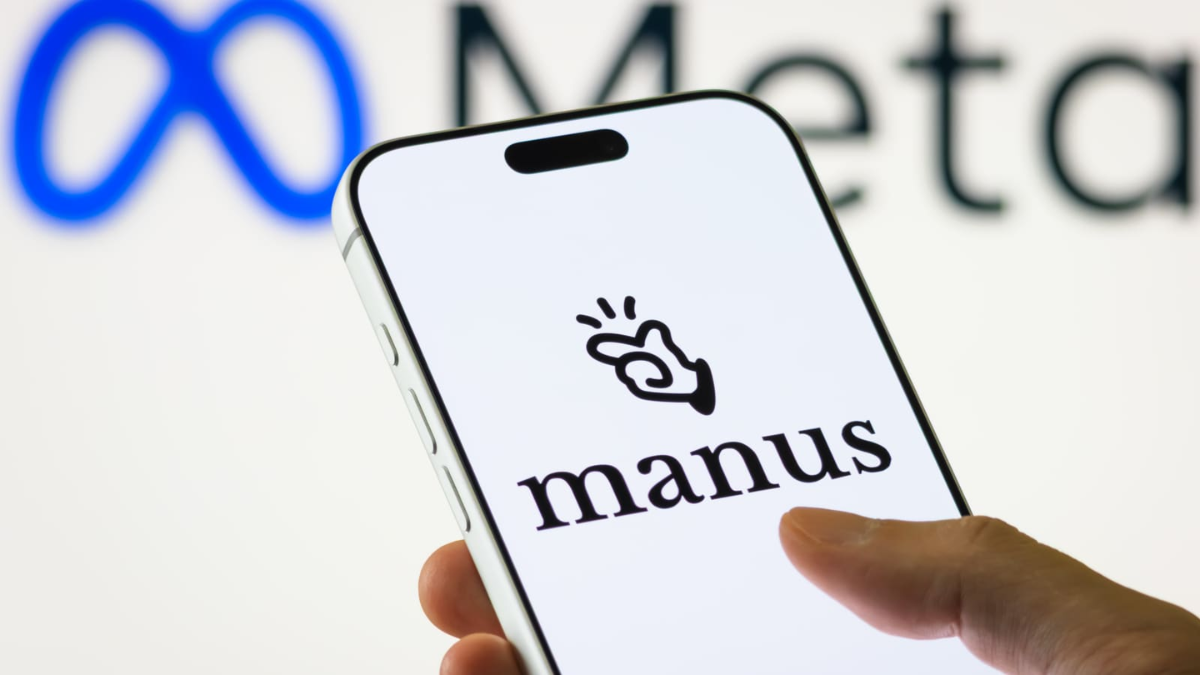


China has taken a strong step to stop the planned takeover of artificial intelligence startup Manus by Meta Platforms. This decision was announced by China’s top economic planning body, the National Development and Reform Commission, which said the deal would not be allowed under current laws and regulations.
The move shows that China is becoming more careful about foreign companies gaining control over advanced technologies linked to the country. Even though the startup Manus is now based in Singapore, it has roots connected to China. This connection appears to be a key reason behind the decision.
The takeover had first been revealed in December. It was seen as an unusual move because it involved a major US company buying a firm with strong Chinese ties. The deal was expected to help Meta improve its artificial intelligence systems across its platforms.
However, Chinese authorities began reviewing the deal in January. They wanted to check if it followed local rules, especially those related to technology transfer and ownership.
Google enters reported AI deal with Pentagon for classified work
Concerns Over Technology and Ownership
At the center of the issue is the fear that important AI knowledge could move out of China. Manus develops advanced AI agents. These are systems that can complete complex tasks with very little human help. Such technology is considered highly valuable and sensitive.
Reports suggest that China is worried about losing control over this kind of expertise. The concern is that if the company is fully owned by a foreign firm, its technology could be used outside China without any restrictions.
Even though Manus moved its headquarters to Singapore, its earlier connections to China still matter. Authorities appear to believe that the company’s technology may have been developed with Chinese resources, talent, or knowledge.
The legal side of the situation is not very clear. Since Manus is no longer based in China, it is uncertain how the country can fully block the deal. It is also unclear how regulators would reverse the transaction if parts of it have already been completed.
Meta Platforms has responded by saying that the acquisition follows all legal requirements. The company also expressed confidence that discussions with regulators would lead to a positive outcome.
Complex Background and Rising Tensions
The story of Manus adds another layer to the situation. The company had recently gone through major changes. After raising $75 million in funding in May 2025, led by US venture capital firm Benchmark, it shut down its offices in China and reduced its workforce there. It then shifted its operations to Singapore.
European Commission delays decision on Google over advertising practices
This move allowed its parent company, Butterfly Effect, to rebuild itself outside China. The restructuring may have been aimed at avoiding restrictions from both the United States and China. The United States has rules limiting investment in Chinese AI firms, while China has controls on sending technology and capital abroad.
Despite these changes, the deal still faced scrutiny. China’s decision to block the takeover shows that moving a company’s location may not be enough to remove regulatory concerns.
The issue has also drawn attention in the United States. Officials there have stated that they will protect American technology companies from what they see as unfair foreign interference.
The timing of the decision is also important. It comes just before a planned high-level meeting in Beijing between Donald Trump and Xi Jinping in mid-May. This adds more tension to an already complex relationship between the two countries, especially in the area of technology.
The situation highlights how artificial intelligence is becoming a key area of competition. Countries are now paying close attention to who owns and controls advanced technology. Deals that once seemed like normal business transactions are now being closely examined for their wider impact.