

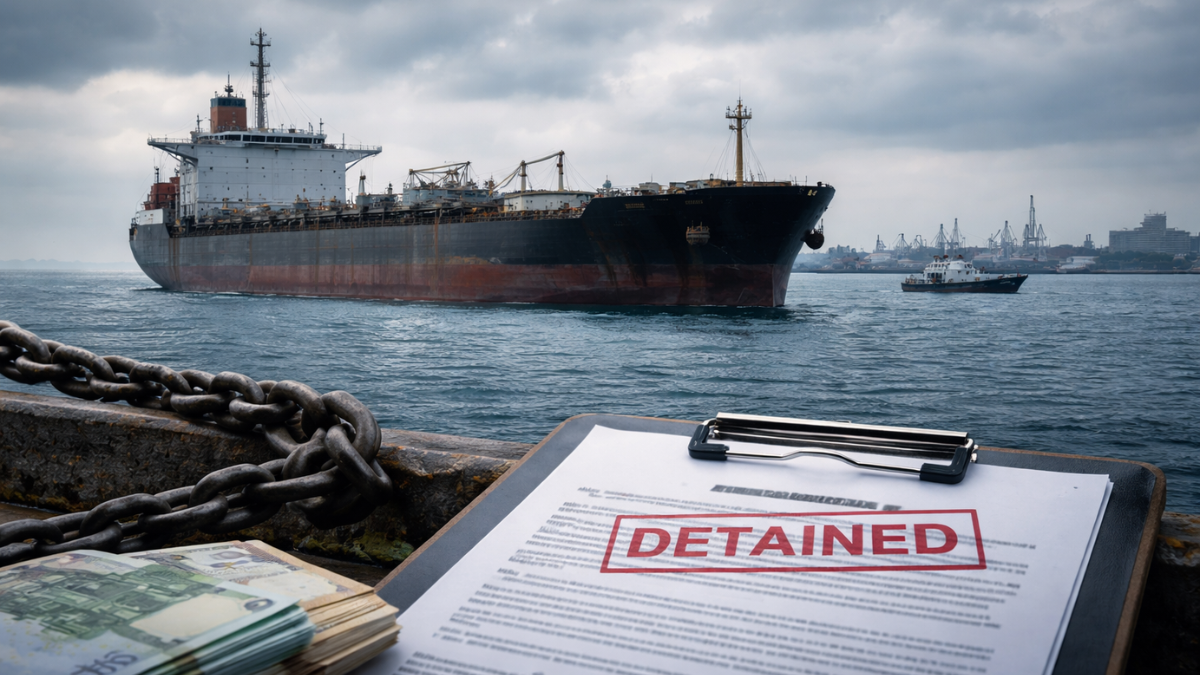


Belgium has imposed a 10 million euro bail on a Russian oil tanker named Ethera after seizing the vessel in the North Sea. The tanker was taken into custody on Sunday, and the decision was announced on Tuesday. Authorities said the ship cannot sail again unless the bail is paid and strict legal and technical conditions are met. The move is part of action against vessels linked to Russia’s so-called shadow fleet, which has been operating to move oil despite Western sanctions.
Seizure of the Russian Oil Tanker in the North Sea
Belgium confirmed that the oil tanker Ethera was seized after inspectors discovered serious violations during checks in the North Sea. Officials reported that the vessel was sailing under a false Guinean flag and was using false documents. During the inspection, authorities identified 45 separate violations. Most of these were related to incorrect or falsified certificates. The discovery of the false flag raised concerns about the ship’s legal registration and compliance with maritime rules.
The tanker Ethera is also listed under sanctions by the European Union. Being on the sanctions list means the vessel is already subject to restrictions linked to measures against Russia. Belgium has set the bail at 10 million euros, which is about 11.61 million US dollars. The authorities made clear that the ship will not be allowed to leave until this amount is paid.
Portugal freezes €25 million in suspected Russian sanctions evasion cases
Even if the bail is paid, the tanker must undergo a follow-up inspection before it can sail again. Officials stated that the vessel must secure a legitimate flag state, obtain valid certificates, and resolve technical issues. A flag state is the country where a ship is officially registered. Ships must operate under one recognized national flag and follow that country’s maritime laws. In this case, authorities determined that the Guinean flag being used was not valid.
Belgium’s Defence Minister Theo Francken said the government is taking firm action against vessels in the shadow fleet. He stated that the operation is aimed at enforcing European Union sanctions, protecting the North Sea, and curbing financing connected to Russia’s war in Ukraine.
Russia’s Shadow Fleet and Sanctions Enforcement
Western sanctions were imposed on Russia after its invasion of Ukraine. These sanctions are designed to reduce Russia’s oil revenues and limit funding linked to the war. In response, a network of oil tankers commonly described as a shadow fleet has grown. These ships help transport Russian crude oil while attempting to avoid restrictions.
Sanctions enforced at sea as Belgian commandos board suspected Russian ‘shadow fleet’ ship
Shadow fleet vessels often have unclear ownership structures and opaque registration details. Some ships use misleading paperwork or change flags. Others operate with documentation that later proves to be false. This lack of transparency has raised concerns among European authorities.
There are also environmental risks linked to these vessels. Many shadow fleet tankers are ageing ships that may not meet proper safety standards. Poor regulation and limited oversight increase the chances of oil spills, leaks, or mechanical failures. Such incidents could threaten marine ecosystems, especially in busy waters like the North Sea.
The Russian embassy in Belgium did not immediately respond to a request for comment regarding the seizure of the Ethera. In previous cases, Moscow has described the seizure of its tankers or vessels carrying Russian cargo as acts of piracy.
The tanker remains under seizure in the North Sea. It can only resume operations after the 10 million euro bail is paid and a follow-up inspection confirms full compliance with maritime regulations. Belgium’s action forms part of ongoing efforts to enforce European Union sanctions and address concerns surrounding Russia’s shadow fleet.