

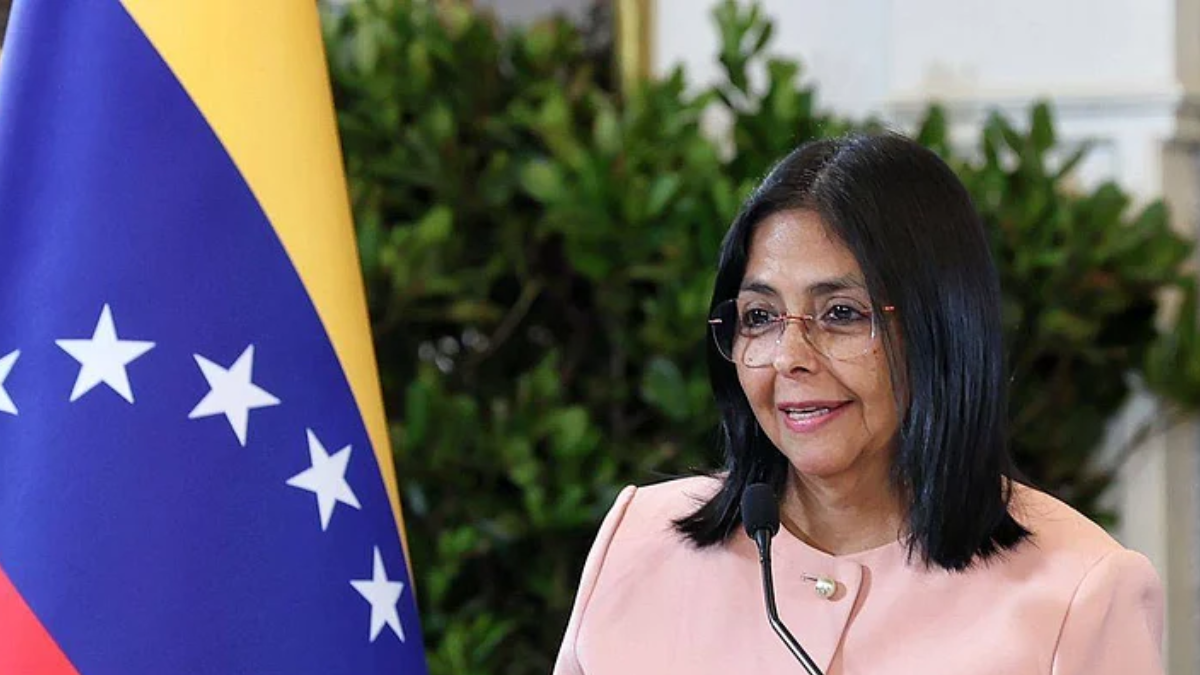


Spain has formally announced that it will ask the European Union to lift sanctions on Venezuela’s interim president, Delcy Rodriguez. The request comes after Venezuela’s lawmakers approved a limited amnesty bill aimed at granting legal relief to certain detainees.
Spain’s Foreign Minister, Jose Manuel Albares, said that sanctions are not meant to exist forever. He explained that sanctions are tools used to encourage democratic dialogue and peaceful solutions. According to him, if Venezuela is taking steps in the right direction, the European Union should respond positively.
The sanctions against Delcy Rodriguez were imposed several years ago. These measures include travel bans and asset freezes within the European Union. They were introduced as part of broader EU sanctions on Venezuelan officials over concerns about democracy and human rights.
Jose Manuel Albares stressed that the European Union should send a signal that Venezuela is entering a new phase. He said that when progress is made, the EU should also adjust its approach.
However, the European Commission has not confirmed whether it will act on Spain’s proposal. EU Commission spokesperson Anouar El Anouni stated that the European Union stands ready to use every tool available to support a transition toward democracy in Venezuela, but he did not directly address the request to lift sanctions.
European Union places Iran’s IRGC on terrorist list under counter-terrorism sanctions regime
Leadership Change and the Amnesty Bill
The political situation in Venezuela shifted earlier this year. Former President Nicolas Maduro was removed from office by the United States in early January. After his removal, Delcy Rodriguez, who previously served as vice president, was sworn in as interim president.
Since taking office, Delcy Rodriguez has made several moves that have attracted international attention. She accepted certain demands from the administration of Donald Trump regarding oil sales. In addition, hundreds of detainees described by human rights groups as political prisoners were released.
Most recently, Venezuela’s National Assembly approved a limited amnesty bill. The bill was passed unanimously by the ruling party-controlled legislature. It grants amnesty for crimes or offenses committed since 1999, including acts described as politically motivated violence linked to the 2024 presidential election.
Supporters of the law say it is meant to promote national reconciliation and ease political tensions. The approval of the amnesty bill is one of the main reasons Spain believes sanctions should now be reconsidered.
Russia openly defies Cuba sanctions as Putin reaffirms sovereignty stance
However, human rights groups argue that the law does not go far enough. They say it falls short of offering relief to hundreds of people they consider political prisoners. The government in Caracas has consistently denied holding political prisoners and maintains that those jailed committed criminal offenses.
Background on EU Sanctions Against Venezuela
The European Union first imposed sanctions on Venezuela in 2017. At the time, the EU said regional elections were marred by irregularities. The sanctions included an arms embargo and a ban on surveillance equipment.
In 2018, the EU expanded its sanctions. It placed economic measures, travel bans, and asset freezes on 11 senior Venezuelan officials, including Delcy Rodriguez, who was vice president under Nicolas Maduro. The EU said these officials were responsible for human rights violations and for undermining democracy and the rule of law.
The recent leadership change and the approval of the amnesty bill have renewed discussion within Europe about whether those sanctions should remain in place. Spain has now made clear that it will formally ask the European Union to lift sanctions specifically against Delcy Rodriguez.
While Spain views the amnesty law and recent prisoner releases as signs of progress, the European Union has not yet announced any decision. For now, the sanctions remain active as EU member states consider Spain’s request.