

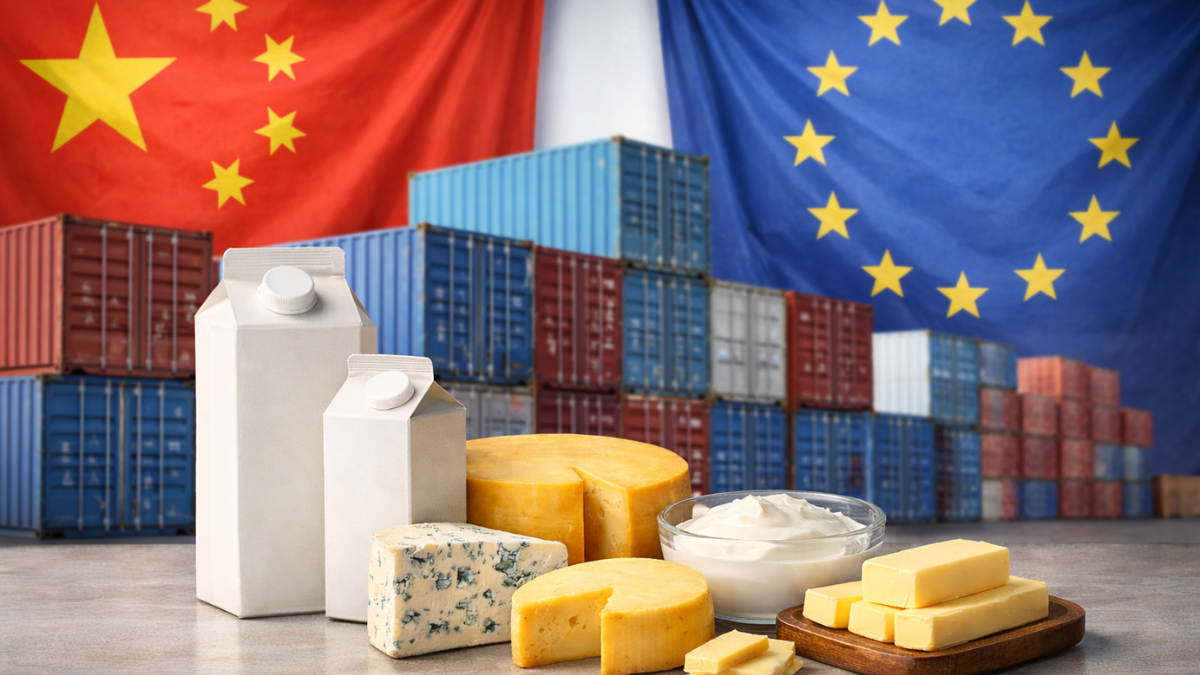


China has lowered tariffs on dairy products imported from the European Union, ending an 18-month anti-dumping investigation. The final ruling reduces earlier proposed duties and brings clarity to a trade issue involving more than half a billion dollars’ worth of dairy goods. The decision is closely linked to wider trade tensions between China and the EU, especially those related to electric vehicles.
The ruling was announced on Thursday by China’s Ministry of Commerce and applies to a broad range of dairy products imported from the EU. These include milk, cream, and various types of cheese. The revised tariffs will remain in force for five years and take effect from February 13.
China issues final ruling on EU dairy imports
China’s investigation into EU dairy products began in August 2024. The probe focused on whether European exporters were selling dairy products in China at unfairly low prices, a practice known as dumping, which could harm their domestic dairy industry.
After reviewing the case for 18 months, China confirmed that tariffs on EU dairy imports will range between 7.4% and 11.7%. This final rate is much lower than the preliminary tariffs announced in December, which ranged from 21.9% to 42.7%.
Trump administration blacklists Pacific Island officials in China-linked corruption move
The tariffs will apply for a period of five years starting on February 13. According to official data, the dairy products covered by the investigation were worth more than $506.3 million in imports from the EU.
China is the world’s third-largest dairy producer but still relies on imports to meet demand. In 2024, it imported $589 million worth of dairy products included in the investigation, a figure similar to the value recorded in 2023. This shows that trade volumes remained steady during the investigation period.
Products and exporters affected by the decision
The ruling affects major dairy-exporting EU countries, including France, Italy, Denmark, and the Netherlands. These countries supply a wide range of dairy products to the Chinese market.
The products covered include unsweetened milk and cream, along with fresh and processed cheeses. Well-known European cheese varieties such as Roquefort and Camembert were also included in the investigation.
Earlier this month, on February 3, the European Union confirmed that it had received China’s final calculations for the planned duties. At that time, industry groups reported that the expected tariff rates would fall between 7.4% and 11.7%, which matched the official announcement made later.
Venezuela reassures China after reports U.S. sought to cap oil prices near $50 a barrel
While the tariffs still add costs for exporters, the lower rates significantly reduce the financial burden compared with the earlier provisional decision. The final ruling gives exporters clear information on the duties they will face over the next five years.
Trade tensions linked to electric vehicle tariffs
The dairy investigation was launched after the EU introduced duties on Chinese electric vehicles, citing concerns over subsidies. In response, China opened investigations into several EU products, including dairy.
This is the second time in two months that China has reduced tariffs on EU goods that were targeted following the EU’s electric vehicle measures. The move highlights how trade disputes in one sector can lead to actions in unrelated industries such as food and agriculture.
In January, Brussels issued detailed rules explaining how the EU’s electric vehicle tariffs could potentially be replaced by minimum price commitments, an approach supported by Beijing. However, differences remain between the proposals from both sides.
China’s decision on dairy tariffs forms part of this broader trade context but is based on the findings of the anti-dumping investigation itself. With the final ruling now issued, the tariff levels are officially set, bringing the investigation phase to a close and defining the terms for EU dairy imports into China under this case.