

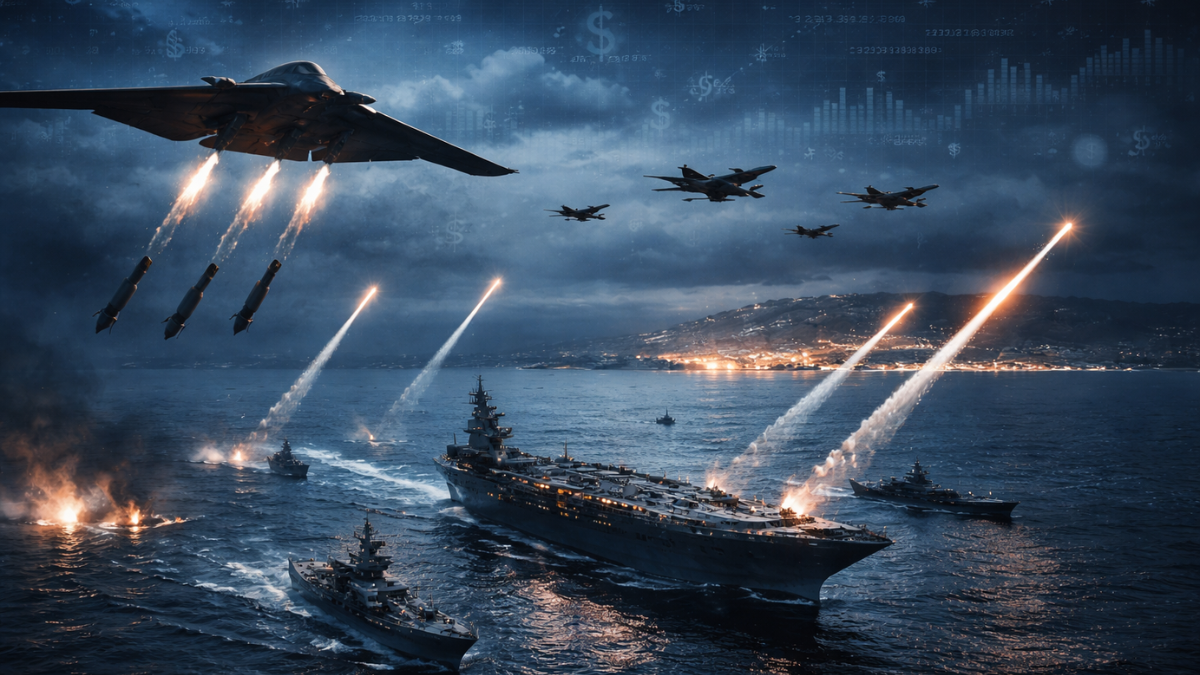


The United States carried out a large-scale offensive targeting sites in Iran, with operations taking place over a single day. The action involved a wide range of military aircraft, naval ships, missile systems, and ground-based weapons.
The United States Central Command confirmed that the deployment included B-2 stealth bombers, F-22, F-35, and F-16 fighter jets, F-18 aircraft, A-10 attack planes, and EA-18G electronic warfare aircraft. The operation also made use of MQ-9 Reaper drones, nuclear-powered aircraft carriers, guided-missile destroyers, and advanced missile defense systems such as Patriot and THAAD.
Four B-2 stealth bombers flew nonstop from Whiteman Air Force Base in Missouri to strike targets. These bombers dropped 2,000-pound Joint Direct Attack Munitions during the mission. The B-2 aircraft are known for high maintenance needs and a payload capacity of 40,000 pounds.
The cost of the B-2 operations alone is estimated at $30.2 million. This figure is based on flight hours, maintenance expenses, and munitions data from US defense budget requests for 2025 and 2026.
Fighter Jets, Drones and Ground Systems Add to Costs
In addition to the bombers, fighter jets played a major role in the offensive. Aircraft such as F-18s, F-16s, F-22s, and F-35s conducted sorties as part of the initial strikes. Based on budget data covering flight hours, upkeep, and weapon usage, these missions are estimated to have cost about $271.34 million.
Currency risks rise in Argentina, Turkey and Pakistan as oil surges
Specialized aircraft also supported the strikes. These included the EA-18G Growler for electronic warfare, the A-10C Thunderbolt for attack operations, and the MQ-9 Reaper drone for surveillance and strike missions. The Low-cost Unmanned Combat Attack System was also part of the deployment.
Other support aircraft included P-8 Maritime Patrol planes and RC-135 reconnaissance aircraft. Aerial refueling tankers were used to extend the time aircraft could remain in the air. Land-based HIMARS batteries were deployed as part of the ground component of the operation.
When combining the costs of fighter jets, specialized aircraft, reconnaissance planes, refueling tankers, and ground systems, the estimated expense for air and ground assets reached approximately $423.57 million.
Naval forces were heavily involved in the offensive. Two US carrier strike groups were operating in the region. These included the USS Abraham Lincoln and the USS Gerald R. Ford. Both carriers were supported by destroyers and littoral combat ships.
Israel–Iran conflict sparks oil shock fears for India as Hormuz risks mount
The estimated cost of operating the aircraft carriers along with their escort ships is about $15 million per day.
The United States Central Command also released videos showing the launch of Tomahawk cruise missiles from naval vessels. While the exact number of missiles fired remains classified, estimates suggest that around 200 Tomahawk missiles were launched.
The munitions cost of these Tomahawk missiles is estimated at $340.4 million.
When all expenses are combined, including bomber missions, fighter jet operations, specialized aircraft, drones, naval deployments, missile defense systems, and Tomahawk missile launches, the total estimated cost for the first 24 hours of the US offensive stands at approximately $779.174 million.
This amount represents roughly 0.1% of the entire US defense budget for 2026. The estimate is based on operational data, flight hours, maintenance figures, and munitions procurement details outlined in recent defense budget requests.
The reported figures highlight the scale of military assets deployed during the single day of strikes and the financial resources required to conduct such an operation.