

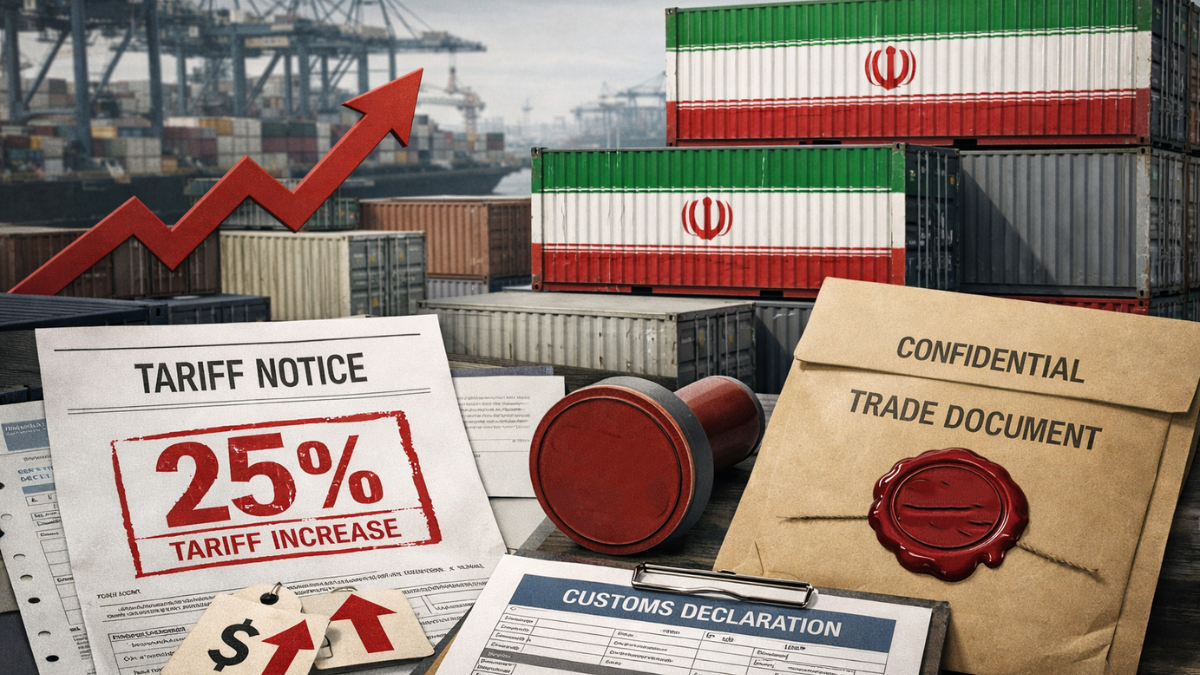


The United States has announced a sweeping trade action that could reshape global commerce. President Donald Trump said that any country continuing commercial relations with Iran will now face a 25% tariff on all trade with the United States. The announcement stated that the measure takes effect immediately and leaves no room for negotiation.
The decision could impact several major economies that maintain trade ties with Iran. China stands out as the most exposed, as it is a leading trading partner of both Iran and the United States. Other countries that could also be affected include India, Turkey, and the United Arab Emirates. The lack of detailed guidance has created uncertainty for governments, businesses, and global markets.
What the Tariff Announcement Includes
According to the public statement, any country that does business with the Islamic Republic of Iran will now face a 25% tariff on all business conducted with the United States. The order was described as final and conclusive.
However, the announcement did not explain what actions qualify as “doing business” with Iran. It did not clarify whether the tariff applies only to imported goods or also includes services such as financial transactions, shipping, insurance, or energy-related activities. No list of affected countries or industries was released.
500% tariffs loom as U.S. targets countries still buying Russian oil and uranium
The White House declined to provide additional clarification or technical details on how the policy would be enforced. This has left companies unsure whether existing contracts or indirect trade links could trigger penalties.
This approach marks a shift from traditional sanctions. Instead of targeting specific Iranian sectors or companies, the policy places pressure on entire countries by increasing the cost of all trade with the United States if they maintain economic ties with Iran.
China’s Role and Trade Numbers With Iran
China is Iran’s most significant economic partner and a key focus of the tariff threat. In the first eleven months of 2025, China exported approximately $6.2 billion worth of goods to Iran and imported about $2.85 billion in return, based on Chinese customs figures.
These figures do not include oil transactions. China does not publicly report how much oil it buys from Iran. Analysts estimate that China has accounted for more than 90% of Iran’s oil trade in recent years, with much of it routed through intermediaries.
At present, Chinese goods entering the United States face tariffs of around 20%. If the new 25% tariff is applied, the combined rate could rise to at least 45%, significantly increasing costs for U.S. importers and consumers.
China criticized the decision. Foreign ministry spokesperson Mao Ning said that tariff wars produce no winners and stated that China will firmly protect its lawful rights and interests.
Iran shocks world by selling ballistic missiles and warships for crypto, bypassing sanctions
Legal Dispute and Broader Trade Pressure
Other countries with strong trade links to Iran could also be affected. India, Turkey, and the United Arab Emirates are considered major partners. Earlier this year, the United States doubled tariffs on Indian goods to a minimum of 50% over India’s purchase of Russian oil. Similar warnings were directed at other buyers of Russian energy, including China.
President Donald Trump has relied on the International Emergency Economic Powers Act to impose higher tariffs during his second term. This use of the law is now being challenged in the Supreme Court, with a ruling expected soon. If the court finds that the authority was exceeded, the United States could be required to refund at least $130 billion collected through tariffs.
The tariff announcement comes amid ongoing unrest in Iran. Anti-government protests have taken place across the country, with hundreds of protesters reportedly killed. Authorities have also imposed a communications shutdown, cutting off much of the country from outside contact.
The new tariff move adds to existing global trade tensions following last year’s U.S.-China trade conflict, when tariffs on some Chinese goods climbed as high as 145%. No exemptions or enforcement guidelines for the new 25% tariffs have been announced so far.