

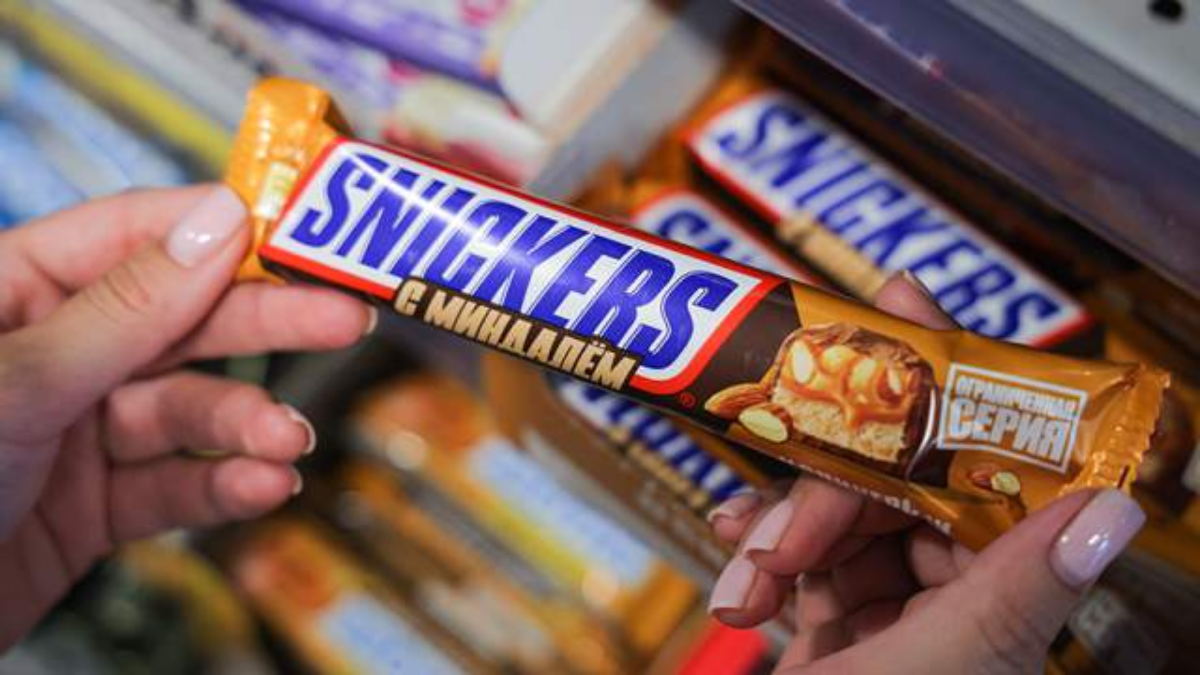


Shoppers in London have noticed something unusual in convenience stores. Candy bars that look like regular Snickers have appeared, but with a surprising twist. The packaging is almost entirely in Russian, using Cyrillic letters instead of English.
Some bars are coated in white chocolate and labeled “Белый”, which means “white”. Others are described as “сo вкусом пломбира”, or “with the taste of plombir”, a type of vanilla ice cream first made in the Soviet Union in 1937. These flavors are unusual for the U.K., making the bars stand out among regular chocolate offerings.
Anyone trying to call the toll-free number on the package would need to speak Russian. The presence of these bars has raised concerns because they do not have English labels, which is a legal requirement in Britain. Authorities have said that selling products without ingredient and allergen information in English breaches labeling regulations.
These Russian Snickers are not available in large supermarkets. Instead, they appear mostly in smaller convenience stores across London. Shop owners say they purchased the bars in good faith from wholesalers who specialize in supplying small retailers. How the bars got from Russia to these wholesalers is still unclear, adding to the curiosity surrounding this unusual arrival of candy.
US signals readiness for new Russia sanctions linked to Ukraine peace talks
How Russian Candy Made Its Way to Britain
The appearance of these candy bars is particularly surprising because Britain and other countries have restricted trade with Russia since the invasion of Ukraine in 2022. Many Russian products, including vodka, alcohol, metals, seafood, and other goods, were removed from U.K. shelves in the months following the war.
Despite sanctions, these candy bars have found their way into British shops. Experts suggest that intermediaries or food brokers may have bought the products in Russia or neighboring countries like Belarus and then resold them to wholesalers in the U.K. at higher prices.
Dean Cooke, a food officer at the Chartered Trading Standards Institute, explained that the bars appear to have been “picked off the shelf in the country of origin” and then sold abroad. He emphasized that selling candy without English-language labeling, particularly allergen information, is not permitted in the U.K.
In Russia, a large Snickers bar sells for less than £1, while in London, the same bar can cost £1.30 or more. This price difference may have motivated brokers to bring the candy to Britain.
Mars Wrigley, the company that makes Snickers, said it does not produce these bars in the U.K. and cannot control third parties reselling products internationally. The company confirmed that it stopped importing and exporting from Russia shortly after the invasion but continues production there to feed local consumers. Any profits generated in Russia are directed toward humanitarian causes, the company said.
Legal and Ethical Concerns
The sale of Russian-labeled Snickers raises both legal and ethical questions. U.K. law requires that products sold to consumers include English labeling, especially for allergens. Products without this information are technically illegal to sell and can be removed from stores by authorities.
Ethically, buying these bars could indirectly support the Russian economy. Ioannis Koliousis, a professor at Cranfield School of Management, explained that money spent on these products may flow back to Russia, supporting its economic ecosystem.
Authorities, including Dean Cooke, have urged consumers to avoid products without English labeling. Officers across the country are monitoring the arrival of these bars and have purchased some for inspection. Some of these bars may be kept as evidence if they are found to breach labeling laws.
Despite the unusual circumstances, Russian Snickers remain a curiosity in London’s convenience stores. Shoppers can still find them alongside familiar chocolate brands, but anyone buying a bar should be aware of the language on the packaging and the legal rules surrounding its sale.