

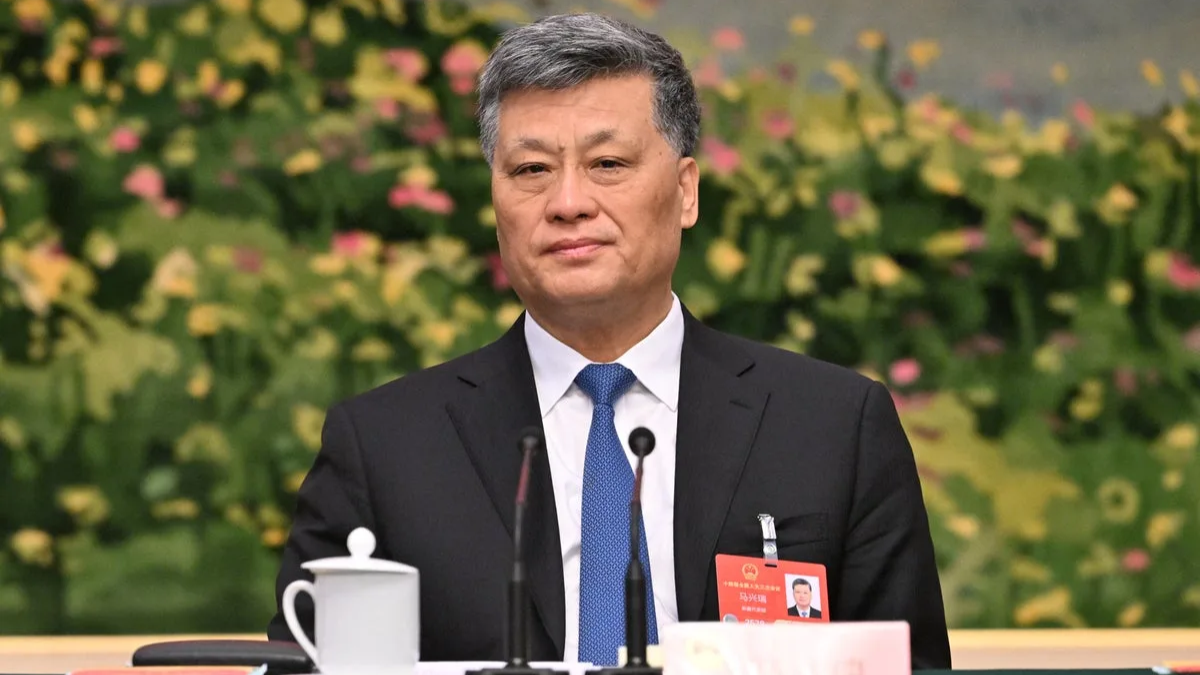


A major political development has emerged in China as Ma Xingrui, a senior leader of the Communist Party and member of the Politburo under President Xi Jinping, is now under investigation for suspected corruption and serious violations of discipline and law. The investigation is being handled by the Central Commission for Discipline Inspection, the top anti-corruption authority of the ruling party.
The official statement released on Friday confirmed that Ma Xingrui has been placed under disciplinary and supervisory investigation. In China’s political system, this phrase is commonly used when a senior official is suspected of corruption, misuse of power, or internal rule violations.
Ma Xingrui previously served as party secretary of the Xinjiang Uyghur Autonomous Region, one of China’s most sensitive and strategically important regions. He also held a national-level position in a rural affairs leadership group, giving him influence in both regional governance and national policy decisions. His position in the 24-member Politburo placed him among the highest decision-makers in the country.
Reports say Ma Xingrui stepped down from his Xinjiang leadership role in July last year. Since November, he has also been absent from several major public events, which led to growing speculation before the investigation was officially confirmed.
Ma Xingrui Case Highlights Wider Anti-Corruption Crackdown
The investigation into Ma Xingrui is part of a wider anti-corruption campaign led under President Xi Jinping. The campaign has targeted senior officials across government, military, and state institutions, focusing on corruption, discipline violations, and misuse of authority.
Suspicious oil and stock trades before Iran post raise corruption concerns
The fact that Ma Xingrui is reportedly the third Politburo member under investigation since the 2022 party term began makes the case highly significant. Such high-level probes are rare in China and indicate strict internal enforcement within the ruling Communist Party.
The crackdown has also reached the military leadership. Former senior military figure He Weidong has been removed from party and military positions and is under investigation. Another senior official, Zhang Youxia, has also been linked to disciplinary scrutiny over alleged violations of party rules and law.
The Central Military Commission, China’s top military authority chaired by Xi Jinping, has reportedly been affected by repeated investigations and leadership changes. Zhang Shengmin, a senior discipline inspection official in the military system, is also part of the internal oversight structure managing such cases.
Since 2012, reports indicate that more than 100 officials at the rank of major general have been punished under the ongoing anti-corruption drive, showing the scale and intensity of the campaign.
US Treasury links polo patrons and Swiss bank to alleged Venezuelan oil corruption network
Ma Xingrui and Expanding Anti-Corruption Action Across China
The anti-corruption campaign involving Ma Xingrui has expanded beyond politics and the military, reaching government departments, financial regulators, universities, and state-owned enterprises across China.
Since the 2022 Communist Party Congress, at least 24 members of the Central Committee have been removed or placed under investigation. The Central Committee is one of the most powerful governing bodies in China’s political system.
In the past year alone, around 65 senior officials were reportedly caught in the anti-corruption drive. These officials came from multiple sectors, including government leadership, regulatory bodies, state companies, and academic institutions.
Ma Xingrui also has a background in China’s aerospace sector, where he worked in a major state owned aerospace organization. He held senior roles linked to space programs, including responsibilities for human spaceflight missions and advanced rocket development projects.
Over time, several people connected to the aerospace sector have also been investigated. This shows that the anti-corruption campaign has spread into technical and industrial networks as well.