

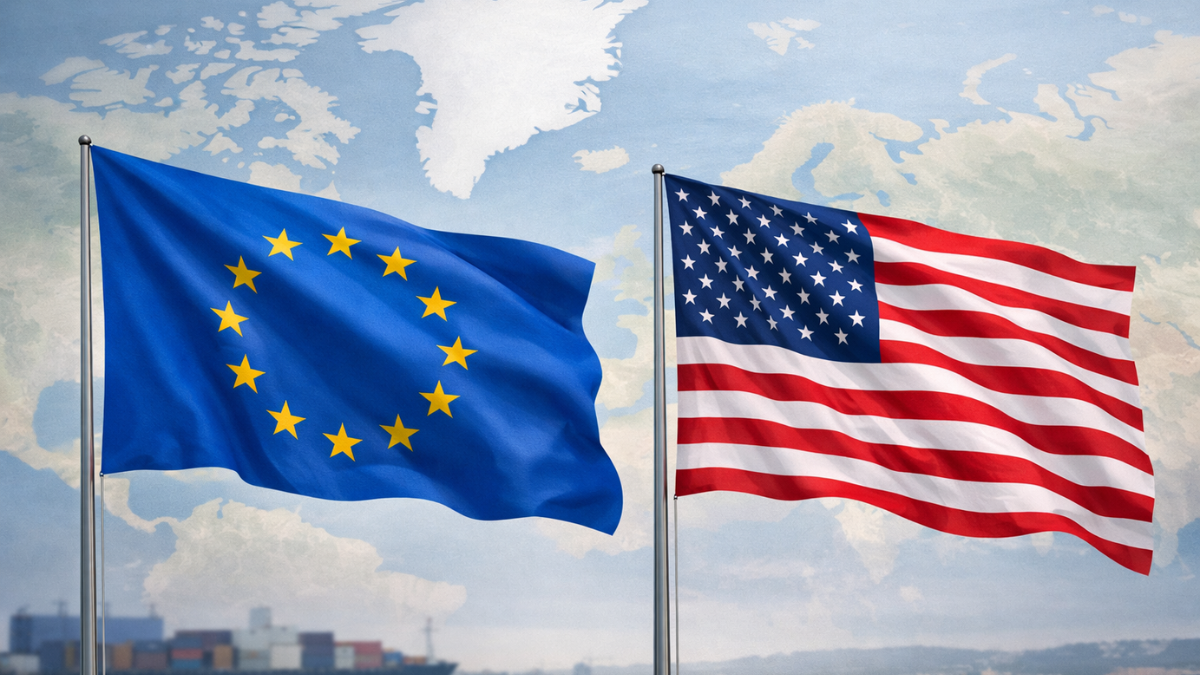


The European Union has lifted its suspension on a major trade agreement with the United States after US President Donald Trump withdrew his threat related to Greenland. The decision allows European lawmakers to restart the approval process for the trade deal, which had been paused earlier due to political tensions.
The agreement focuses on lifting tariffs on American industrial goods and is seen as an important step in easing trade barriers between the two economies. With the immediate dispute resolved, the European Parliament has agreed to move forward with discussions that could lead to formal approval of the deal.
The suspension had been in place since January, when concerns over political pressure and tariff threats caused lawmakers to halt progress. The recent reversal on Greenland removed the key obstacle, clearing the way for talks to resume.
Why the Trade Deal Was Put on Hold
The European Union and the United States had reached an agreement last year after months of intense negotiations. During that period, Washington imposed tariffs of up to 15 percent on imports from the European Union, increasing trade tensions.
However, the approval process in Europe was stopped when US President Donald Trump threatened to impose additional tariffs on eight European countries. These threats were linked to demands involving Greenland, an autonomous Arctic territory connected to Denmark.
Greenland talks advance as Trump confirms framework agreement and halts Europe tariffs
European lawmakers viewed the situation as a serious political issue. They expressed concern that trade measures were being used alongside political pressure. As a result, the European Parliament decided to postpone ratifying the agreement, including the planned lifting of tariffs on American industrial goods.
The decision to suspend the process was intended to protect political sovereignty and ensure that trade agreements are approved without external pressure. Lawmakers stated that they could not continue discussions while threats affecting European territory and trade relations remained active.
Greenland Threat Withdrawn and Talks Resume
The situation changed after US President Donald Trump stepped back from his earlier position on Greenland. Last month, he said he had reached a framework understanding with NATO Secretary General Mark Rutte, focusing on increased American influence through cooperation rather than control of territory.
Following this shift, the European Parliament announced that it would resume work on the trade agreement. Parliamentary committees are now preparing to review the steps needed to lift tariffs on American industrial goods.
Before the deal can take effect, it must still be approved by the full European Parliament. A committee may decide whether to move forward with implementation at its next meeting scheduled for February 24.
‘Mother of all trade deals’ delivered as India and EU push back against global tariff chaos
Lawmakers have indicated that the agreement could include safeguards to prevent future political disputes from affecting trade arrangements. These measures would allow parts of the deal to be paused again if similar situations arise.
Related Trade Deals Shape the Broader Context
The restart of the approval process comes amid broader trade activity. In January, the European Union signed a major deal with India. European Commission President Ursula von der Leyen described it as the “mother of all deals,” highlighting its size and economic importance.
This was followed by another trade agreement between India and the United States. Under that arrangement, effective tariff rates were reduced to some of the lowest levels among emerging market economies.
The EU–US deal itself focuses mainly on industrial goods and does not include agriculture or consumer products. Its aim is to reduce costs for manufacturers and improve trade flows between both sides.
With the Greenland dispute set aside, European lawmakers have reopened the path toward approving the agreement under calmer diplomatic conditions. The approval process is now back on track after being paused during a period of heightened political tension.