

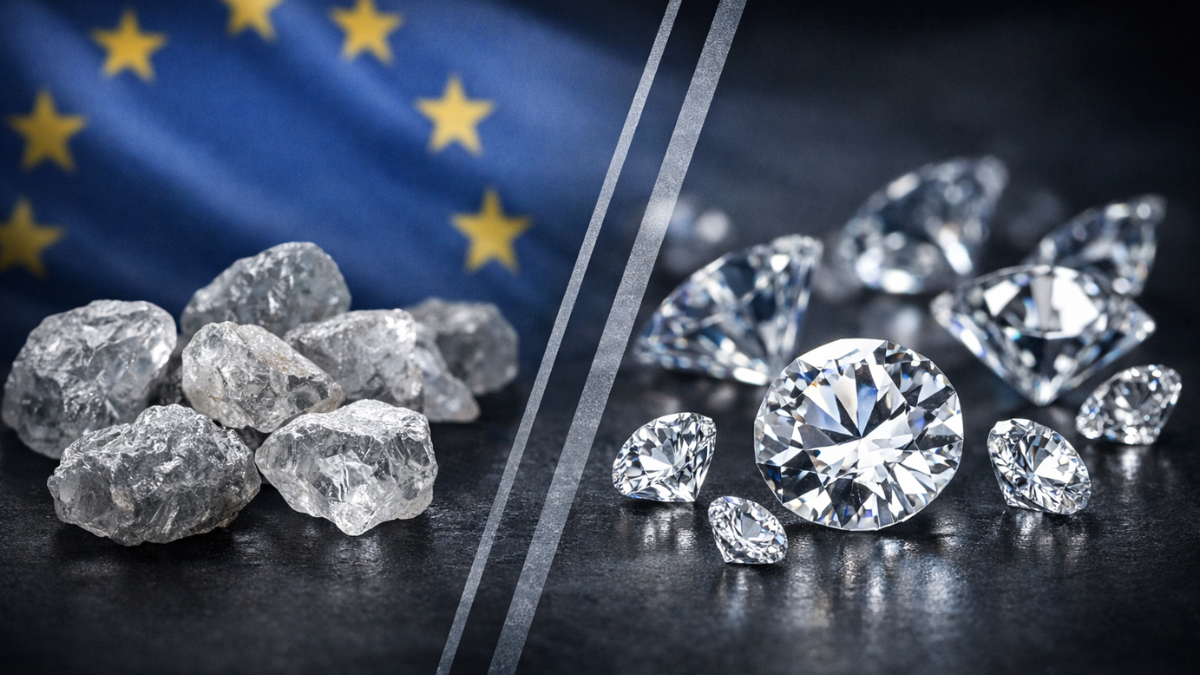


The European Union (EU) is intensifying its sanctions on Russian diamonds, aiming to significantly reduce one of Russia’s most valuable sources of income. The updated measures were outlined by the European Commission, which stated that the restrictions are designed to further limit Russia’s access to critical revenue streams.
According to the Commission, the diamond trade generates an estimated €4 billion annually for Russia, with around €1.5 billion linked directly to imports into the EU. The sanctions are part of a broader and coordinated effort involving the G7 group of countries, highlighting the importance of global cooperation in enforcing the ban.
The EU has already taken action. From January 1, 2024, the purchase and import of non-industrial natural and synthetic diamonds that originate in, or are exported from, Russia have been prohibited. These measures apply across all EU member states and are intended to close off access to the European diamond market.
The European Commission has stressed that restricting diamonds is only effective if major global markets take part. This position underlines why the EU is working closely with G7 partners to ensure the rules are applied consistently across borders.
CBAM rules start in the EU, requiring exporters to account for carbon emissions
How the EU Diamond Ban Works
The next phase of the sanctions will take effect from January 1, 2026, when mandatory traceability and certification requirements for polished diamonds become fully operational. This stage is expected to make enforcement stronger and more transparent across the supply chain.
The rules apply to diamonds with a weight of 0.5 carats or more, which is equal to 0.1 grams. These thresholds apply to both rough and polished diamonds at the time they are imported into the EU. The regulations also cover diamonds that have been processed or polished in third countries, ensuring that Russian diamonds cannot re-enter the market through indirect routes.
The rules apply to items weighing 0.5 carats or more, which is equal to 0.1 grams. These thresholds cover both rough and polished stones at the time they are imported into the EU. The regulations also include stones that have been processed or polished in third countries, ensuring that materials of Russian origin cannot re-enter the market through indirect routes.
The Antwerp Diamond Office in Belgium will continue to serve as the EU’s primary entry point for rough diamonds. This facility currently handles 99.99 per cent of all rough diamond imports into the EU. Every rough diamond shipment entering the EU must pass through Antwerp for physical inspection and verification.
Once checked, rough diamonds must receive a G7 certificate, confirming that they are not of Russian origin. This system is intended to provide a uniform standard for verification and to support cooperation among participating countries.
For polished diamonds, the European Commission has clarified that documentary-based evidence will continue to be accepted unless specific amendments are introduced. The Commission has recommended the use of commercial traceability platforms as the most effective way for operators to demonstrate a diamond’s non-Russian origin.
EU sanctions fail to block luxury goods from Russia but push prices higher
Businesses involved in the diamond trade are required to apply transparency and integrity principles in good faith when submitting due diligence statements and documentation.
Rules for Jewelry and Personal Use
Stricter restrictions on jewellery containing Russian diamonds were originally planned for late 2024. However, the EU Council has decided to postpone this step to allow for further coordination among G7 partners. This decision does not remove existing restrictions but delays the introduction of additional controls.
Current bans remain firmly in place for gold jewellery and other precious metal jewellery originating from Russia. These bans also apply to any diamonds that may be set within such products, preventing them from entering the EU market.
At the same time, the rules allow for limited exemptions. Natural persons travelling to the EU may carry diamond jewellery for personal use, provided the items are not intended for sale or commercial purposes. This exemption ensures that private travelers are not affected while maintaining restrictions on trade activity.
The European Commission has reiterated that compliance with the updated diamond sanctions depends on accurate documentation and responsible conduct by all operators involved. The measures are designed to strengthen oversight of the diamond supply chain while aligning the EU’s actions with broader international efforts.