

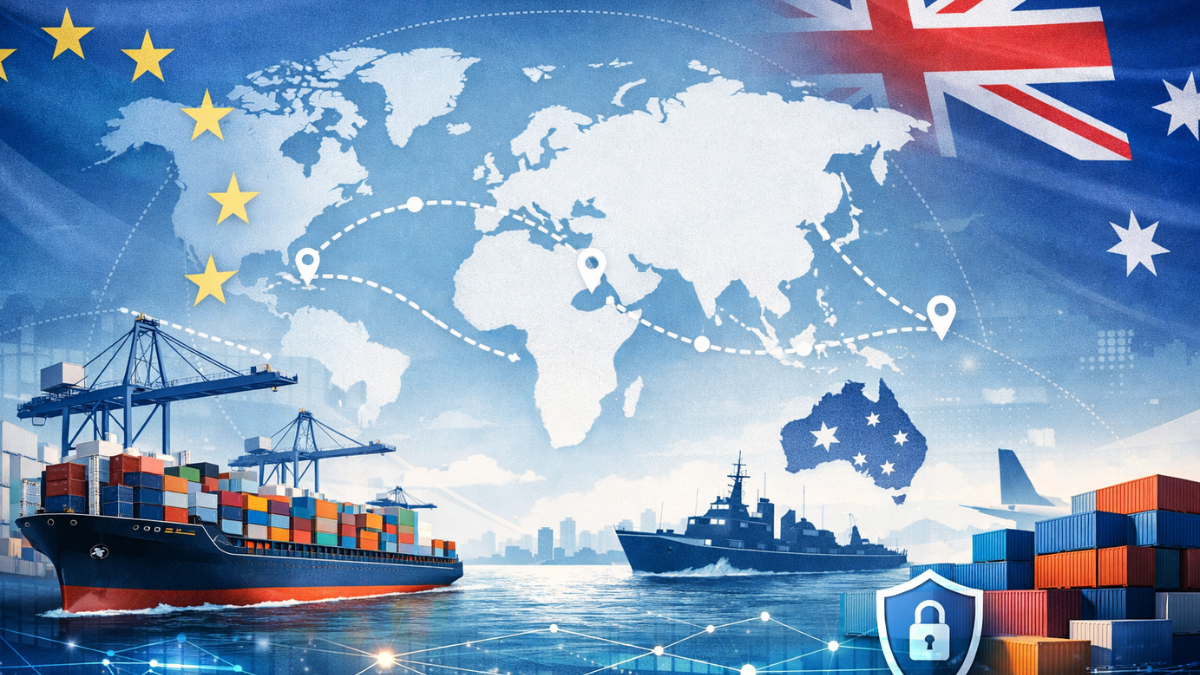


The European Union and Australia have officially agreed on a free trade agreement after years of negotiations. Talks for this agreement first began in 2018 but faced serious challenges and delays. In 2023, discussions even broke down due to disagreements over market access and product naming rules. However, both sides have now managed to resolve their differences and finalize the agreement.
The agreement was signed by Ursula von der Leyen and Anthony Albanese at the Australian Parliament House, marking an important moment after prolonged negotiations.
This free trade agreement is designed to make it easier for goods to move between the two regions. It removes or reduces tariffs on many products, which means businesses can trade more freely and at lower costs. For everyday people, this can eventually lead to more choices and competitive prices on certain goods.
One of the major sticking points in earlier negotiations was Australia’s demand for better access to sell red meat in the European market. The final agreement includes a solution, allowing a fixed quantity of Australian red meat to enter the EU under tariff rate quotas. Out of the total allowed amount, more than half will be duty-free.
The agreement also addresses concerns about product names. Certain names traditionally linked to Europe, such as Prosecco, will be protected. Australian producers will no longer be able to use such names for exports after a transition period of 10 years.
Thailand given April 15 deadline to address US section 301 trade concerns
Key Trade Benefits and Economic Impact
The free trade agreement brings several important benefits for both sides. Australia will gain improved access to European markets for key exports. These include wine, seafood, and horticultural products like fruits and vegetables. Removing tariffs on these goods makes them more competitive and easier to sell.
On the other hand, the European Union will benefit from improved access to critical raw materials found in Australia. These include lithium and tungsten, which are essential for modern industries such as battery production and advanced manufacturing.
The agreement comes at a time when global trade is facing uncertainty. Many countries are rethinking their trade relationships due to changing economic conditions. Both the EU and Australia are working to diversify their trade networks. This means they want to reduce reliance on any single country, especially major economies like China.
There are also concerns about possible tariffs and trade policies from other global powers, including the United States. By strengthening trade ties with each other, the EU and Australia aim to create more stable and predictable economic partnerships.
Another important aspect of the agreement is its focus on rules-based trade. This means both sides agree to follow clear and fair rules when doing business. Such agreements help build trust and reduce the risk of sudden trade disruptions. Ursula von der Leyen highlighted that in a changing world, trust and cooperation in trade are becoming more important than ever, while Anthony Albanese emphasized the shared belief in free and fair trade.
Hungary’s opposition stalls €90 billion Ukraine aid, EU plans next steps
New Defense Partnership Strengthens Strategic Ties
Alongside the trade agreement, the EU and Australia have also announced a new defense partnership. This marks a significant step in their relationship, going beyond economic cooperation.
The defense partnership provides a framework for closer collaboration in several important areas. These include defense industries, maritime security, and cybersecurity. Both sides will also work together to counter terrorism and address hybrid threats such as disinformation.
Maritime security is especially important as it involves protecting sea routes that are vital for global trade. Cybersecurity cooperation will help both sides deal with growing digital threats in an increasingly connected world.
The partnership also highlights shared positions on global security issues. Both sides have expressed continued support for Ukraine in the ongoing conflict with Russia. This reflects a broader commitment to international stability and security, as stated by Anthony Albanese.
In addition, Australia is set to begin negotiations to become an associate member of Horizon Europe, a major research and innovation funding program run by the European Union.
The agreement does not yet have a confirmed start date. However, it represents a major development in both economic and strategic relations between the European Union and Australia.